I – 4 – numbness
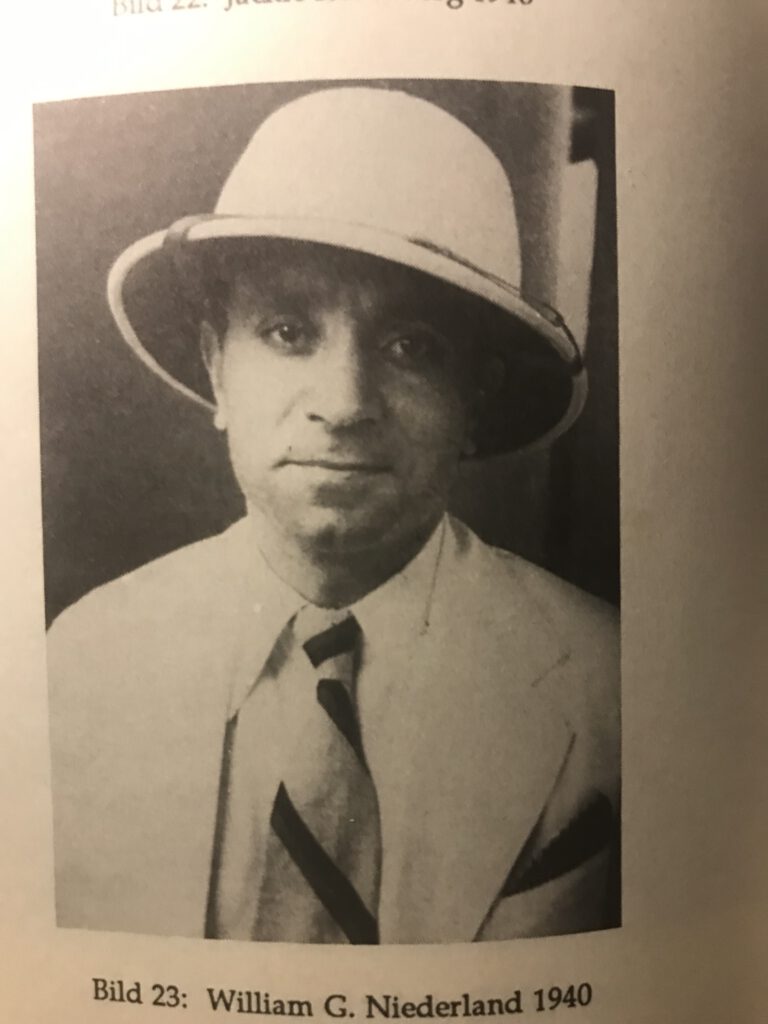
“Psychological numbness”– this was the observation made by William G. Niederland, a psychiatrist and medical expert for the victims, regarding the Germans’ attitude toward the victims in the postwar period, when the issue of compensation for the harm suffered during imprisonment in concentration camps was being heard in German social courts; and I took note of this observation. I immediately sensed that Niederland had found an apt term in “numbness” to describe a syndrome among Germans who had experienced and helped create the everyday reality of mass murder. Foto right: William Niederland
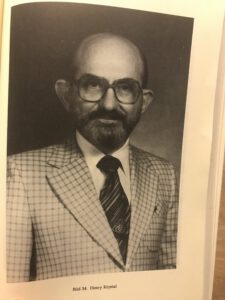
Henry Krystal
Henry Krystal, born in 1925 in the Silesian village of Sosnowiec, the son of Hermann Herschel and Devorah Grossman, was forced by the Germans in 1942 to work as a slave laborer at the Strachowice steelworks near Wrocław, until he was transported in 1944 to the Auschwitz concentration camp, some 200 kilometers away. Krystal survived and emigrated to America. He became a psychiatrist and, together with psychiatrists and psychoanalyst Robert Jay Lifton, Ulrich Venzlaff, and William G. Niederland, developed the theory of the survivor syndrome (1966) —psychological trauma—which we know today as post-traumatic stress disorder.
“Hypermnesia includes, for example, hyper-vivid memories charged with intense emotion, a feeling of constant threat, the erosion of one’s sense of self, frequent acute fear of death, general insecurity regarding interpersonal relationships, and the overwhelming of the mental ego structure by the incessant onslaught of insults, slander, and accusations. ”
William G. Niederland; Psychiatrist to the Persecuted; A Portrait, by Wenda Focke, Würzburg, Königshausen und Neumann, 1992
Niederland, William G.; Consequences of Persecution: The Survivor Syndrome. The Murder of the Soul. Suhrkamp, Frankfurt am Main, 1980,
Photos @Wenda Focke