Europe’s people endured tyranny, world wars, genocides, border shifts and civil wars.
Europe’s people endured tyranny, world wars, genocides, border shifts and civil wars.
We should preserve family history. But how do we do that?
I will present the principles and prerequisites for researching family history:
History is present within us — it is an experience within us and has a significant influence on our actions. It is the source of the driving forces within us. And this is especially true when we go through extremes situations. The memory of human history lies in the private sphere, and that is where it should be explored. An awareness of both individual and universal history strengthens people’s self-determination, capacity for action, and judgment.
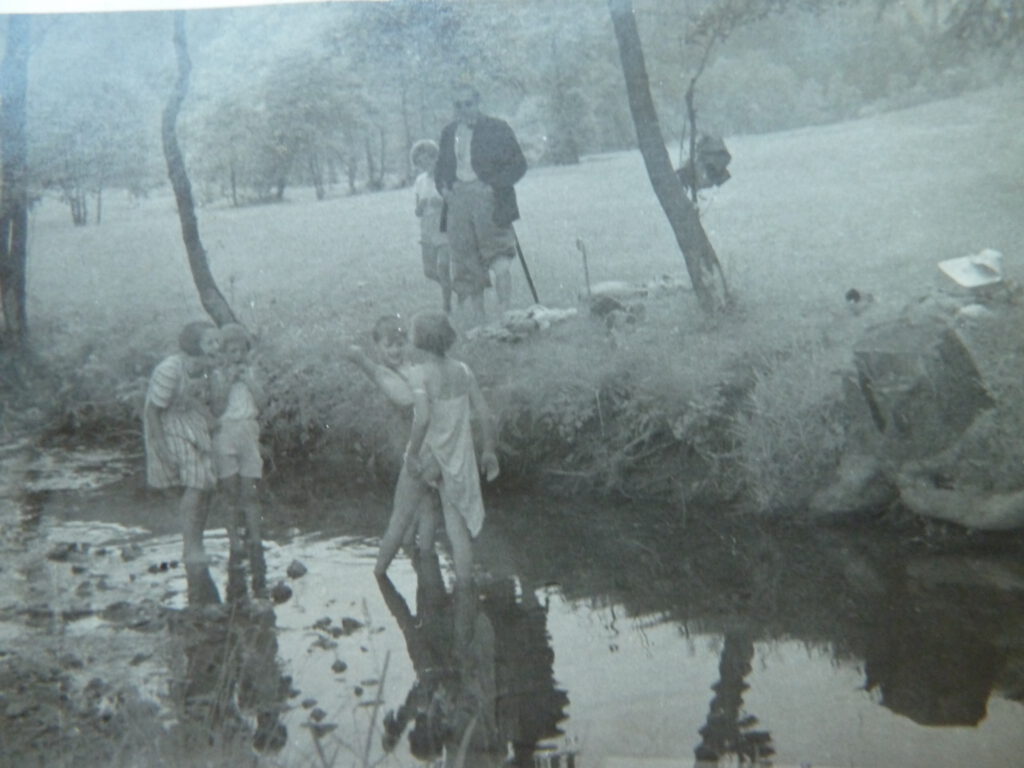
Foto: childhood in the year 1933 in Westboehmia
The individual is at the center of history –
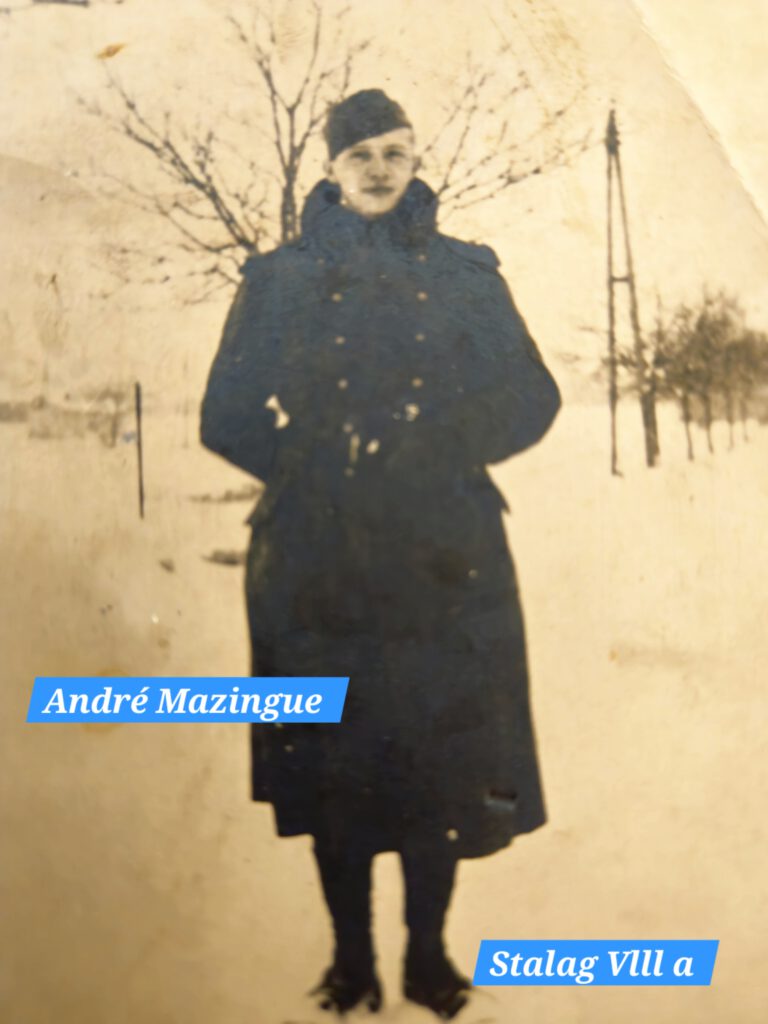
Every individual has their own story, but the memories of those who were persecuted and survived totalitarian regimes are often—if at all—told from the perspective into which people were forced. In the photo, we see the French master shoemaker André Mazingue in forced labor at the Stalag VIII a labor camp in the german city Görlitz.
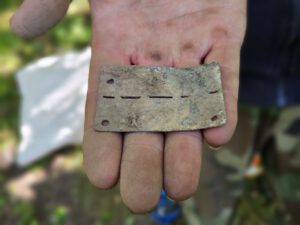
When you reconstruct a person’s life story, you start with what you find of that person—what remains of them. This could be, for example, a metal tag from a forced-labor camp. Or you might visit a historic site where your grandfather was, and in this way, you restore the broader and personal context of the person who was objectified and dehumanized. “I was just in Dunkirk,” a friend told me recently, “where André was arrested along with a thousand other soldiers.” I spent a few hours on the historic beach. I cried. Of course, I cried. Human beings can be so devoid of humanity. Now I’ve seen both sides. Dunkirk, the arrest, and Görlitz, the captivity.” Jean Paul Ledun, grandson of André Mazingue
The Age of Extreme
Reconstructing a family history during the age of extremes in 20th-century Europe brings out the extremes within us as we conduct our research. We must relive the extremes of the past at our desks, at the actual sites where events took place, and in our dreams at night. Every story, in its extremes, holds its own concentrated complexity within us. And we must become aware of this.
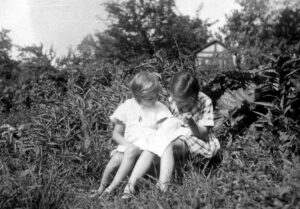
childhood in East France 1935
For example: in the families of offenders, extremes were generally trivialized. A child surrounded by an environment that downplays crime in everyday life clings to these myths. The closer the suspicion of a crime comes to the family, the more carefully the child will draw the curtain over the crime. One then fails to see the extremes. When, decades later, researchers pull back the curtain, they immediately plunge into the abyss. But even the myth is not merely a cover-up; it is also a distorted form of remembrance.
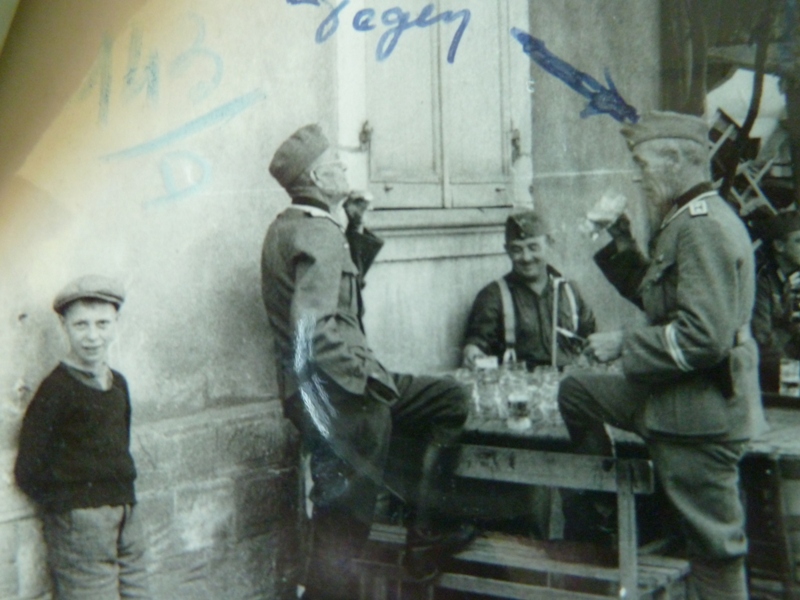
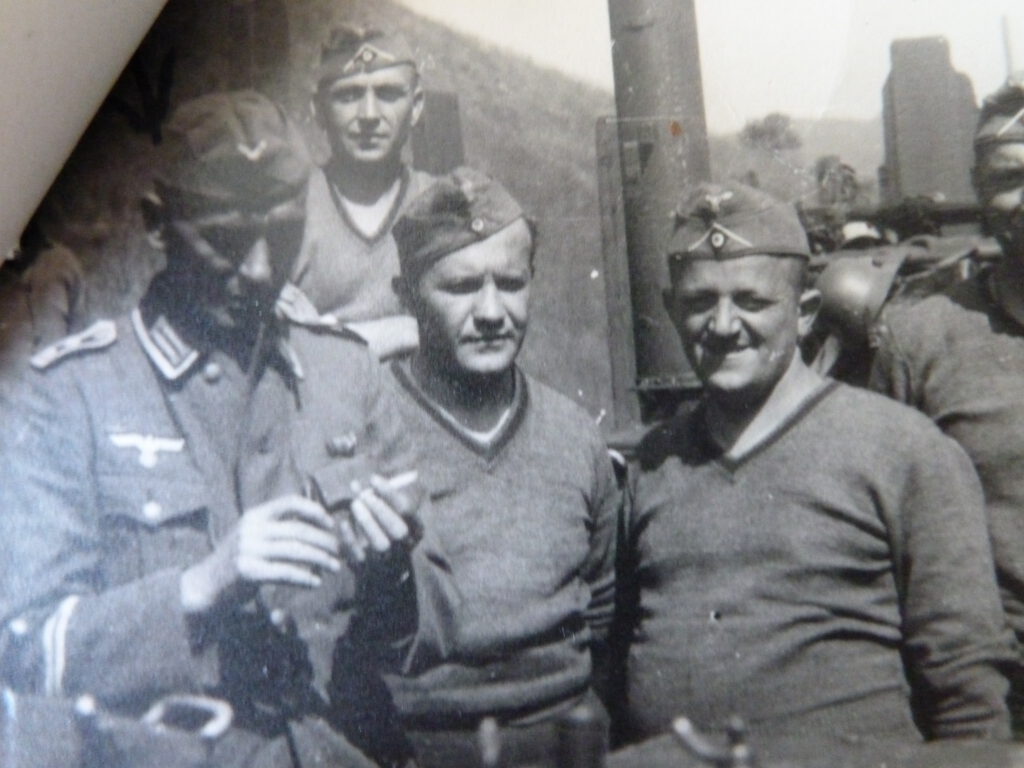
Foto right: German Occupiers in Eastern France 1943; Source: Dépôt central des archives de la justice militaire (DCAJM) in Le Blanc https://lannuaire.service-public.gouv.fr/gouvernement/9bdb4a96-76ac-4050-b044-a39f015fa9ce
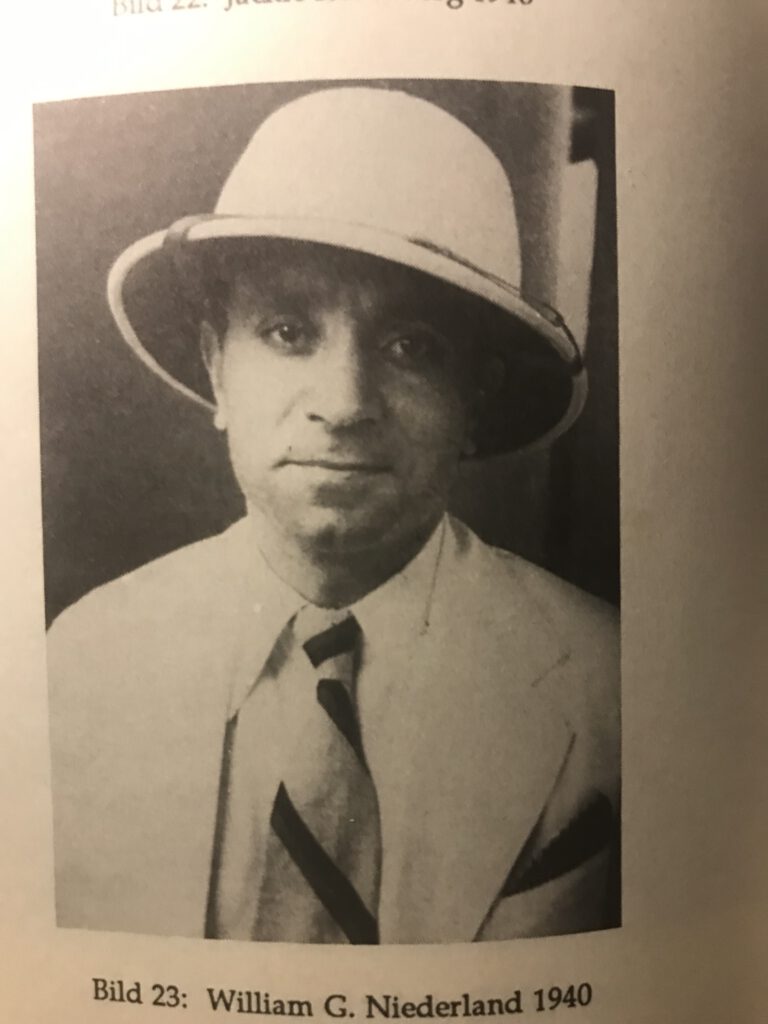
“Psychological numbness”– this was the observation made by William G. Niederland, a psychiatrist and medical expert for the victims, regarding the Germans’ attitude toward the victims in the postwar period, when the issue of compensation for the harm suffered during imprisonment in concentration camps was being heard in German social courts; and I took note of this observation. I immediately sensed that Niederland had found an apt term in “numbness” to describe a syndrome among Germans who had experienced and helped create the everyday reality of mass murder. Foto right: William Niederland
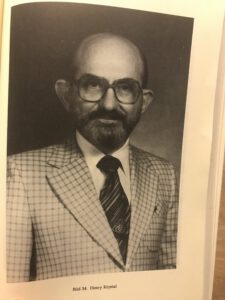
Henry Krystal
Henry Krystal, born in 1925 in the Silesian village of Sosnowiec, the son of Hermann Herschel and Devorah Grossman, was forced by the Germans in 1942 to work as a slave laborer at the Strachowice steelworks near Wrocław, until he was transported in 1944 to the Auschwitz concentration camp, some 200 kilometers away. Krystal survived and emigrated to America. He became a psychiatrist and, together with psychiatrists and psychoanalyst Robert Jay Lifton, Ulrich Venzlaff, and William G. Niederland, developed the theory of the survivor syndrome (1966) —psychological trauma—which we know today as post-traumatic stress disorder.
“Hypermnesia includes, for example, hyper-vivid memories charged with intense emotion, a feeling of constant threat, the erosion of one’s sense of self, frequent acute fear of death, general insecurity regarding interpersonal relationships, and the overwhelming of the mental ego structure by the incessant onslaught of insults, slander, and accusations. ”
William G. Niederland; Psychiatrist to the Persecuted; A Portrait, by Wenda Focke, Würzburg, Königshausen und Neumann, 1992
Niederland, William G.; Consequences of Persecution: The Survivor Syndrome. The Murder of the Soul. Suhrkamp, Frankfurt am Main, 1980,
Photos @Wenda Focke
when we conduct research in a zone of denial, we need friends –
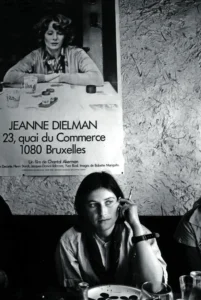
Only a few have managed to free themselves from the influence of extremes—which seek to eliminate freedom – by raising their voices. Among them were the theorist Hannah Arendt, as well as artists such as Claude Lanzmann, psychiatrists such as Henry Crystal and William G. Niederland, writers and historians such as Imre Kertész, Primo Levi, Saul Friedländer, Alexander Solzhenitsyn, Alexander Mitscherlich, Osip and Nadezhda Mandelstam, and the Belgian filmmaker Chantal Akerman. Akerman died by suicide in Paris on October 5, 2015, at the age of 65.
@picture alliance /akg images / Marion Kalter
Chantal Akerman in the year 1985
The works of these people have enlightened us about real-world events and provided us with moral guidance. We do not stand helpless today as new dictatorships emerge and modern totalitarianisms take root. We have a remedy to cure this disease.
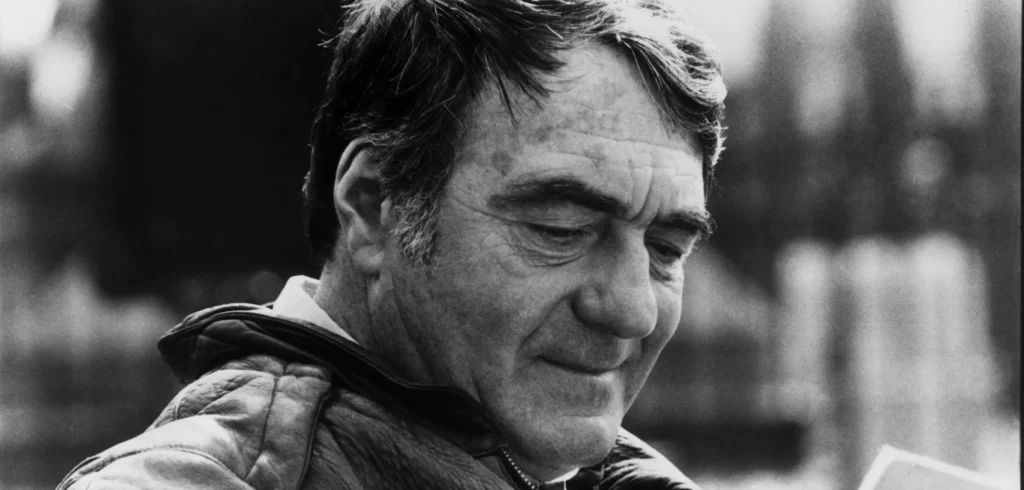
Photo right: @faz / French filmmaker and director of the documentary “Shoah,” Claude Lanzmann (1925–2018), in 1985
The Shift from Myth to Reality –
the decision to explore your own family history is, therefore, a difficult one. It can change your life. You reach a point of no return, and that is the moment when you grasp reality; From now on, you want to know. You want to get out of the fog.
Claude Lanzmann, the artist and filmmaker behind the documentary “Shoah,” called this moment “the shift from myth to reality.” Lanzmann wrote: “Treblinka existed. A village named Treblinka existed. (…) I didn’t really want to go to Poland. I had arrived there full of arrogance, convinced that I was undertaking this journey only to confirm that I could easily do without it and quickly return to my old ways of thinking. In fact, I had arrived heavily burdened, crammed full of the knowledge I had acquired over the previous four years through reading, research, and even while filming (as in the case of Suchomel); I was a bomb, albeit a harmless one: the fuse was missing. Treblinka set the bomb ablaze, and I exploded that afternoon with unimagined, devastating force. How else can I describe it? Treblinka became real, and the transformation of the myth into reality struck me like a bolt of lightning…” (Claude Landzmann; The Patagonian Hare, 2012)
Language and Complicity –
Families are held together by narratives imbued with myth. This prevents them from falling apart as a result of discussions about ethical issues. The murderer, for example, is still a hero. The family is situated within a coordinate system outside of any ethical or legal framework, in which forced labor and murder are established as reality. The family, which by its very nature is a heterogeneous social entity, is thus transformed into a rigid unit. Every single individual is corrupted by passive complicity. They are ominously fused together as a group. Complicity with those who exercised violent control over the lives of others is thus perpetuated across generations.Language can serve to restrict freedom. It is used to keep others down and control them over the course of decades.
Experience is embedded in our cells—
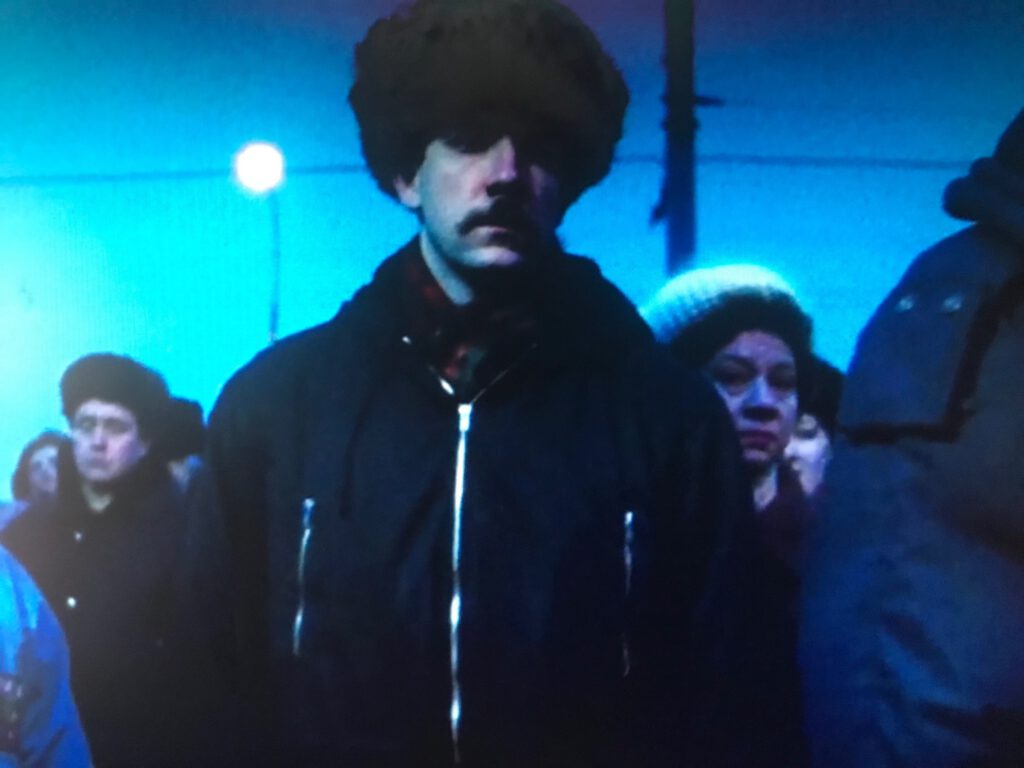
Experimental artist and filmmaker Chantal Akerman filmed passersby waiting for a bus in Russia. In doing so, she uncovered a double secret. “Knowledge lies in every one of my cells,” Akerman said, “even though my mother never told me about life in Auschwitz.” In the East, Akerman not only rediscovered her mother’s story within herself, but in her film “D’Est” she also captured the reality of the oppressive sphere of a totalitarian ideology that resided within the very people she was filming. In her work, she depicted how people create the space of totalitarianism—an atmosphere of utter powerlessness resulting from the totalitarian regime, which continues to linger within their bodies.
https://nofilmschool.com/2015/10/5-lessons-indie-director-chantal-akerman-can-teach-about-filmmaking
Hope –
The Russian poet Ossip Mandelstam, who was a critic of the Russian Revolution, was persecuted by Stalin, and deported to Siberia, wrote about his fellow poets and intellectuals in the Soviet Union who embraced Stalinism as a career opportunity or a dream:
“Stalin doesn’t need to cut off heads. They fly away on their own like dandelion seeds.”
Ossip and Nadezhda Mandelstam
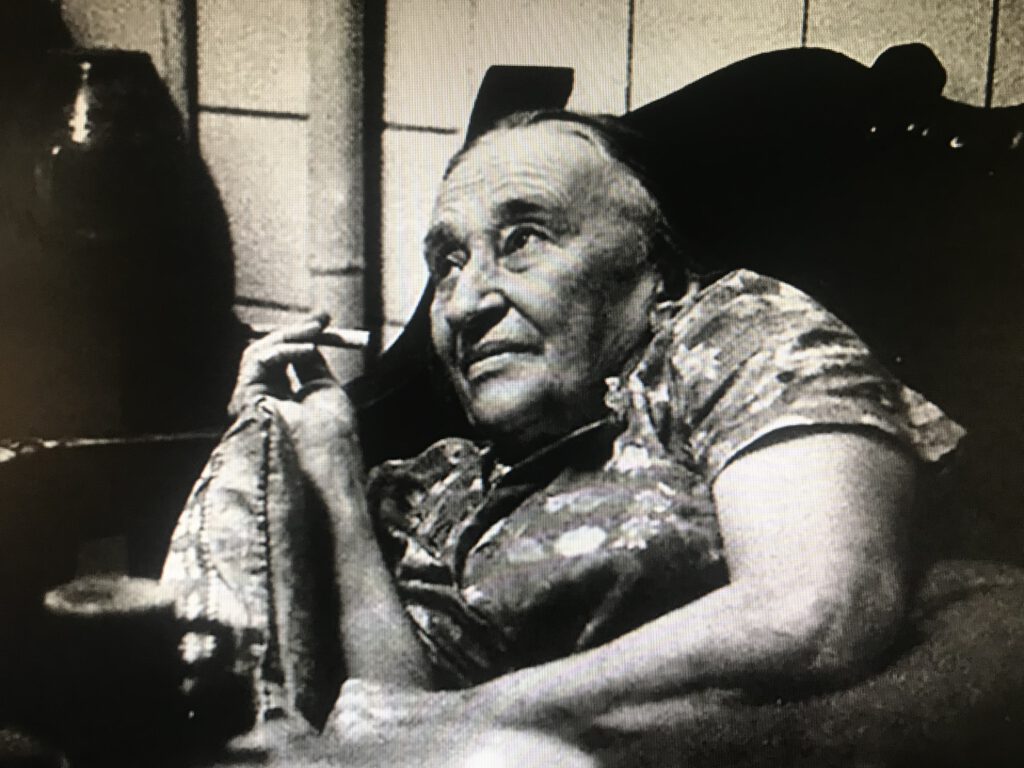
“For the right to live,” wrote Nadezhda Mandelstam, “one had to pay due homage to the ideology and the prevailing style. People were alarmed only when those who did so were killed anyway. People were quite indifferent toward Mandelstam. Those who did not play their part were not admitted into the superstructure. All they could hope for then was a bunk in a labor camp, although in our camps, as in the German ones, there were not even bunks, but only bare planks.”
Nadezhda Mandelstam; *Hope against Hope*; A memoir; London, Harvill Press, 1999
Nadezhda Mandelstam, https://www.youtube.com/watch?v=T5ARWfrzOQk
In the photo right: Nadezhda Mandelstam in the 1970s in her apartment in Moscow
Living in the denial – perpetrator families
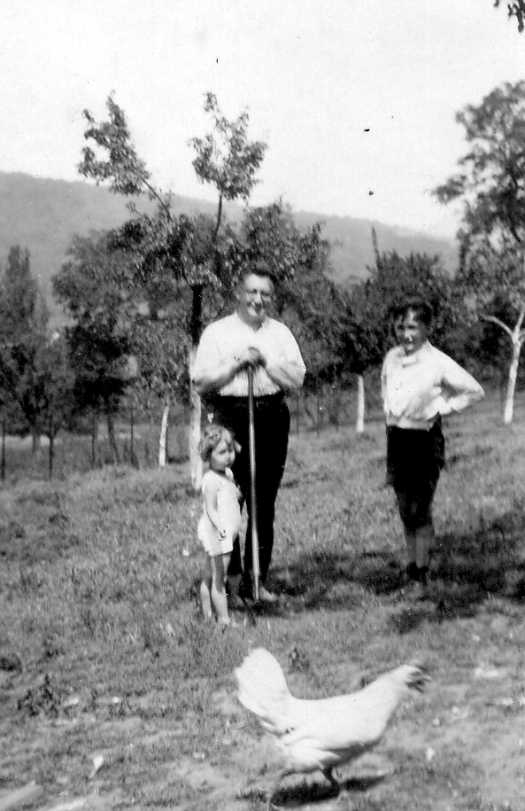
As a child in a space of repression, one does develop a sense that one is being lied to, but one still has no access to reality or to the truth. The lie can exist as a lie in and of itself as long as it remains unrefuted. The violent reality behind it remains hidden. That is its purpose, and it achieves that, at least initially. In J.’s stories, the victims of German mass crimes during the Nazi era did not appear. The violent reality of the crimes and the lies must have seemed like fiction to the child. Yet there was once a world for the child where life was still real.
Life in a Space of Denial among Repressed Families –
However, this problem of denial can also arise in the opposite scenario—namely, when ancestors were not perpetrators but victims of a repressive regime, and the state stands in continuity with that repressive past. We can observe this today in the Russian Federation. In this negative continuity, it is not only the government that is involved, but often society as a whole, due to the state’s revisionism of history. There is no public discourse on these crimes, and the families of victims of state repression are ashamed that their ancestors were imprisoned, shot in basements, or forced to perform hard labor in the Gulags.
Everyone knows the truth. It cannot be suppressed, but it remains unspoken. It remains a petrified reality hanging in the air. And this is what the “Solovetsky Stone” memorial in Moscow stands for; the following commemorative inscription is engraved on it:
„Этот камень с территории Соловецкого лагеря особого назначения доставлен обществом <Мемориал> и установлен в память о миллионах жертв тоталитарного режима
30 октября 1990 года в День политзаключённого в СССР“
“This stone from the territory of the Solovetsky Special Purpose Camp was brought here by the <Memorial> Society and erected in memory of the millions of victims of the totalitarian regime”
October 30, 1990, on Political Prisoners’ Day in the USSR”
In the photo on the right: People performing forced labor in the Gulag in Kolyma, Siberia—It is estimated that over 20 million people were sentenced to forced labor in the Soviet Union between 1929 and 1956.
The Evidence of the Crime
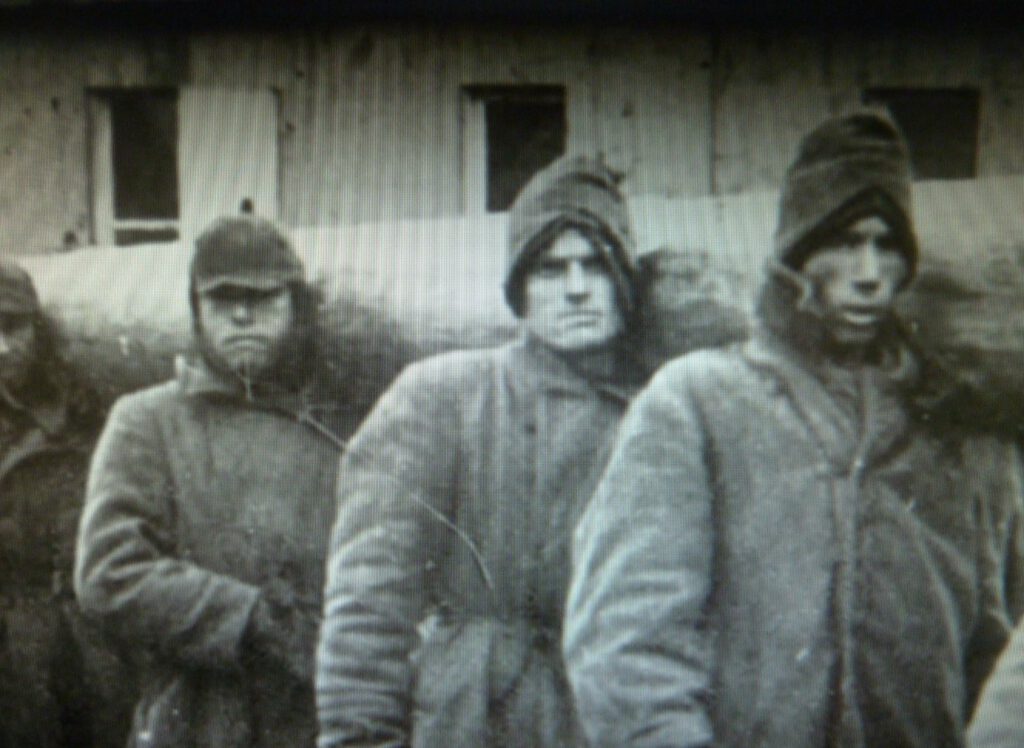
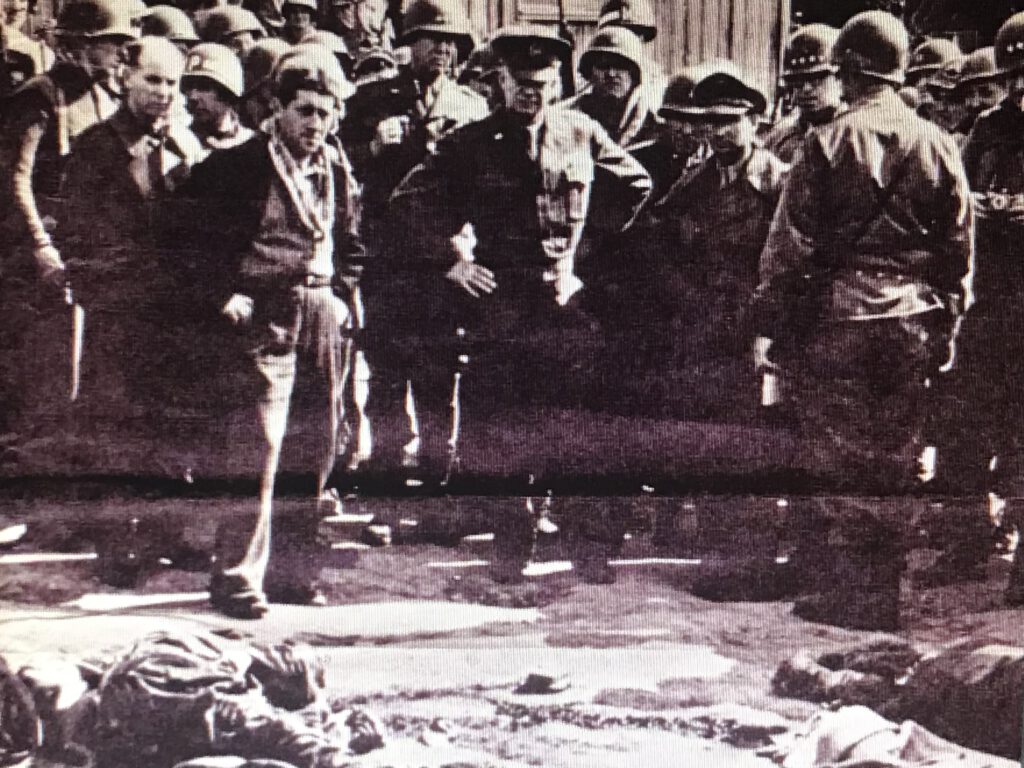
If the Americans had not photographed the concentration camps in Germany in 1945, our memory of the reality of that time would be very limited. Along with photographs of the perpetrators, these images serve as authentic testimonies to the crimes. They are evidence. They have been shown time and again in documentary films, school textbooks, exhibitions, and news reports. The first concentration camp that U.S. troops encountered on April 4, 1945, and where they met living prisoners who could testify to life in the camp, was the Ohrdruf concentration camp, located about 14 kilometers south of the Thuringian city of Gotha and serving as a satellite camp of the Buchenwald concentration camp.
https://nrw-archiv.vvn-bda.de/bilder/kz.pdf
KZ
Concentration Camp
Published by
the U.S. Office of War Information
on behalf of
the Supreme Commander of the Allied Forces
[April 1945]
Holocaust Denial –
When J. said my father didn’t believe it, that meant she didn’t have to believe it either.
In 1995, the American historian and Holocaust scholar Deborah Lipstadt was sued by the British writer David Irving, who posed as a historian and published countless works in which he claimed that the Holocaust had not taken place, and that the gas chambers were merely air-raid shelters, and the shafts into which Zyklon B was thrown were merely ventilation shafts, sued her to prove the statements she made in her book *Denying the Holocaust* (1993), in which she described David Irving as “one of the most dangerous spokespersons for Holocaust denial.”
Under English law, Lipstadt had to prove that Irving was lying. And she did. She prevailed. The trial took place in the High Court of Justice, Queen’s Bench Division, and was decided in her favor in April 2000. The enormous effort required under the law to prove that a liar is lying is well documented in this trial. It took a team of lawyers and historians who studied Irving’s publications to prove the distortions and fabrications in his writings, which were primarily found in the footnotes of his works. The trial was expensive, required a great deal of expertise, and lasted five years.

Conformity Within the Family –
I saw the U.S. historian Deborah Libstadt in Berlin at the launch of her book *History on Trial* and found her remarks on coping with psychological stress particularly interesting. An experienced lawyer advised her to shake off the events of the trial, just as one takes off dirty shoes at the front door to keep the apartment tidy.
Such a strategy is not possible for a child from a perpetrator family. Ideologues generally create a homogeneous zone in which there must be no conflicting or quarreling parties. This also applies within the family. The child must not be different from the others. To this end, the child is forcibly compelled, and thus the child internalizes the partisanship of those in power.
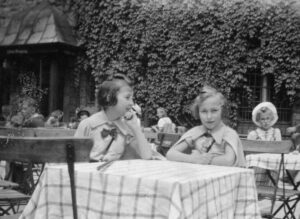
in the City Gotha in June 1942
The silent suffering of the abused child continues in the child’s own children. The political effect of coercive control persists: what is not told does not exist and is therefore, from a subjective perspective, not real either. This form of private revisionism and Holocaust denial within families has far-reaching consequences. In post-totalitarian societies marked by psychological numbness, it has repeatedly sparked revisionist sentiments over decades, making it difficult to operate politically.
In the photo on the right: 1942- cultural genocide and Gleichschaltung can appear inconspicuous from the outside. After all, the “way of life” is still framed by a traditional and formerly heterogeneous social reality. Gleichschaltung within families, however, involved dramatic events.
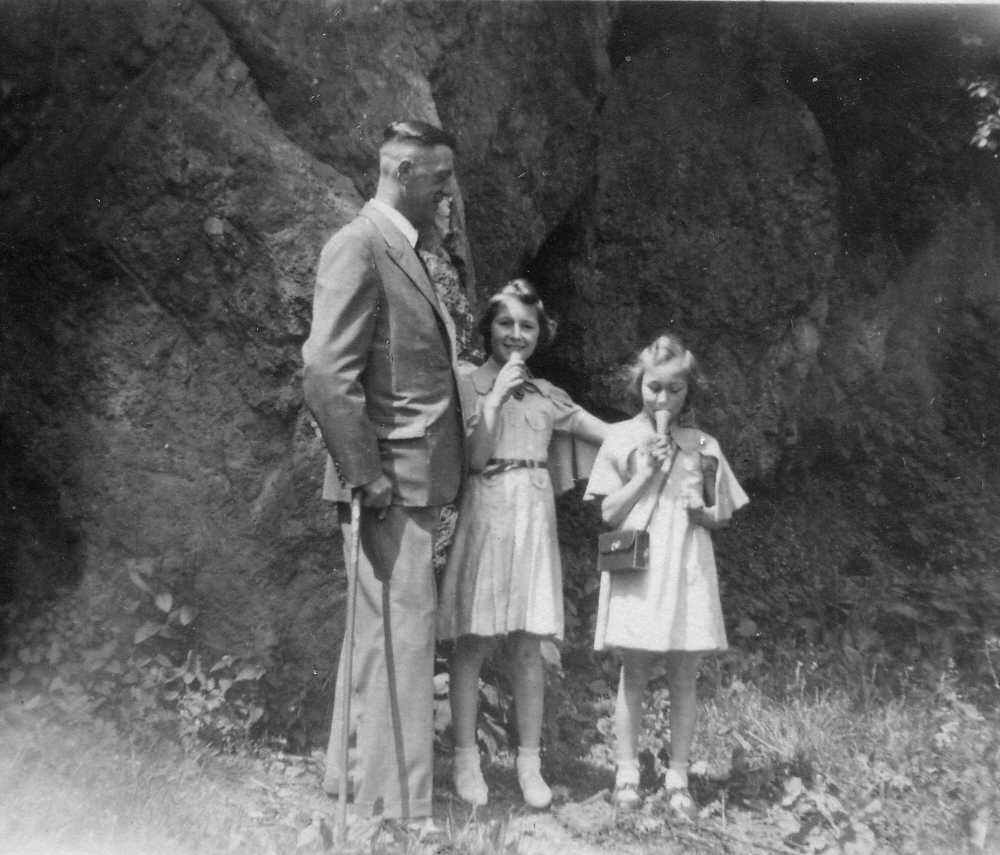
Making the invisible visible –
Reconstructing family history is a task that requires intensive study and a great deal of self-discipline. If you make a mistake, it’s not just your own research that is thrown off course. This problem, which is inherent in research, becomes a pitfall for the researcher when faced with critical others. They point out your mistakes and say: your work is no good. Or you present years of research with evidence, and they say: “We already knew all that. That’s nothing new!” and turn around and walk away. You shouldn’t let yourself be discouraged by either of these reactions of rejection and should continue pursuing the project. Essentially, in research, you make the invisible visible. You establish a connection to reality.
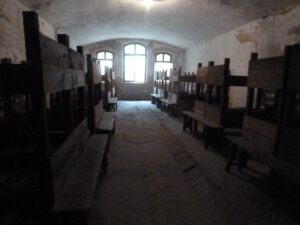
Fort de Queuleu Memorial site /SS and Gestapo torture Camp
In the photo: Prisoners being tortured at Fort Queuleu in the city of Metz. The photo is from the Struthof-Natzweiler Memorial. The prisoners were forced to sit upright for hours on long wooden benches while blindfolded without moving and were beaten from behind. The blows always came out of nowhere and caused extreme trauma to the prisoners.
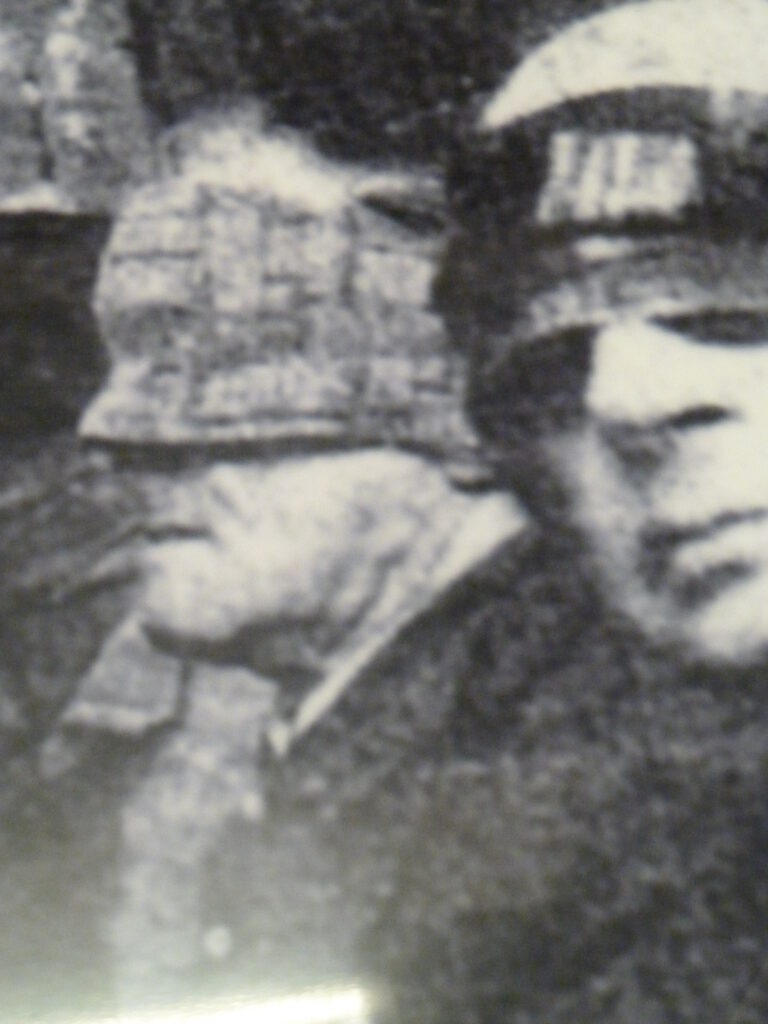
As you explore and learn more about reality, feelings of guilt and shame, despair and grief well up inside you and crash down on you—like a wall of water building up on the ocean and crashing down on you. Researching and preserving family history also means taking on the task of sensing collective emotions and coming to terms with those that arise within you as you conduct your research.
Living in a Lie – shaped by the system –
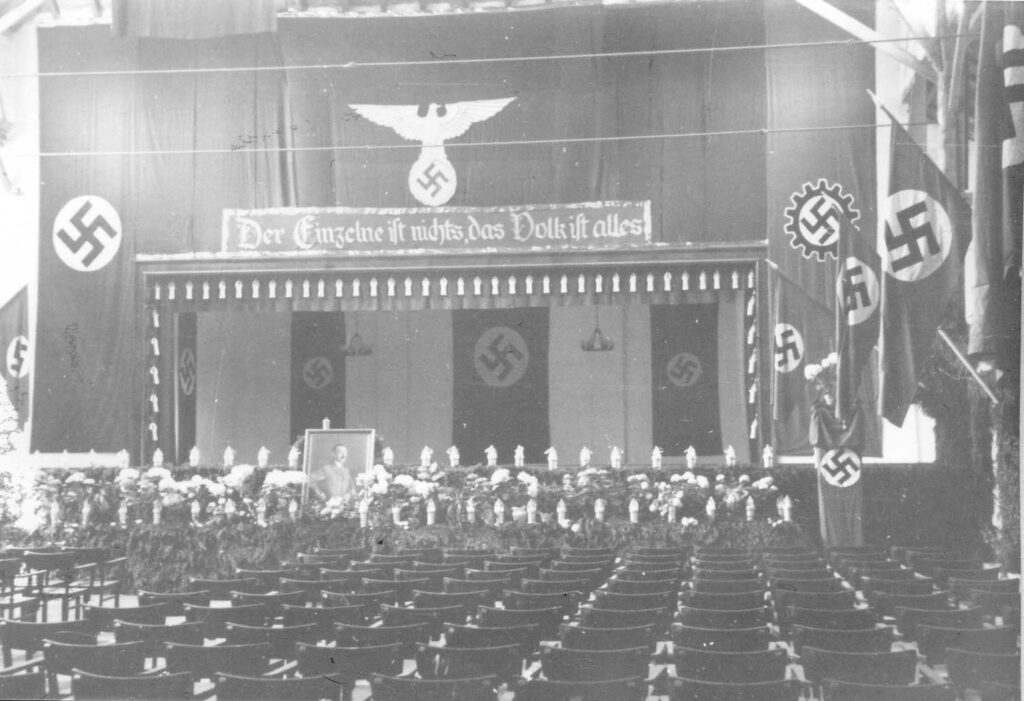
I looked at the photograph and said, “It’s absolutely outrageous that the Nazi ideology of a ‘national community’ was based on the idea that its progress and happiness were built on the misfortune and ruin of others!” She immediately shot back, “From today’s perspective, you can say that, but back then, you would have gone along with it too.” I looked at her and thought to myself: this statement reveals a lack of moral ethos and uncertainty about who one was or is. And immediately afterward, the question occurred to me: how many people today still operate within that framework of totalitarian rule? And what about us? Are we also shaped by this system?
In the photo right: a decorated ballroom with the banner “The individual is nothing—the people are everything” – one of the core propaganda slogans of the national sozialism – for an event of th NSDAP Party in Germany
Born Guilty –
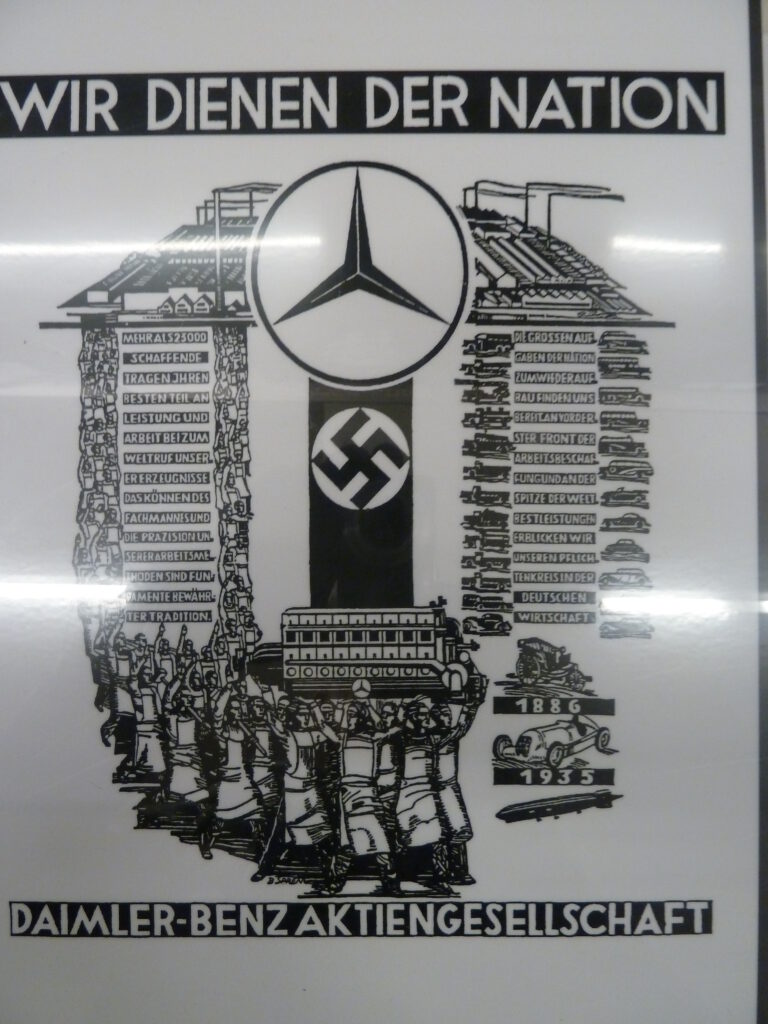
In our liberal democracy, we have adopted liberal forms of social interaction and deeply embedded them in our institutions, yet the family conflict continues to rage in private life. When reading Peter Sichrovski’s book “Born Guilty”—in which he interviewed children of Nazis in the 1980s—it is striking how little has changed to this day regarding the origins of the conflict and the problems arising from it, even though the book was published nearly 40 years ago and a new generation has since grown up. Sichrovski writes:
“However, when the children of Nazis reached an age where they learned of their parents’ true role during the war, they often became victims themselves—victims of their parents. Many of the interviewees presented themselves in this role: as victims of a mentality that, even though the war was lost, continued to perpetuate a fascist way of thinking at least within their own homes. The external framework had changed; Germany and Austria had long since become democratic states, yet National Socialist ideology was deeply rooted in the minds of the perpetrators and their accomplices, so that the postwar generation was confronted with a democratic environment on the one hand and a fascist-like family structure on the other.” Peter Sichrovsky; Born Guilty: Children from Nazi Families; Cologne, Kiepenheuer & Witsch, 1987, p. 17ff
Photo: “Daimler-Benz Aktiengesellschaft – We Serve the Nation” – Source: Exhibition at the Natzweiler-Struthof Memorial
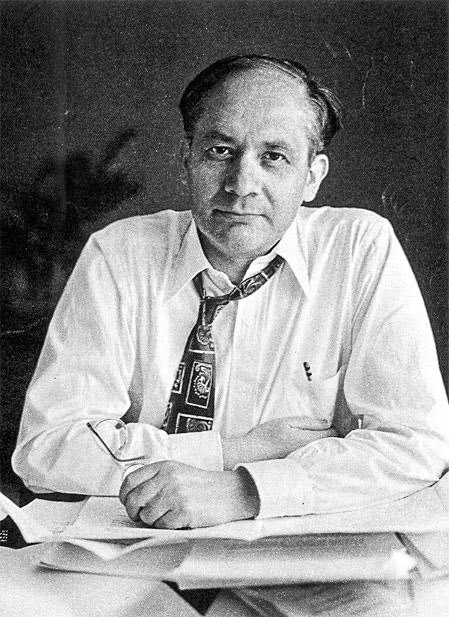
The Birth of the Genocide Convention – Raphael Lemkin, the Initiator of a Global Movement to Condemn Genocide
It was the lawyer and activist Rafael Lemkin who, by drafting and securing the adoption of the Genocide Convention at the United Nations, made it clear to the world that the extermination of groups of people must be made a criminal offense. And that was a “one-man operation”! Lemkin was also the first to recognize the Holodomor (killing by starvation) of 1932–1933 in Ukraine as genocide. The UN Genocide Convention was adopted in 1948 as the first human rights convention and entered into force in 1951.
Toward the end of his life, Raphael Lemkin had no money for a room and could barely afford to pay for his food. He spoke of an illness he had, the cause of which the doctors could not determine. Those countless sleepless nights.
“I suffered such a severe attack of agonizing pain that I could hardly breathe.” (…) “Nobody had established my diagnosis. I defined it myself and I called it Genociditis: exhaustion from the work on the Genocide Convention.”
“My nights turned into nightmares. Dreams came incessantly and compellingly. Visions of my parents in these dreams became very realistic. I saw the interior of a train. A drab light was falling on people sitting on the floor. Among them was my mother, stony-faced, her eyes saying nothing, her mouth silent as ice. Where was she going? Was it her last journey? (…) My health was deteriorating. “(…) ‘Nervous exhaustion, high blood pressure, slow down, rest, relax.” Raphael Lemkin; Totally Unoffical, USA, Yale University Press, 2013
Rafael Lemkin collapsed on August 29, 1959, at the age of 59, at a bus stop on 42nd Street in New York City and died at a police station.
In the photo: Raphael Lemkin (1900–1959). Lemkin came from the Selva District, an Eastern European plain that was part of the Russian Empire at the time. He was from the town of Bezwodne. Lemkin lost his family in the Holocaust.
Total Control –
A state can behave toward its people just like an abuser in a family. The “coercive controller” takes complete control over the lives of others. In January 2026, the Iranian regime killed over 30,000 protesters in Iran. They killed their own people and turned the country—which belongs to everyone—into a slaughterhouse in order to maintain total control.
When the Germans invaded the Soviet Union, the Russian secret service withdrew from Lviv, first executing 5,000 political prisoners. When the Germans marched into Lviv, SS-Oberführer Karl Eberhard Schöngardt, born in Leipzig, had 22 professors of Polish descent, along with their family members, murdered on the night of July 3–4, 1941. It is estimated that up to 120,000 Lviv Jews were murdered during the German occupation.
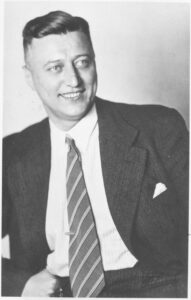
Karl Eberhard Schöngardt – SS Brigadeführer, Major General of the Police, and Head of the Gestapo in Dortmund
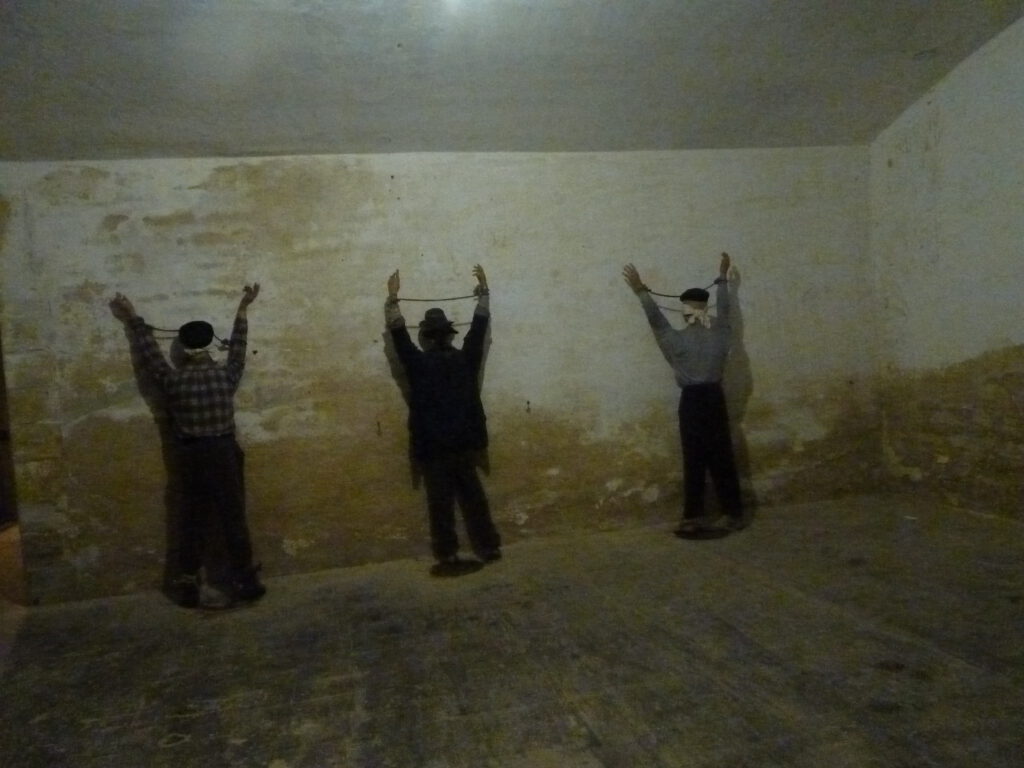
In the photo: Fort de Queuleu/SS Special Camp/Memorial / Depiction of the treatment of prisoners using mannequins
History Does Not Repeat Itself –
After 1945, the swastika—the symbol of the German Nazi state’s reign of terror in Europe—disappeared, but the history of murder and humiliation, of corruption and collaboration, the history of everyday acts of cruelty toward others, of emotional coldness and hatred toward family members and neighbors, the history of enrichment through looting and robbery, and the history of lies, betrayal and annihilation remains to this day a largely unknown and deeply buried historical reality within people in the wake of an extreme experience. We must reconstruct this internal reality, if we want to understand this dimension within ourselves.
History does not repeat itself. History leaves its mark on us. Reconstructing it brings us self-awareness. It is up to us whether we understand the reality of our histories, whether our analyses accurately reflect that reality, and whether and how we act in the present.
We can break the spell and prevent the atavism that drags us back into inhumanity, but we must tell the true story within our families.
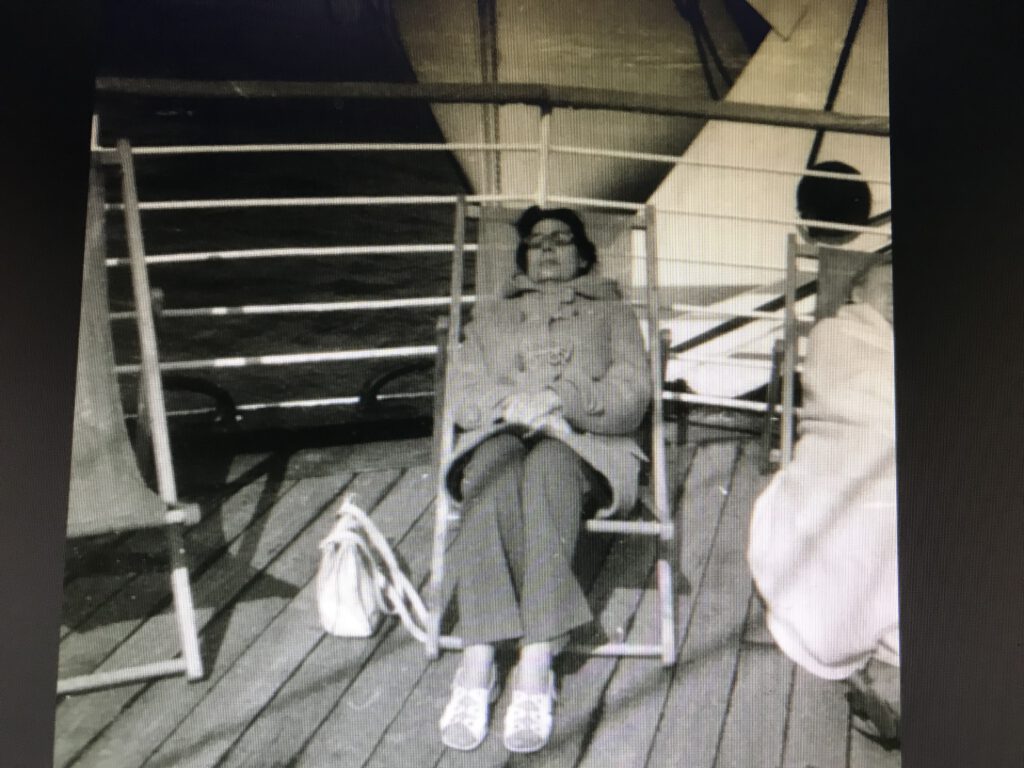
Photo: Ilse Rewald, a german Jewish woman and holocaustsurvivor on a ferry to Naples in the early postwar period. I found this photo in Ilse’s home after she passed away in 2005 in Berlin.
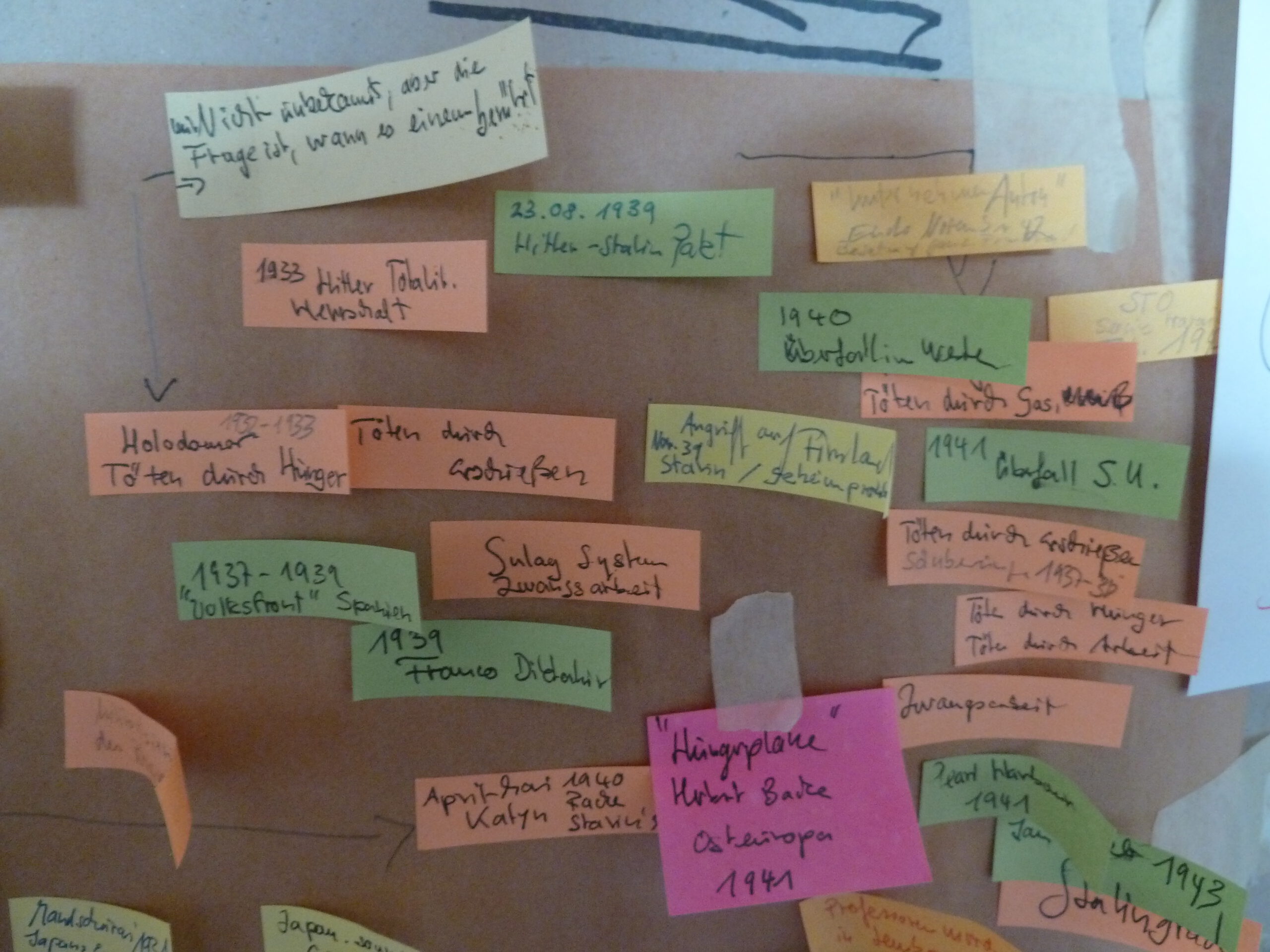
Method – We must create systems that enable us to remain flexible …
An overview of a method we can use to explore and process extreme experiences in history:
Early forms of narratives – In our research, we need to create systems that, on the one hand, keep us flexible and, on the other hand, allow us to identify or record something. The bulletin board is one of the container systems I use to maintain inner clarity and control, yet remain open to the process. Early forms of narration are lists, containers, slips of paper, notes, a word, a thought, which you then commit to paper.
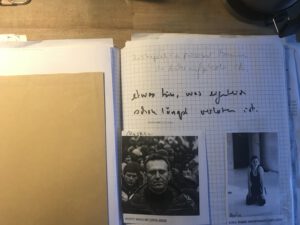
I keep a workbook in which I jot down my thoughts—as my personal tools for self-reflection—and current events as my personal tools for navigating the sheer overwhelming mass of atrocities I perceive and that weigh heavily on me emotionally. I must create emotional structures within myself that enable me to endure the intensity and gravity of the violent events I uncover in my research—events I do not shy away from—so that I can see this difficult work through to completion and bring it to the public.
Even when terror and fear overwhelm you, and all your memories are swept away in a wave, or you want to forget everything right away, you stand the ground and you state!
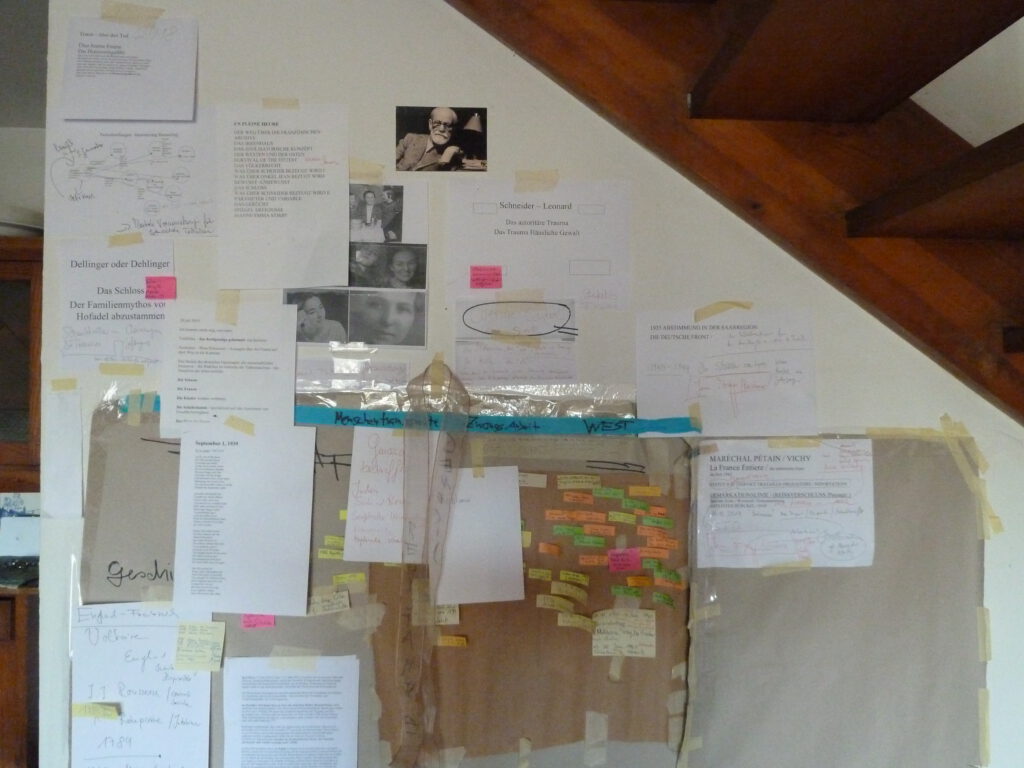
Containment as a method of self-preservation and protection against one’s own repressive forces – Amid the chaos of events, I construct various forms of chronologies or logical frameworks during my research. This is particularly true when the intensity and frequency of violent incidents within the family are high, and the individual’s entanglement in historical events is complex. Totalitarian regimes use the method of isolating and disorienting the individual within the collective through the moral pressure of guilt, thereby weakening or annihilate them.
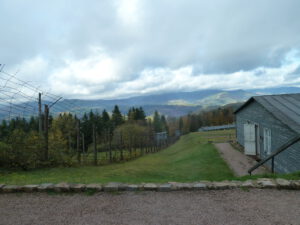
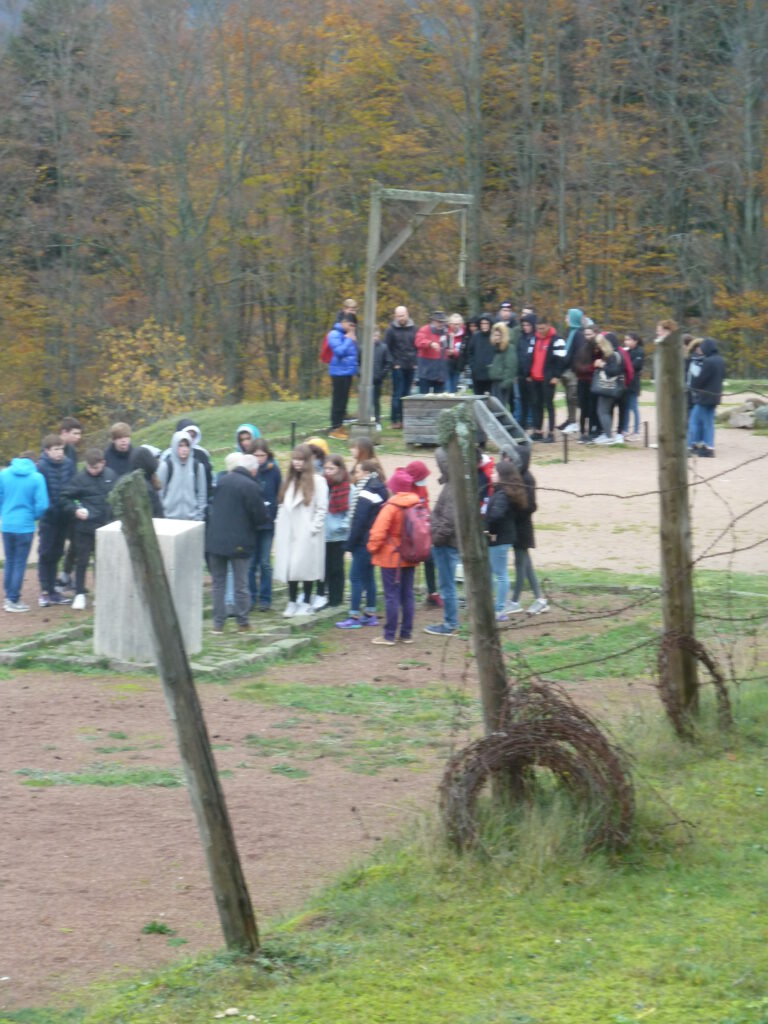
Memorial Site the concentration camp Natzweiler-Struthof in Alsace /France
Le Struthof on Mont-Louise was once a popular destination for the people of Strasbourg, featuring a hotel and several ski slopes. On June 22, 1940, Alsace and Lorraine were occupied by the german Wehrmacht. The Germans built in the year 1941 a concentration camp and declared the area a forbidden zone.
In the photo on the right: November 2019 in the memorial site Natzweiler-Struthof in France / a school class stands at the gallows of the former german concentration camp while the teacher speaks. Punitive executions were carried out at this gallows. All prisoners were forced to watch the executions.
Microcosm – Macrocosm –
I need a structurally multifaceted equivalence to the complex reality that research is all about. Every form of knowledge you document takes some of the burden off you. You’re pulling away. On the computer, I set up “knowledge containers”—such as Excel spreadsheets, travel journals, photo journals, and digitized archival material—across multiple screens. While writing, I can then move back and forth within these containers and between the historical and emotional layers, whether I’m searching for something or simply reflecting and letting my thoughts wander through these landscapes.
Motifs – Dreams – Myths – Quotes – Facts – Jotted-down thoughts – Spontaneous memories – Feelings – that you experience while exploring a place
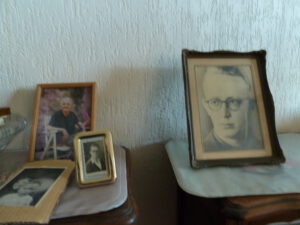
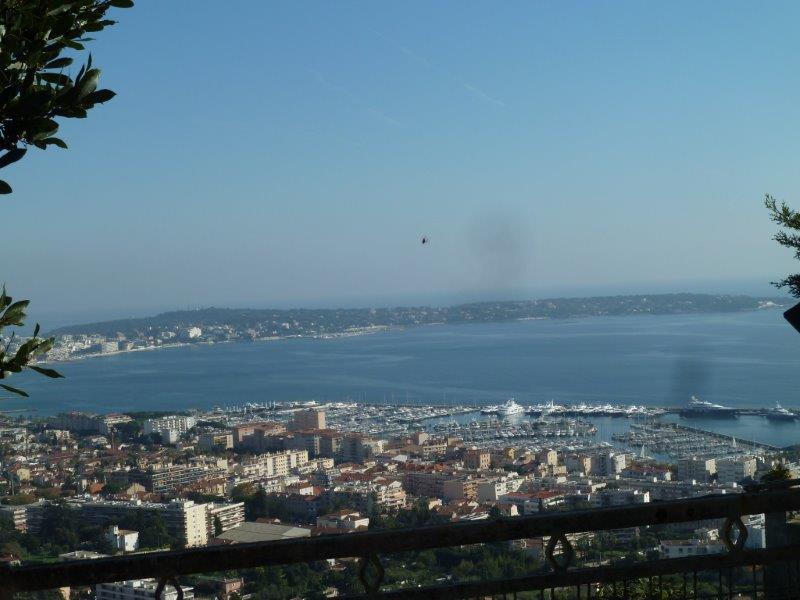
Outside, you have the beauty of the Mediterranean, and inside, you have all the horrors of a repressed history: Foto of an aged SS Man in an apartment at the Cote D’Azur.
Gathering Material –
You have to gather the material. You have to be consistent and precise. You have to be honest with yourself. You must not distort the content or facts yourself, as those who cover up crimes do, because you, too, are driven by emotions that can narrow—or even completely distort—your view of events and facts. Gathering knowledge can take many years. The yield for writing from these treasure troves might amount to about 5 to 10 sentences, about which one can say with certainty that they are universally applicable—and that is a good result.
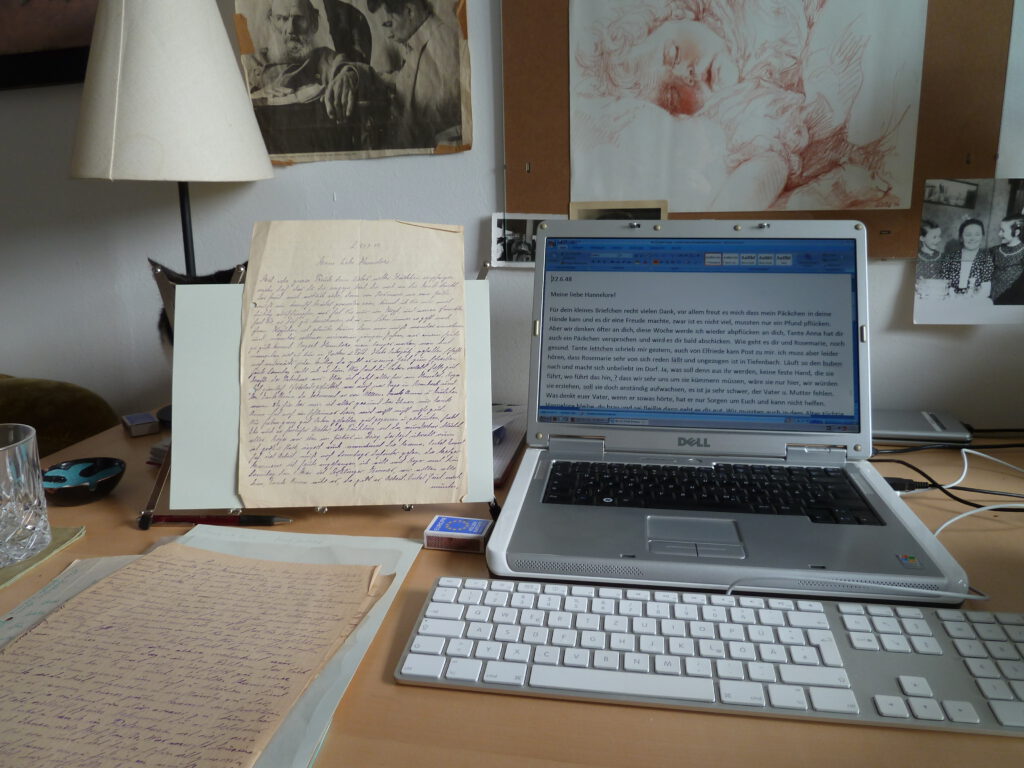
A word, a sentence, or a thought comes to mind, or I have an idea. I jot it down on a strip of paper, date it, and note the exact time. This can happen in the middle of the night. Then I tuck the strip of paper into my work journal. Just as the traffic lights on a highway guide me on my nighttime drive, I follow these ideas and finally write something down.
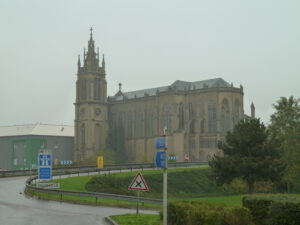
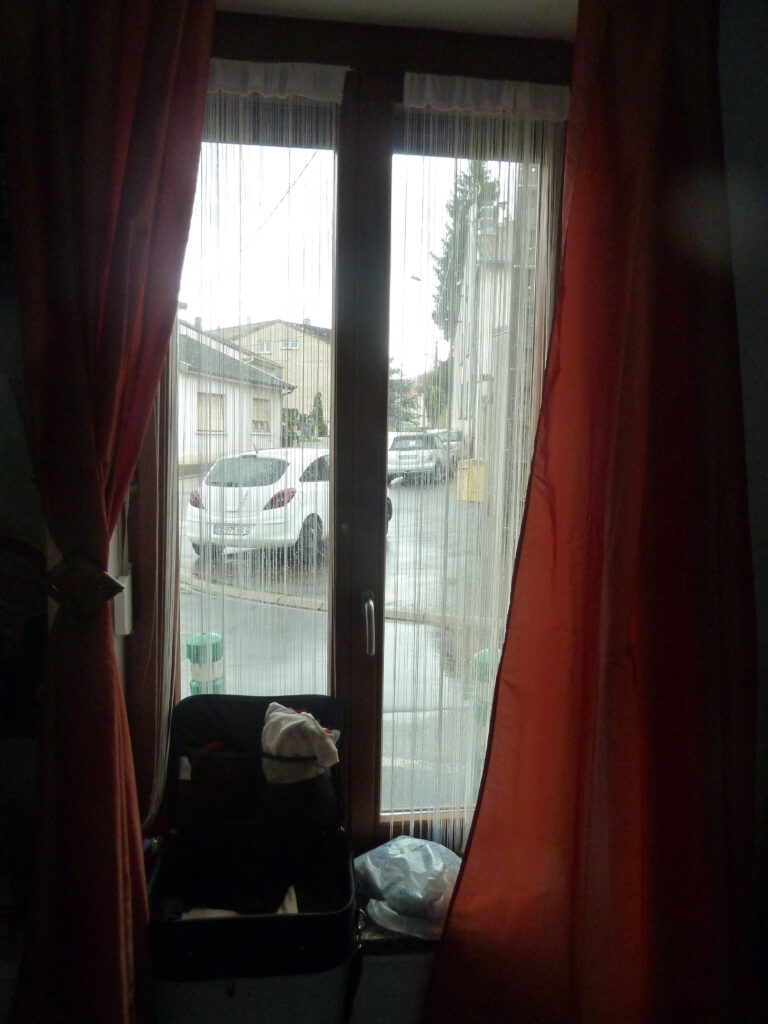
Foto: you’re traveling somewhere, staying in an airbnb. It’s raining nonstop. You’re freezing. You’re lying in bed, jotting things down.
The Emotional Grid –
Underlying the entire process is a sequence of emotions followed by insights that enable you to expand your questions or dismiss them entirely. But this variability does not apply to time. It now becomes clear to us: the reconstructive text is asynchronous. And what are you actually doing? You’re working through the prejudices and blind spots you had—ones you didn’t even realize you had.
For example: Born in 1960 in the Federal Republic of Germany, France was simply the better country for us. France, the land of human rights, was in 1939 the great hope of all those who had to flee Hitler’s Germany. But what happened then in July 1940, when the French Parliament voted to abolish the Republic? Vichy France, led by Marshal Pétain, and the Holocaust—the deportation of Jewish children—marked the lowest point in French history. I didn’t begin to explore this catastrophe in France until I started researching my French grandfather. And that was in 2012. I didn’t begin to grapple with this catastrophe in France until I started researching my French grandfather. And that was in 2012.
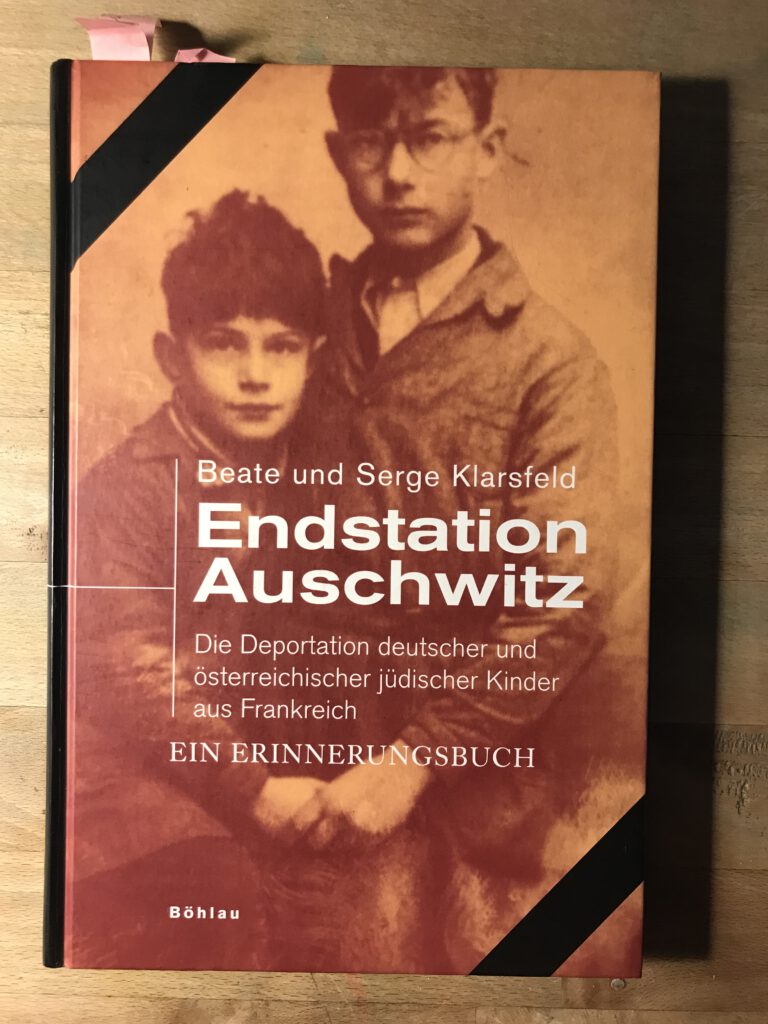
Beate and Serge Klarsfeld wrote:
“The French Vichy government has disgraced itself forever, for it made its police and administrative apparatus available as an active accomplice to the German Nazis in the arrest of Jews, particularly in 1942. 43,000 Jews were deported from France in 1942, 17,000 in 1943, and another 16,000 in 1944. In total, 76,000 Jews were deported, including 11,400 children under the age of 18. About 2,000 children were younger than six years old. Among the Jews deported from France, about 10,500 came from Germany and Austria, including about 800 children and adolescents.”
Beate und Serge Klarsfeld; Endstation Auschwitz. Die Deportation deutscher und österreichischer jüdischer Kinder aus Frankreich, 2008.
Conscious – Unconscious
The most delicate stages in reconstructing a family history are those in which one moves from a state of emotional detachment or indifference to a preconscious state. For example, one may know something, but it does not affect one emotionally. The message hasn’t reached you yet. We are not yet conscious of what the message says. We are aware of the genocide, but not conscious of it. The preconscious doesn’t hurt yet, but it already throws everything I’ve built up into disarray.
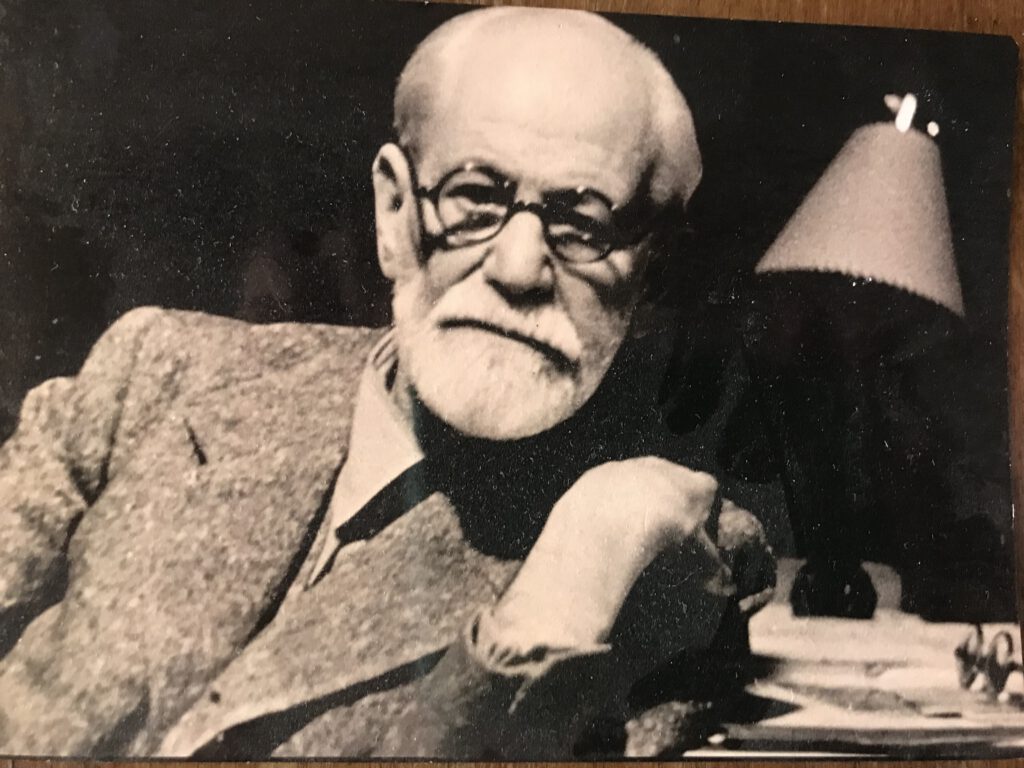
One lies awake at night and it thinks. Or it dreams terrible things. One enters a state of tension, as if the pores were opening and the inside were becoming permeable to the outside. An osmosis takes place between inner reality and objective reality. Freud also calls these states of the psyche “the wandering of consciousness.”
Sigmund Freud elaborates on the relationship between the conscious and the unconscious as follows:
“It is by no means impossible for the product of the active unconscious to enter consciousness, but this feat requires a certain amount of effort. When we try this on ourselves, we get the distinct feeling of a defense mechanism that must be overcome. (…) Thus we learn that the unconscious thought is excluded from consciousness by vital forces that oppose its admission, while they pose no obstacle to other thoughts, the preconscious ones. (…) The unconscious is a regular and inevitable phase in the processes that constitute our mental activity; every mental act begins as unconscious and may either remain so or, as it develops, progress toward consciousness, depending on whether it encounters resistance or not. The distinction between preconscious and unconscious activity is not a primary one, but is established only after ‘defense’ has come into play. Only then does the distinction between preconscious thoughts, which appear in consciousness and can return there at any time, and unconscious thoughts, which are denied this possibility, acquire theoretical and practical value.
A crude but fairly apt analogy for this supposed relationship between conscious and unconscious activity is provided by the field of ordinary photography. The first stage of photography is the negative; every photographic image must undergo the ‘negative process’; only some of these negatives, having passed the test successfully, are admitted to the ‘positive process,’ which culminates in the image.”
Sigmund Freud; Collected Works, Volume III, The Psychology of the Unconscious, Fischer Verlag, Frankfurt am Main 1982, p. 33
Foto@Sigmund Freud Museum: Sigmund Freud in his study at 20 Maresfield Gardens, London, in 1939
Intuition and construction –
I can examine the process of abstraction—the transformation of feeling into words—in retrospect by going into the various formats of my containers and seeing what is depicted there. I return to the original form. One cannot reverse the transformation of a feeling that has already been abstracted—that is, its transformation into a word or a sentence—without its source, because abstraction erases concreteness. An abstraction is fixed.
The preliminary form of abstraction, however—the naive emotional state, the one-sided perception, the romantic gaze, the error, the search— wrong bull’s-eye, the longing, the desire, the mistaken thought, the as-yet-unperceived, the deception, the intuitively grasped exact fact or moment—is a raw form that can be archived in containers like artifacts and thus preserved. In this way, the raw forms—which are strongly shaped by the feeling—and what I can recognize are preserved.
On this basis, I can now reconstruct and then undo the reconstruction once I realize that it has led me astray. I then pick up a new trail by returning to the preliminary form like a tracking dog, picking up the scent, and beginning the search anew.
If we can verify and distinguish between intuition and construction, then we can determine to what extent we are shaped or influenced by social processes, whether past or present. We can then explore our relationship to the world within ourselves to a certain degree of autonomy, in spite of majorities and fads.
While doing my research, I also discovered something surprising: when I sit alone in my study, I am always caught up in the hustle and bustle of the world and yet, at the same time, I have escaped it. Others have called this a victory over time.
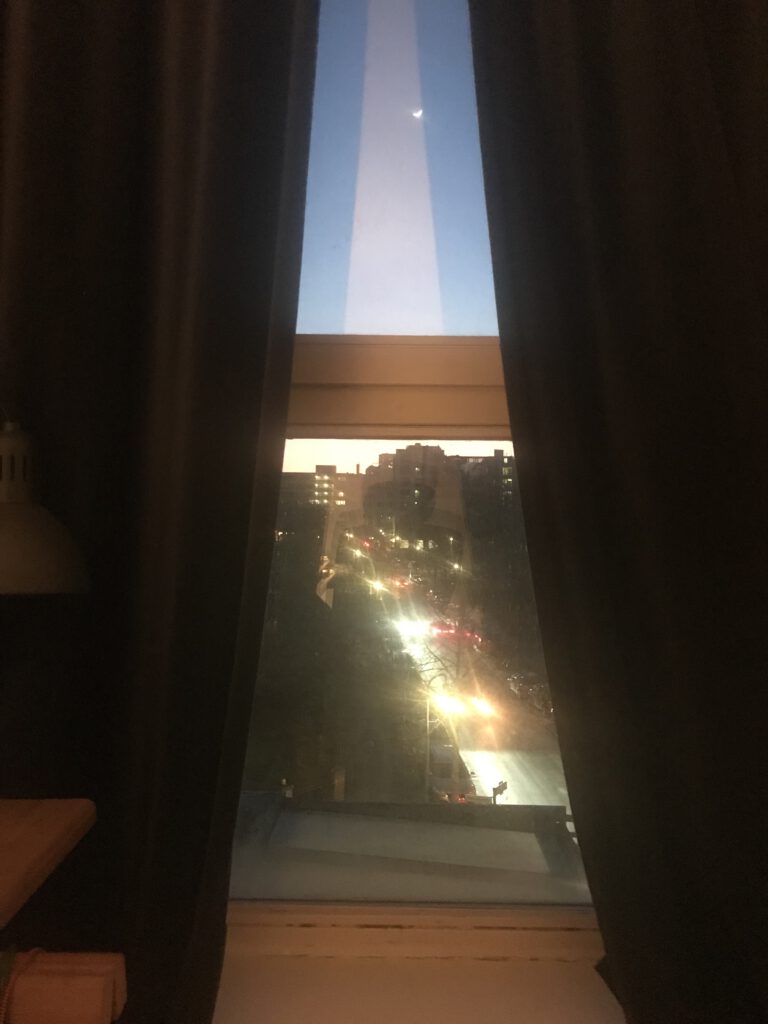
No Chronology – Historians typically present history and stories chronologically, but within us they lie unsorted and undated, and they are always present. History is an egalitarian, inner, timeless reality within us that spans countless generations. When you sit at your desk and immerse yourself in historical processes and human experiences, everything happens all at once.
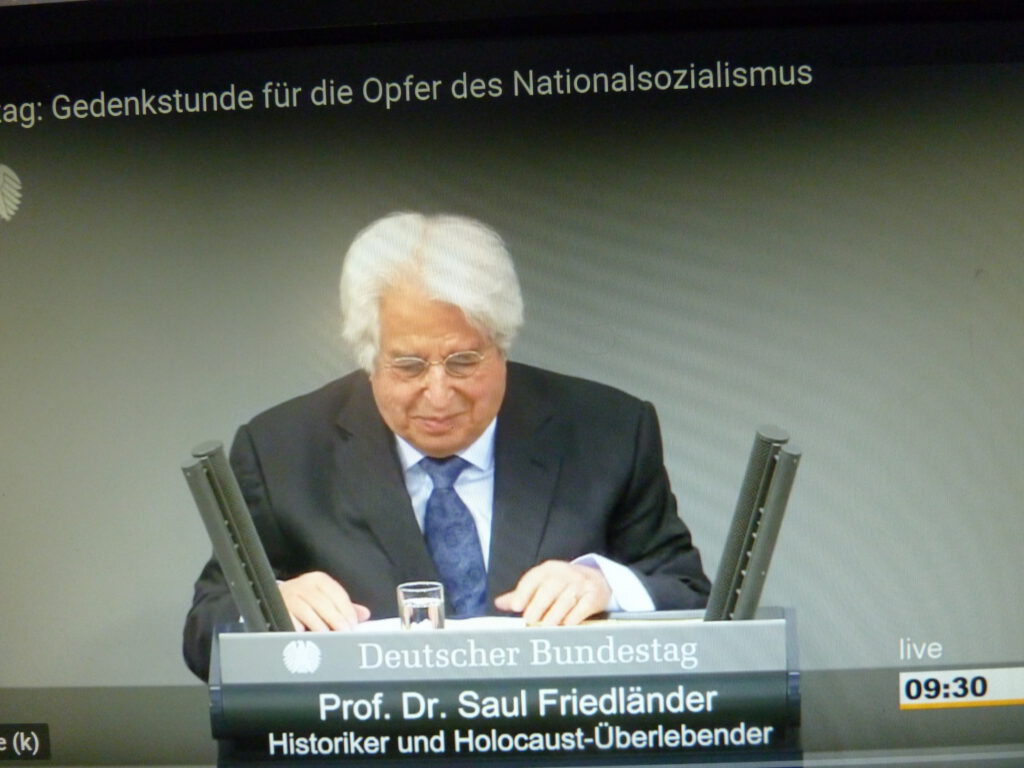
On the bulletin board, it looks like this: in your mind, you find yourself in 1935 in eastern France—five years before the occupation by the German Wehrmacht—and at the same time, you witness the German Bundestag’s memorial service for the victims of National Socialism on January 27, 2019, via a live broadcast on public television.
In the photo on the left, recruits near Verdun in 1915, and on the right, the fire at Notre Dame in Paris on April 16, 2019
In such moments of deep immersion in history, we come to understand that this is, in essence, the natural state of things—namely, the simultaneity of events and, with it, the absolute closeness to historical events within us through a feeling we possess and which is given to us by that feeling within us—which we are now discovering. We are then deeply connected to reality. But if we are not aware of history, we are completely at its mercy and vulnerable to any upheaval, no matter how significant it may be. We react, but we lack the historical perspective that would give us the distance needed to assess the situation appropriately and rationally.
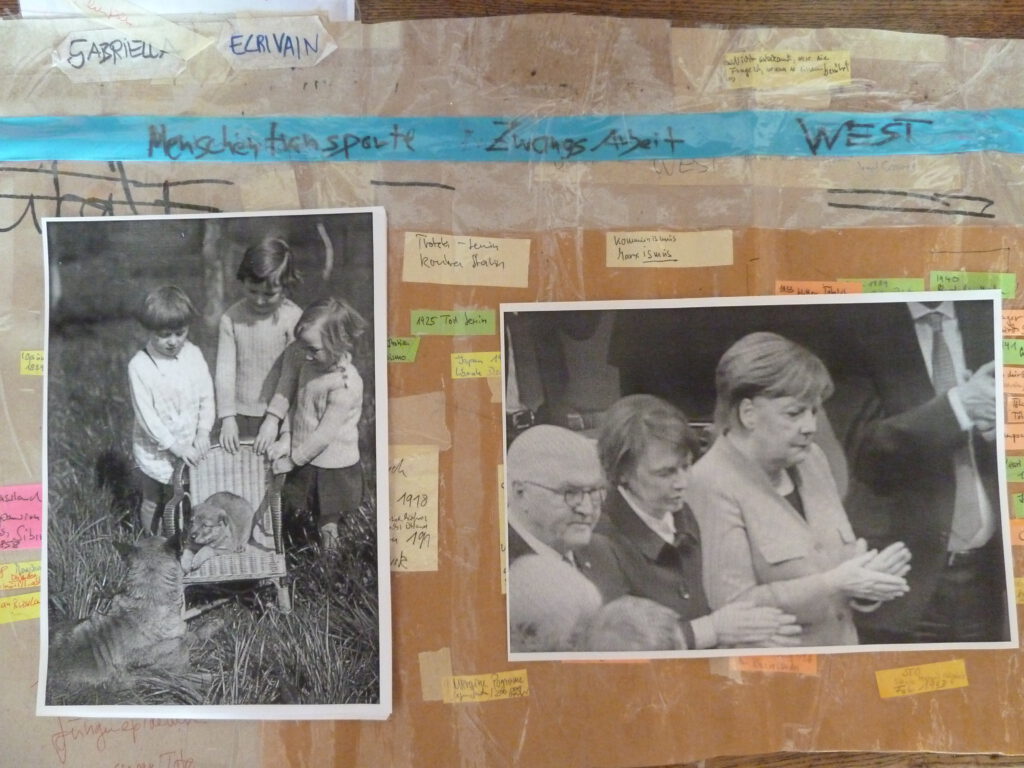
Tension Energy –
Under certain circumstances, an oscillating tension may develop between the contents of the knowledge containers. You must work with this tension. You are then on the trail of something. In my research, for example, these included German shepherds, hair, feet, eye color, body measurements, but also the significance of antique furniture, silverware, mantel clocks, and candelabras. You articulate your feelings in a comment section. With a search command, you move easily between the cells of the computer program. The volume of documents grows.
The work of delving into this dark abys of human nature is hard. You have to prepare yourself for a long dry spell until you’ve fought off the censor within yourself, resolved the conflict, and given up loyalties to people.
During this process of reconstructing family history—which can take years—you become unable to function within the collective, because a gap emerges between you and the prevailing social mindset. You see the problem you’re grappling with in the outside world as well, and that leads to friction with others there. In the public you recognize now a latent presence of what you previously considered private. Something shifts inside you.While you’re straightening something out, you end up on the sidelines. You break the cycle.
Photo: March 21, 1933 – Reich President Paul von Hindenburg, 1.98 tall, legitimizes Adolf Hitler and the NSDAP with a handshake. @photo – imago/arkivi
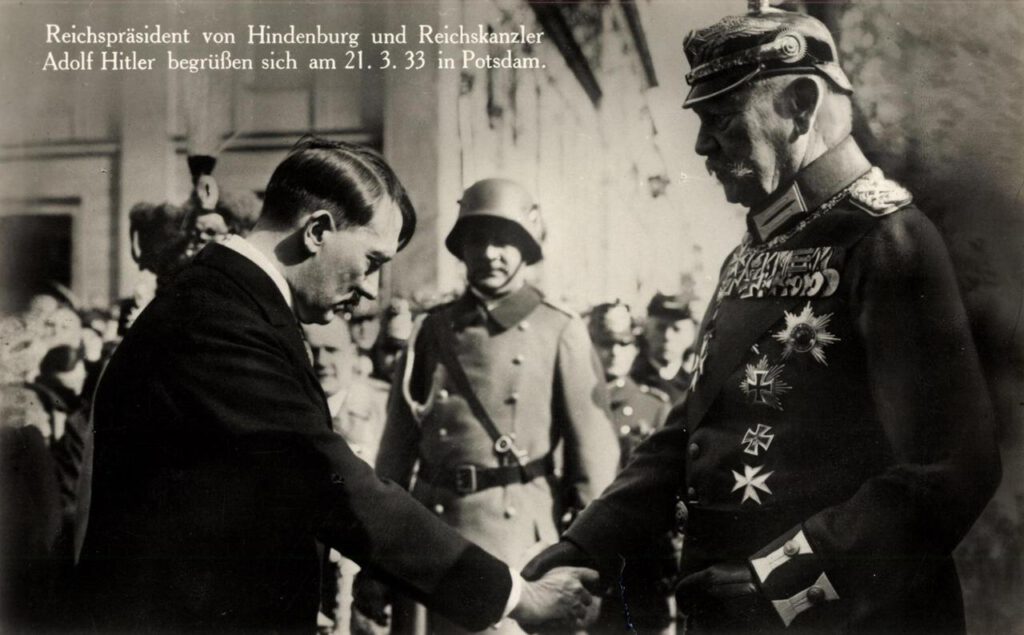
If we have no proof and no evidence, we must observe for a long time and also follow the inner path—exploring what lies stored within us as memory and the traces that exist out there. We begin to search. I have to work with my intuition. I write something down. I take it out again. The matter won’t let me rest all night. The next morning, I look for the scrap of paper in my “Experiments” folder—which I set up specifically for this purpose—and insert it again, and so it goes on and on. You feel your way as if through fog and work against resistance you don’t understand. I write, listen, take notes, and archive. I organize the material into categories, work with recurring themes, develop keywords, and in this way discover the concepts that have persisted across the decades—concepts that, as I come to realize, play a role and revolve around a reality I cannot yet see. A search in the archives can yield surprising results.
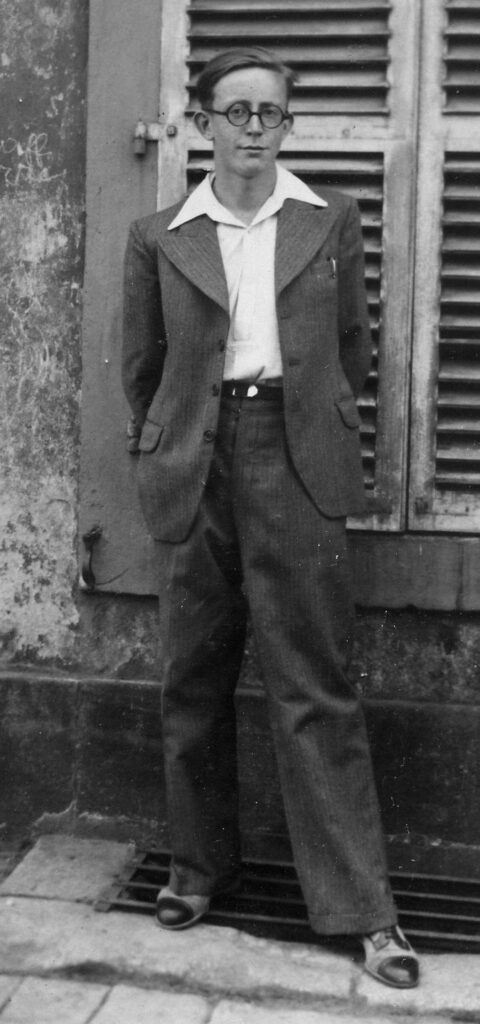
In the photo: The fact that this young Frenchman would become involved in the coming years with the 33rd SS Waffen Grenadier Division “Charlemagne”—a major unit of the Waffen-SS during World War II—only came to light through the 1948 ruling of the Tribunal Militaire de Metz, which I happened to find in an archive. No one in the family had ever spoken about it. He was a Nazi and an anti-Semite, and later a supporter of the Front National, a postwar far-right French party that is now known as the Rassemblement National (RN). The photo was taken in France in 1937.
Archives –
Archives are treasure troves of history. The French archive, the Dépôt central des archives de la justice militaire (DCAJM) holds the file on the German SS leader Klaus Barbie. The case of the “Butcher of Lyon”—who rose through the ranks as head of the Gestapo in Lyon from 1942 to 1944 during the Vichy regime thanks to his cruelty—was reopened on the basis of these files and led to a trial in France in 1987. In this archive, I found Schneider’s investigation file, which dealt with murder and looting.
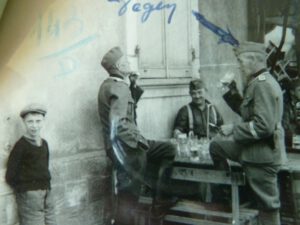
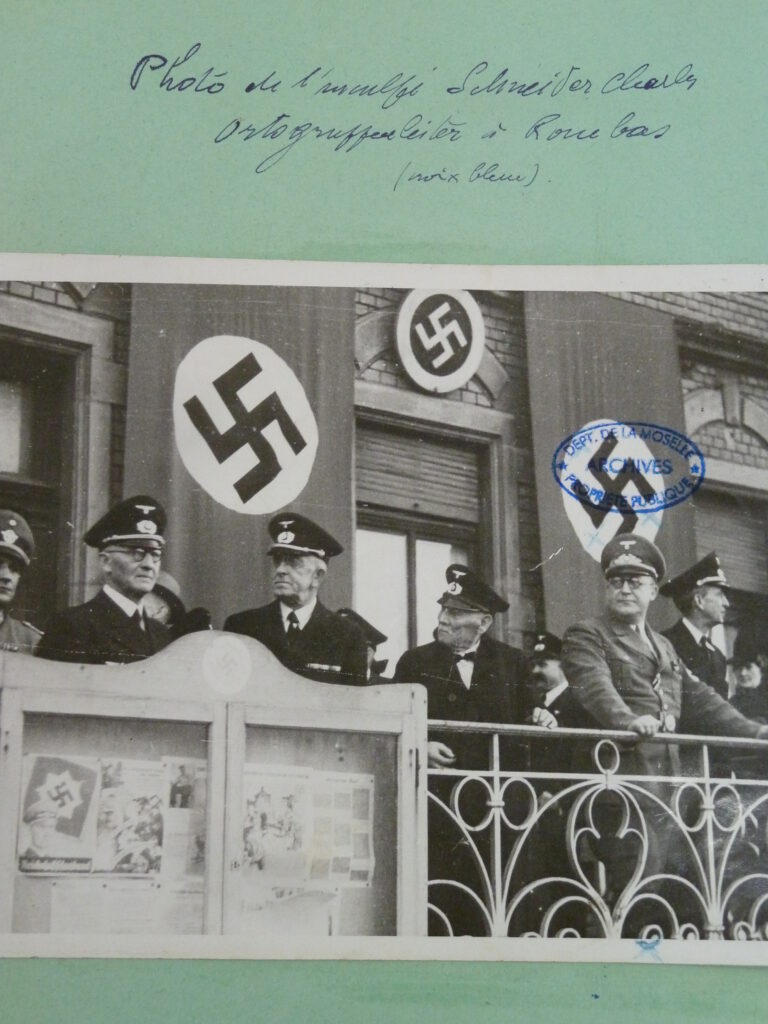
In this file, I found photographs of SS men in uniform and leather boots. The investigators identified the SS man in this photograph as Hans Degen, the head of the factory police at the Rombacher Hütte, and wrote his name by hand in blue ink on the photograph, adding an arrow pointing to him. As I later learned, he was a regular at the Müllerhaus.
Source: Dépôt central des archives de la justice militaire (DCAJM) in Le Blanc, Indre, France https://lannuaire.service-public.gouv.fr/gouvernement/9bdb4a96-76ac-4050-b044-a39f015fa9ce
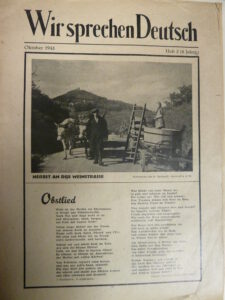
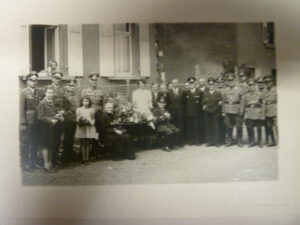
An archival discovery is always a piece of evidence that frees you from the burden of not knowing. And you can learn in this case how propaganda works:
Foto left: Germanization in eastern France— foto right: in 1943 near St. Privat—“Honoring the last comrade-in-arms from 1870.” third from the right: Charles Schneider / Source: Musée de la Mémoire de la Moselle 1939–1945 – ASCOMEMO http://ascomemo.chez.com/
Photo on the right: “Photo of the defendant, Charles Schneider, Ortsgruppenleiter in Rombas”. The blue archive stamp identifies the person named Schneider in the photo. Source: The Moselle Departmental Archives – https://www.archives57.com/
The Tenacious Struggle Over Form –
The process of coming to terms with and representing history in societies is a tenacious struggle over the form of that representation. The Israeli historian Saul Friedländer made the following observation regarding the question of objective versus subjective perspectives in the debate among German historians in the 1980s:
“Historians are critical of Jewish historians who lived through the Shoah. In the Historians’ Dispute, they said: but how can they be objective when they are victims themselves? I wrote to the German historian Martin Broszat, who has written outstanding works on the Nazis. Broszat was someone who always kept the fact that he was in the Hitler Youth to himself. But he was also a party member in his final year. Well, he was a young man. But you could sense that about him, especially in the 1980s—that is, during the Kohl era in Germany when nationalist sentiments were on the rise and German reunification was taking place. That was also precisely the time of the “historians’ dispute,” a debate among German historians about the singularity of the Shoah. They wanted to say that the victims, in a certain sense, were not capable of writing their own history. (laughs) They wouldn’t see that … I said … … … … I replied to him in my letter as follows: don’t you think, Martin Broszat, regarding your statement that we, the victims, we, the Jews … uh … that we are incapable of seeing, that is, of perceiving things in an objective context, because we are too burdened by the past. We are entirely… uh… uh… subjective in what we perceive and in what we write. And don’t you think that someone like you, who was in the Hitler Youth, also has to grapple with his own subjectivity? ”
Interview with Saul Friedländer; historian; Jusqu’au dernier: https://www.youtube.com/watch?v=OKbcYKYYMXc
For his epic story telling of the history of the Shoah—the persecution and extermination of the Jews during the Nazi regime in Europe—Saul Friedländer was awarded the Peace Prize of the German Book Trade in 2007
Interviewing and Self-Reflection – The Life History Interview –
The life history interview is the very heart of research. Through historical reflection and dialogue with the interviewee, one develops one’s own moral compass. It is not age that distinguishes us from one another; it is the life of the other that we must recognize and acknowledge, that we must respect. We then also hear and see what, though unspoken and unseen, nevertheless finds expression. The life history interview is of central importance for deciphering a family history.

The narrator places the families and events within their historical and social context with precision. The narrative is not merely information; it is the evaluation, judgment, criticism, and feelings of a family member who continues to feel part of the group and remains committed to it even after everyone else has passed away or is no longer with us. You always remain a part of your family and the specific local culture you come from, and how you see yourself within it.
Foto: N. always asked questions.
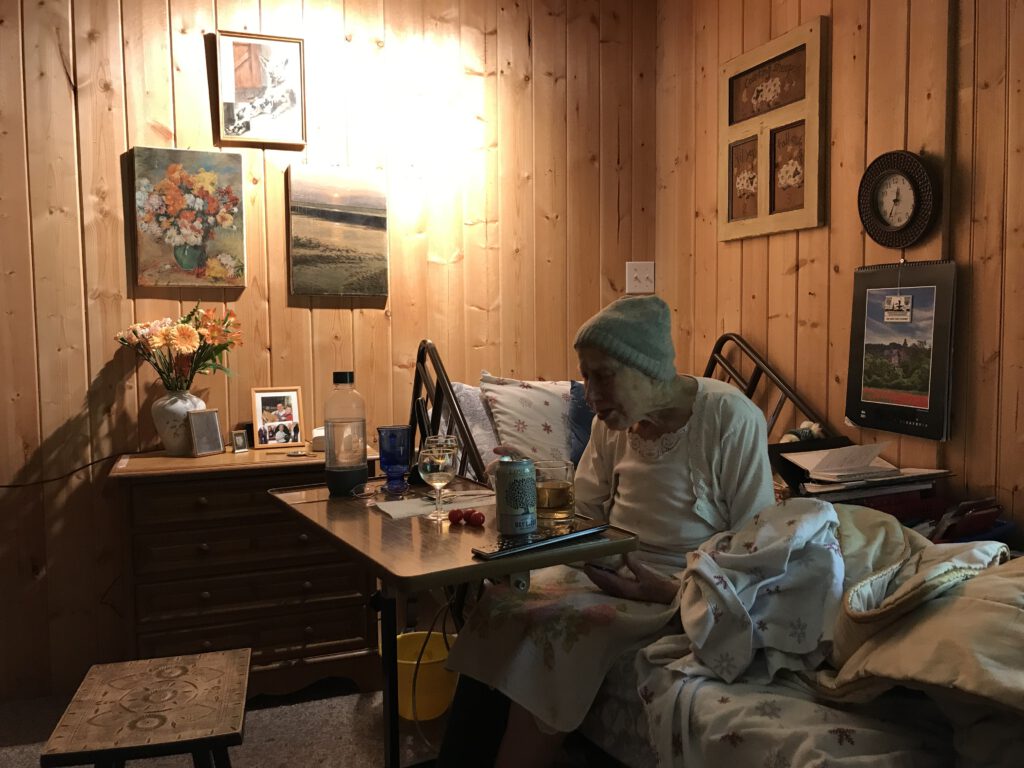
We’re just hanging out together. Stories often come out spontaneously, like a flash of inspiration or a rush of emotion. You always have to have a pen and a notepad ready to jot down those snippets of sentences. But it can also be the other way around. Nothing comes at all. You have to develop a method that gives people space to tell their stories. You live with the people, work with them in the kitchen or in the garden.
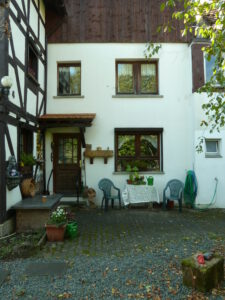
Sometimes I would just sit in the kitchen. I’d then casually ask a question. While standing or walking by, people would offer half-sentences and snippets, which I’d jot down exactly as they were, and at some point I’d pick up on those snippets again. That’s how a conversation would develop, along with a sense of calm in our exchange about a difficult matter—as it turned out later. The family had been both German and French for generations. It was never clear who in their family had done what. Everyone in the family had a different version of the story. J. was torn.
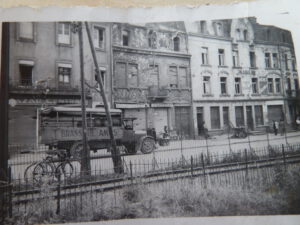
a french town in East France – Rombas
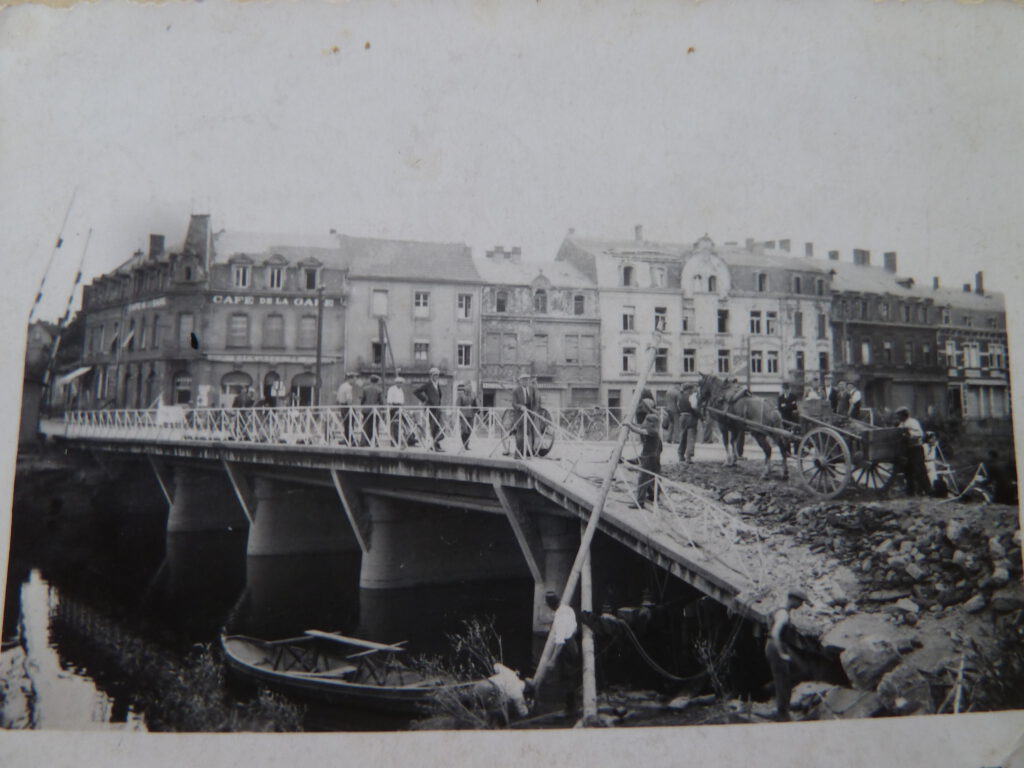
Photo on the right: a destroyed bridge in the town of Rombas. On the back, written in German in Sütterlin script with a pencil, is the note: “A monument to France.” Further down, written in German and Latin script with a ballpoint pen, is the date: “June 20, 1940.”
Who destroyed the bridge? Was it the German Wehrmacht when it occupied the French town of Rombas, or was it the French in an attempt to prevent the German invasion? Rumors continue to circulate within the family to this day.
The Meaning of the Photography – “We often forget, but memories are captured in these images.”
As we look at the old photographs, memories come flooding back. Through her narration, the storyteller spontaneously conveys a feeling. I listen to her and absorb the story through the emotion she shares.
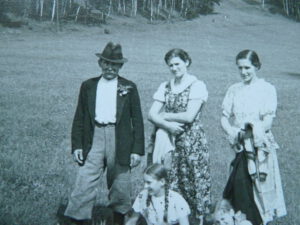
Through the emotion of the person that is conveyed to me, I form a connection with the landscapes and the people she is talking about—people I do not know.
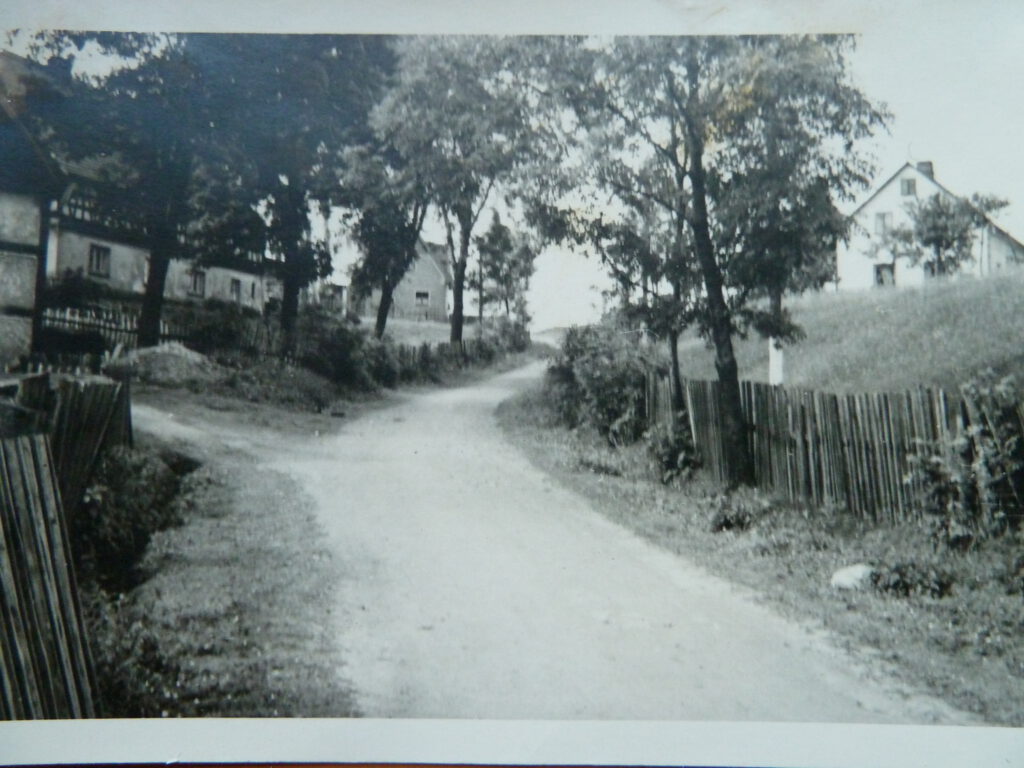
Learning to Read a Photograph –
Reconstructing family history requires self-control. I notice that I have a tendency to look for something in a photograph that isn’t actually depicted in it. I stare. What am I looking for? Am I longing for something? Am I conjuring it up this way? Am I missing something? Or is it the other way around: is something from the past imposing itself on my gaze? So is it staring out from within me and shaping my view of reality? Am I staring something away? Do events—which I don’t even know about—shape my perception of reality today? Does this force pushing outward from within distort my perception, just as a color filter does when I place it over a photograph?
You have to look at photographs again and again. If you come from a broken family, it’s possible that you won’t recognize the people in the photo, even though you know them. You’ve eliminated them from your own mind’s eye and become blind to reality depicted. So, by looking closely at a photograph, you learn something about your own perception, repression, or self-censorship. But you also learn, that J. never really explained this photo.
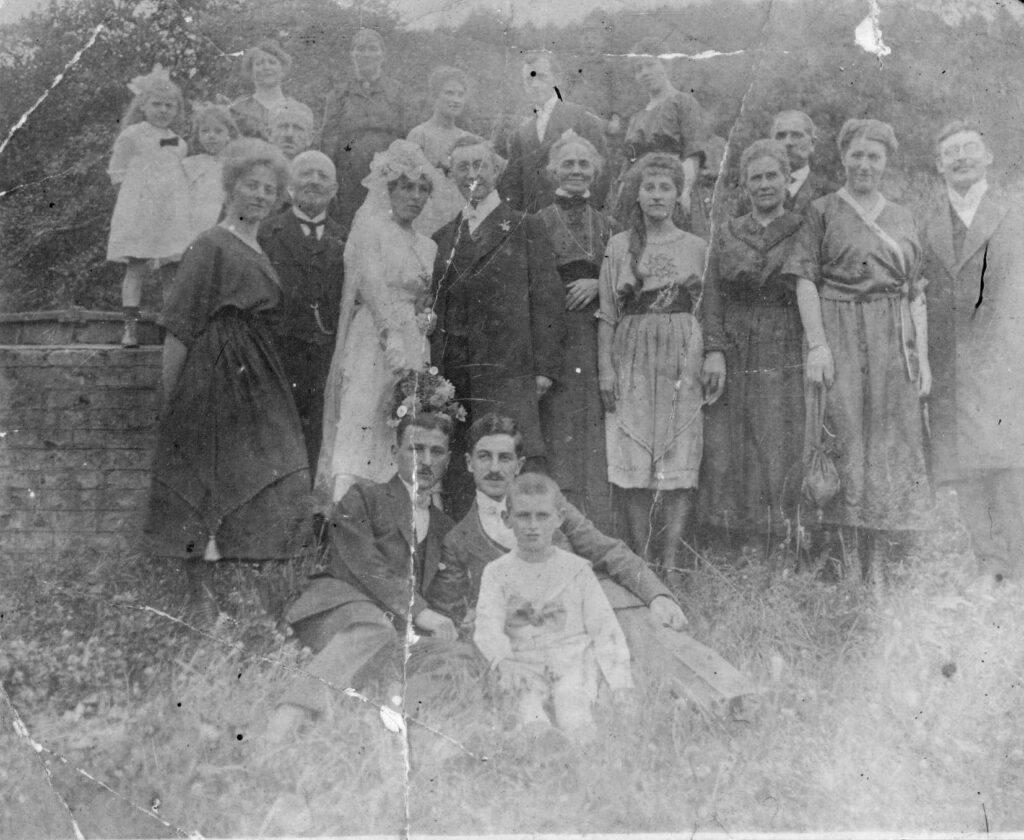
The Camera as an Observing Eye – Apperception
The camera is an important tool. She sharpens my focus. For example, I take pictures of passages of text, plants, the position of the sun, and animals. As I’ve looked at these photos, I’ve realized that my perception and focus when taking pictures are no accident. The photos show me that I’m looking for something specific, that something interests me in particular, or that I want to capture a feeling through photography. I want to capture a sense of the world—the relationship I establish with it, and how I have anchored myself in it, or wish to anchor myself in it. I connect a feeling within me, a historical insight, with the world outside. I capture this moment and thus snatch it away from its fleeting decay and disappearance. I realize that I am questioning the principles that govern our societies: I find myself thinking the following:
The dignity of human beings, the dignity of animals, plants, water, the sky, air, light, insects, bees, and bumblebees must not be violated. It is November 2, 2017. My most faithful companion at the moment is a fly seeking to spend the winter in the kitchen. It has clung to the cool glas and remains still.

Reconstructing a Family History Through a Photo Album
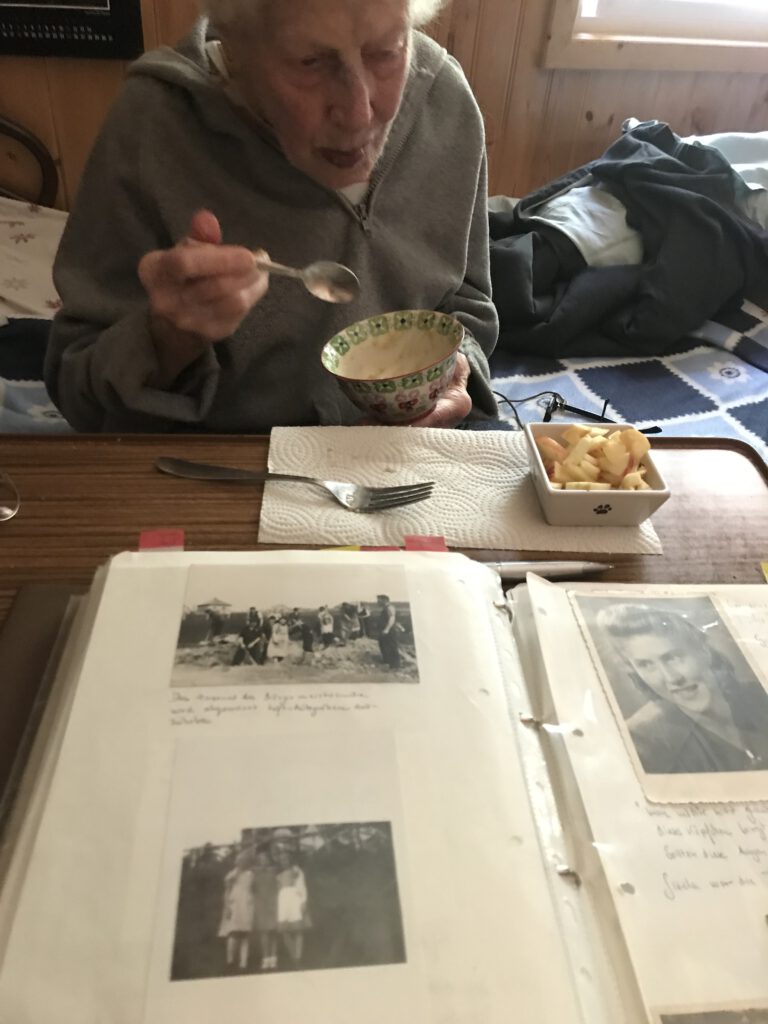
You create a photo album by placing photographs—such as those you pay no attention to at all, or those you look at repeatedly and that capture your attention—on a sheet of paper and in a ring binder, without any temporal or historical context. And now you show the photographs to others. Now the observation of the story begins under a microscope. You note down the first sentence that comes to mind. The reconstruction begins. You can make photo collages by combining the photographs in the way the viewer happens to recall them.
You now enter the microcosm and capture its microstructure. And so you make your way through the reconstruction of the family history. In the microstructure of our everyday life, one recognizes patterns or deviations from social norms. The weddings, the children, the illnesses, the birth, the death, the major and everyday events, the lunch table, the garden, the houses, the professions, the friends, the father, the mother, the brother, the sister, the forest, the landscapes, the food, the light, the entire scent of a life reveals itself in the microstructure.
A person’s social bond and the language in which they express themselves form the core of their identity; parameters such as nationality, gender, age, or even social class are only secondary determinants.
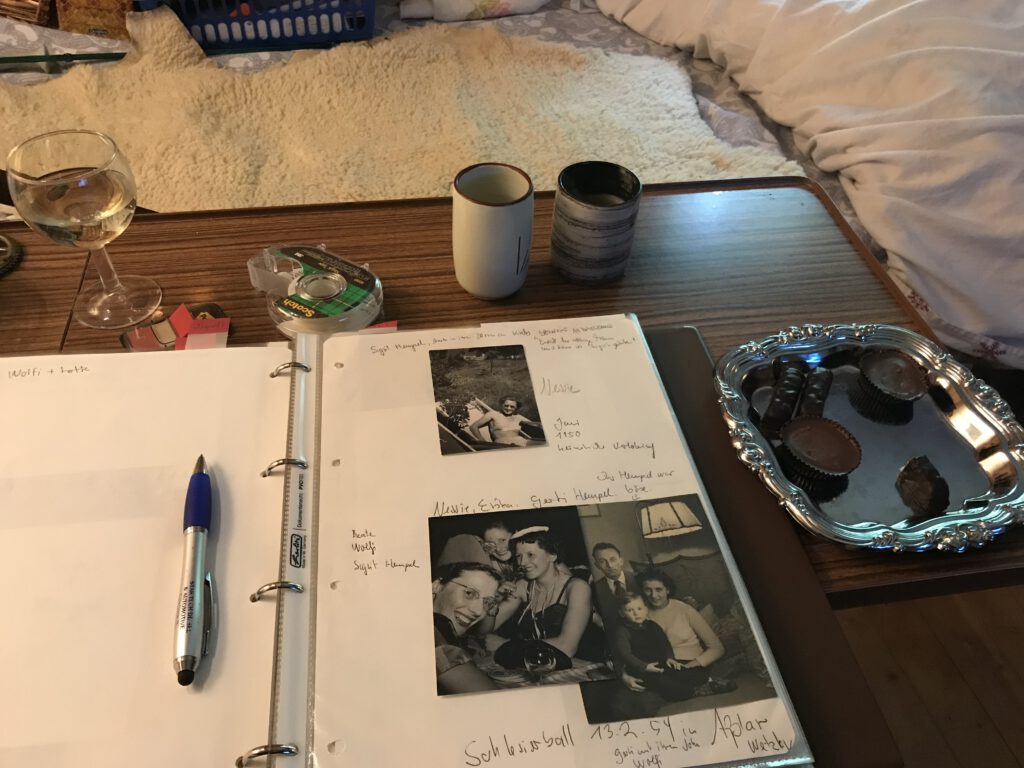
The Hub of Storytelling
When talking with family members, friends, or neighbors, you can now look at the photos and jot down a few sentences—for example, about a landscape or a meal …
as we view them together, and these sentences mark the beginning of a story. They capture the most vivid expression of memory. The photo book becomes the hub of storytelling.
I always loved these moments the most during this demanding work. You can make yourselves comfortable together, eat together, and chat at your leisure.
The Little Things
Emotions are preserved and set aside not only in language but also in the little things we surround ourselves with. Something that seems to have been casually set aside can be an object that holds emotions and memories of the utmost importance. It is a container of emotions. You can find them everywhere in the house. They lie on shelves, hang from doorknobs, and are hidden in pantries.
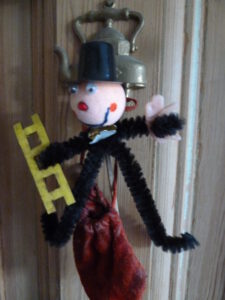
When reconstructing a family history, you have to take the time to look at the things inside the houses. You have to take an interest in them. These little things remain behind when we leave. They can outlast us.
You must learn to decode the hidden transcript.
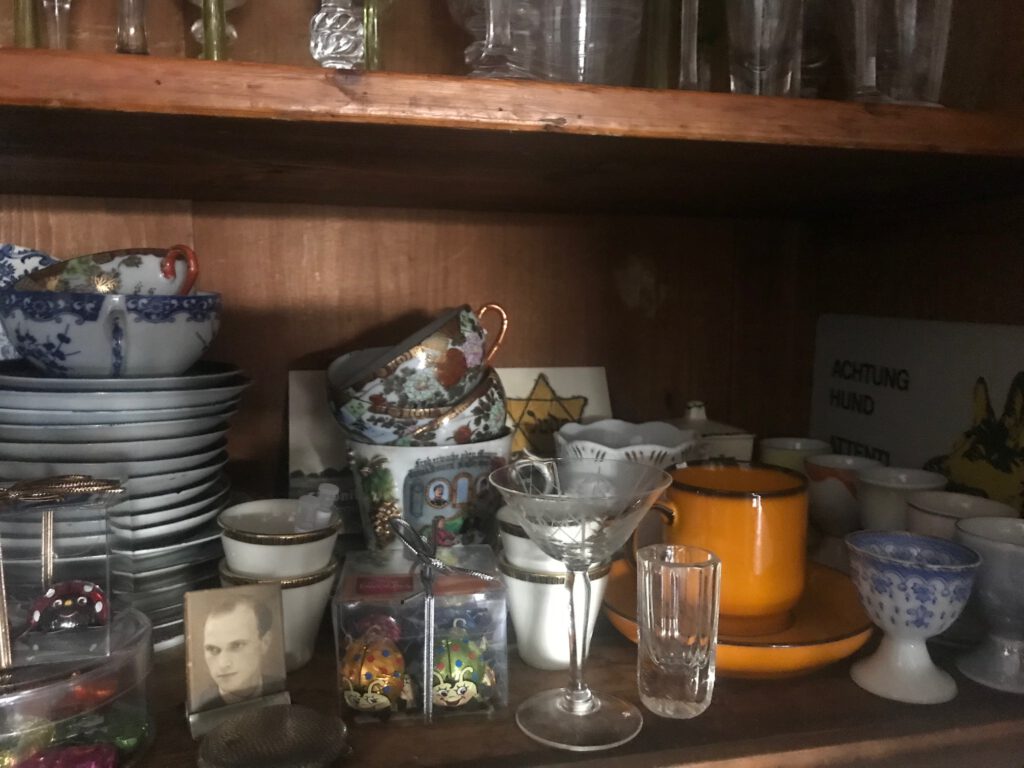
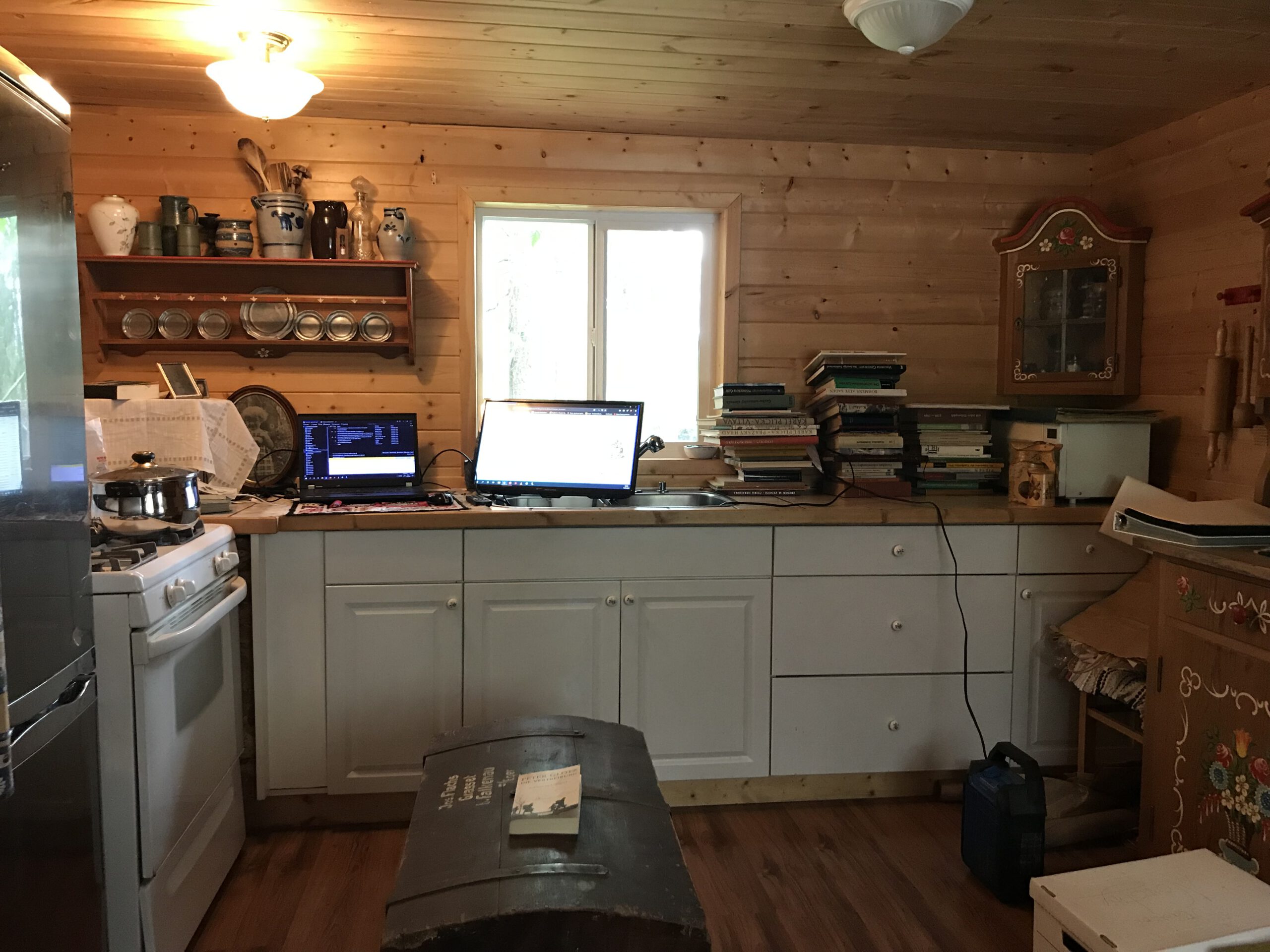
Examples – A bohemian parlor in North America
Documented examples from private estates, archives, and oral histories:
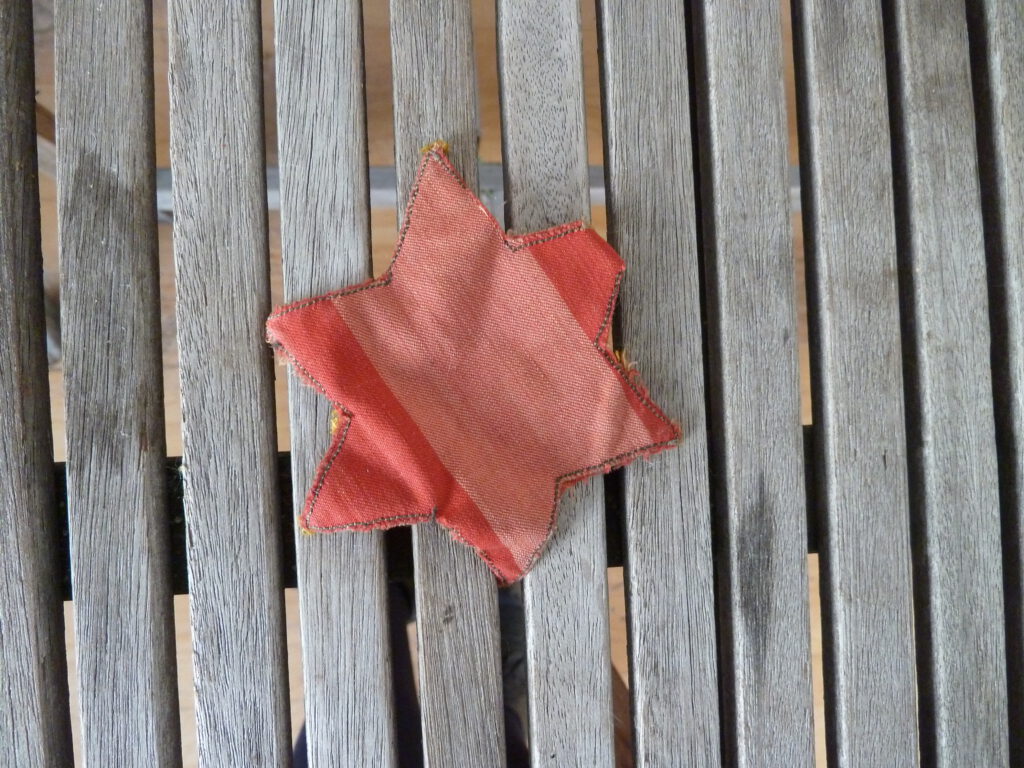
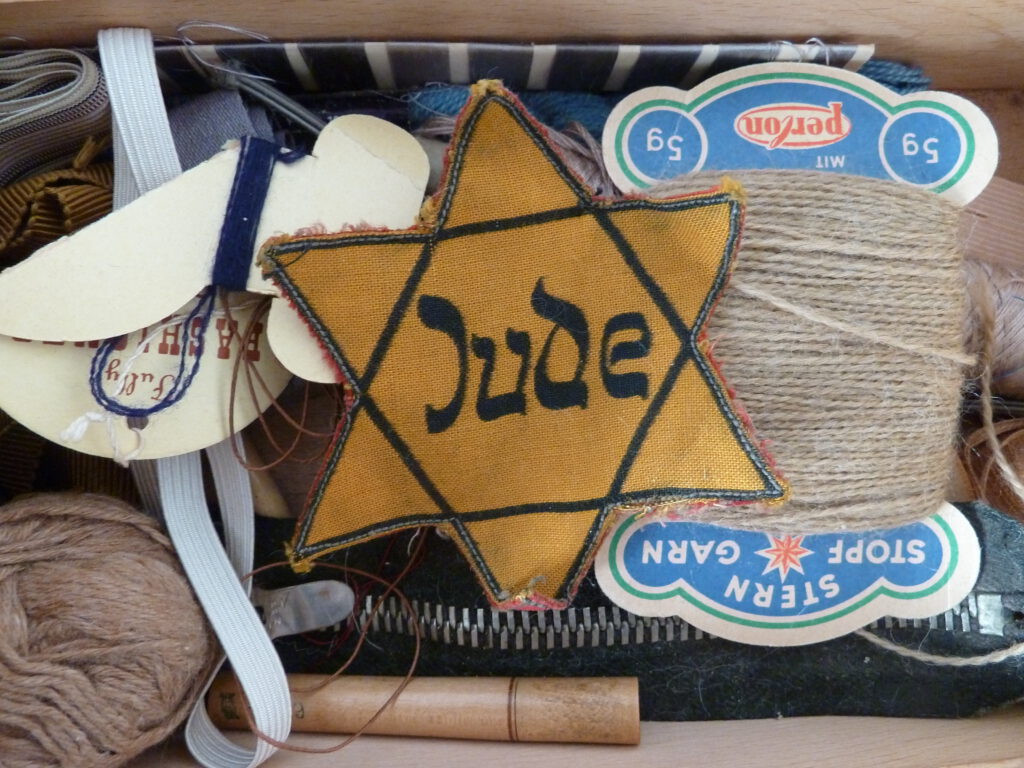
Everyday Life Under the Regime of Extermination – Eyewitness Accounts – The photograph shows the chance discovery of a “Jewish star” in a sewing box in Berlin in 2008. The people who were supposed to wear it took it off and survived in hiding in Berlin, living in illegality.
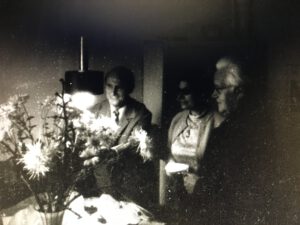
Foto: West Berlin/Zehlendorf, 1980s—Holocaust survivors Ilse Rewald and Eppi Chotzen with their friend, the composer and musician Hanning Schröder at the Rewalds’ home on Quermatenweg. Countless hours were spent here sitting together and talking about what persecution means and how generous the hearts of so many friends were who hid the persecuted in their homes.
Barbara Schieb: Between Legal Death and Illegal Life: Ilse and Werner Rewald in the Berlin Underground, An Annotated Biographical Account, in: Publications of the German Resistance Memorial Center (Vol. 12), Berlin 2022
I was born in the Gulag –
“My father comes from the German-speaking minority in Czechoslovakia (CSSR). My paternal great-grandparents were of Hungarian descent. The Z’s had been watchmakers since the 14th or 15th century. On my mother’s side, my family descends from the German Swabians of the 16th century and were Volga Germans. Virtually no one from my family is left. I am one of the few remaining.
“At the end of World War II in 1945, the Russians herded German prisoners of war through the streets. People stood on the sides of the roads watching to see what was going on. And it happened that German prisoners of war would jump out of the column into German houses or haylofts and disappear. But the Soviets had to keep the numbers right, so they’d grab just anyone to take their place, who then had to march along with them. And that’s how they grabbed my father. My parents met while doing forced labor. I was born in the Gulag. I can’t remember almost anything. It’s not just a faint memory. I simply had no idea where I was. It was all just unimaginable.
My mother is a Volga German from the village of Remmler. During the purges of 1937–38 in the Soviet Union under Stalin, she was deported along with other Volga Germans.
that longing …
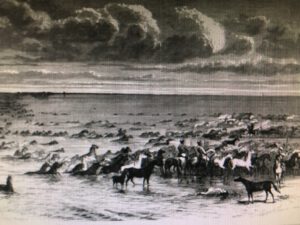
My mother always sang. She sang Russian songs all the time … everywhere … … that longing … … The children swam in the Volga with the horses! The people couldn’t swim, but the horses could. The children held on to the horses’ tails and went into the Volga with them.”
I conducted the interview in June 2026.
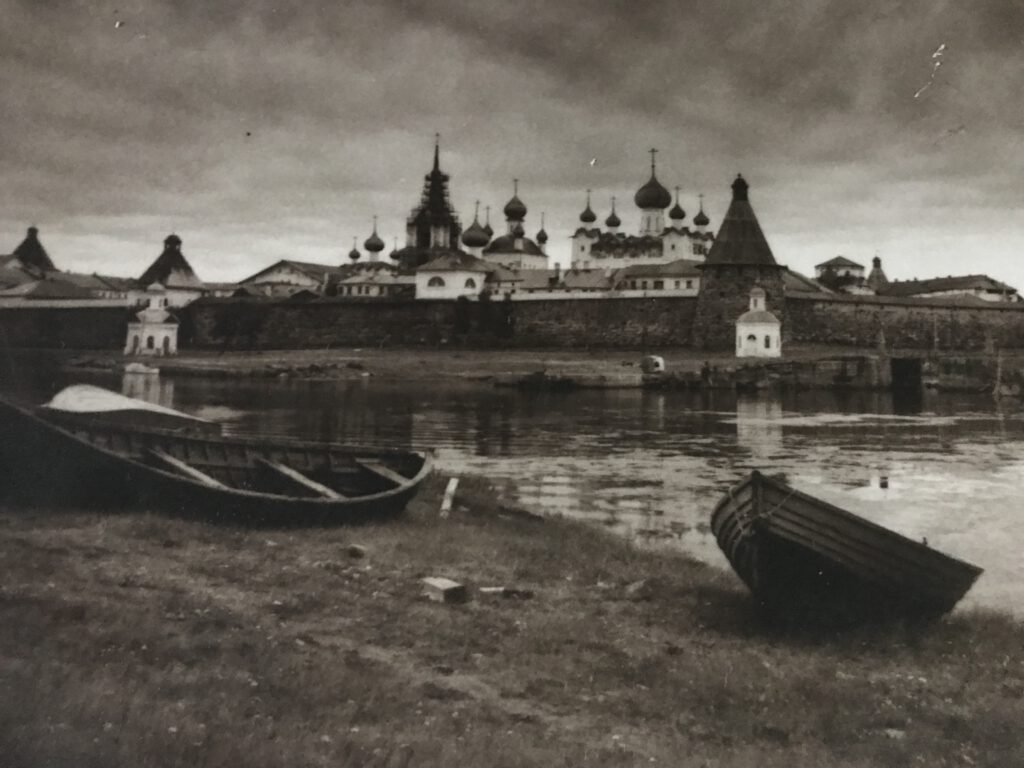
Foto: the Solovetsky Islands with the Monks’ Kremlin in 1995. The prototype of the Soviet penal camp system was established on the Solovetsky Islands in the White Sea in the year 1923
Memories of Bohemia in North America
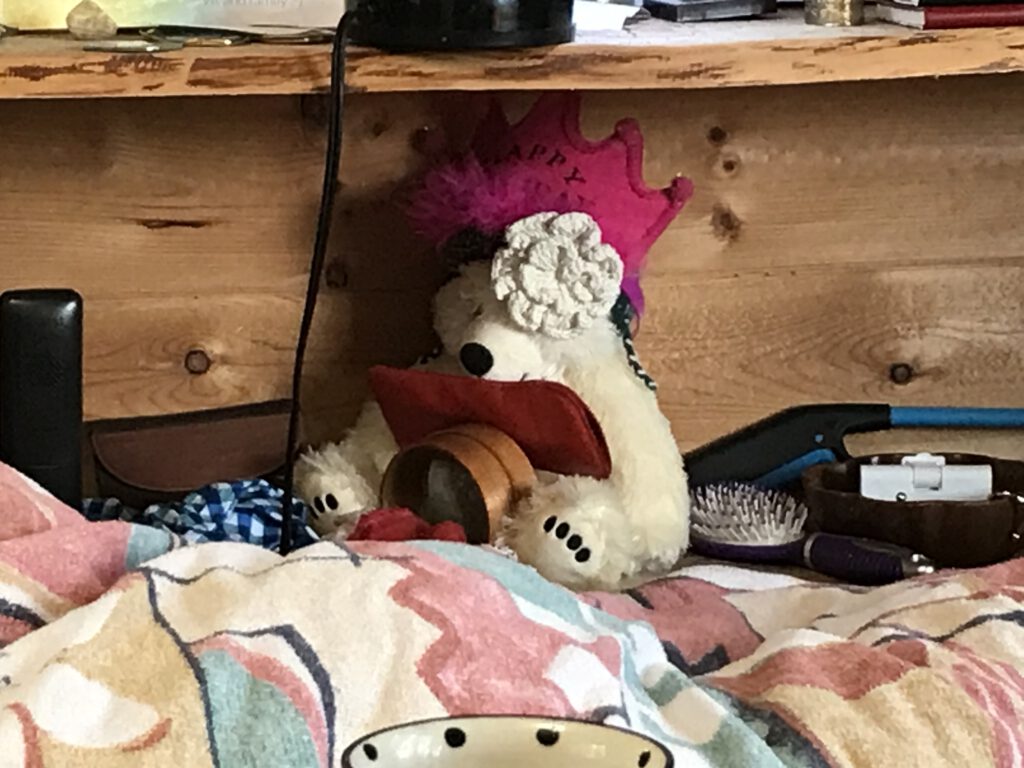
This little teddy bear, holding a pile of objects in its arms, symbolizes the loss of the many countries where N. one once felt at home—the loss of families and landscapes that she misses and whose memory she cherishes. That can be a painful burden.
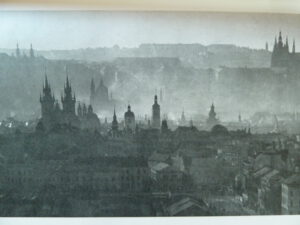
Prague
“Deep down in the Moldau the pebbles are shifting,
In Prague three dead emperors moulder away.
The top can’t stay top while the bottom is lifting.
The night has twelve hours and then comes the day.”
Berthold Brecht, 1944
In Zentraleurope, Nations and regions that lie between the great powers and are constantly in danger of being destroyed. The Czech writer Milan Kundera wrote in the year 1983: “What is Central Europe? The unstable zone of small nations between Russia and Germany. (..) But what is a small nation? I propose the following definition: A small nation is one whose existence can be called into question at any time, one that could disappear, and one that knows it. A Frenchman, a Russian, or an Englishman usually does not question the survival of his nation. Their national anthems sing only of grandeur and eternity. The Polish anthem, however, begins with the words: ‘Poland is not yet lost…’ Milan Kundera; The Stolen West: The Tragedy of Central Europe.
ethnic cleansing –
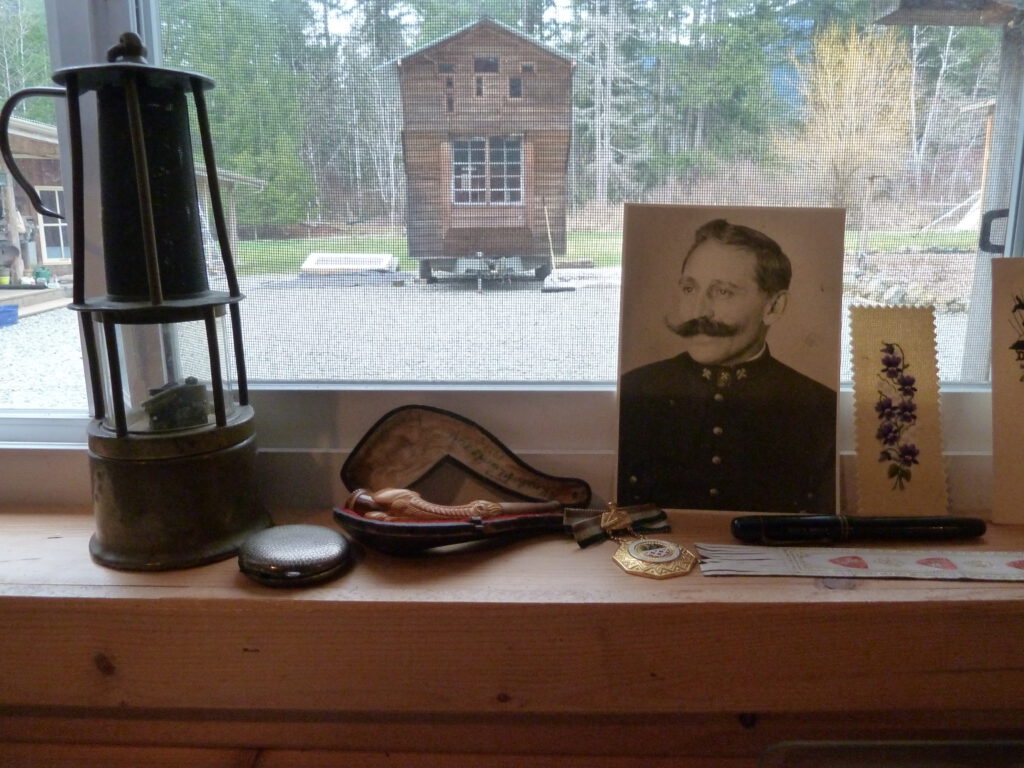
In North America: a portrait photograph of a Bohemian miner, alongside his original mining lamp and meerschaum pipe—objects that bear witness to life in Central Europe before the world wars and were brought along during emigration to North America in the 1990s.
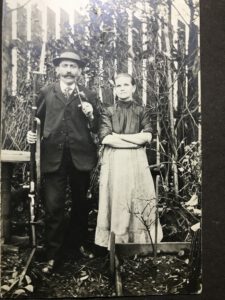
The German-speaking Bohemians were resettled in 1947 by a state decree of the then Czechoslovak Socialist Republic. (ethnic cleansing) The old miner died three days after his expulsion in a foreign land.
“Did you talk about your feelings at home?”
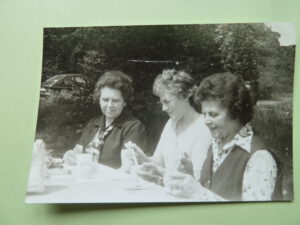
“Well, with my mother and my aunts…. Now I want to die again ….”
Exile – Structures of a Refugee’s Fate –
“We always set ourselves a goal and tried to achieve it together with others. Stability was not a category we considered.”
At nearly 98 years old, N. has a crystal-clear perception. Inner realities sometimes push themselves in front of outer realities. “You’re in Canada,” she told me recently, “but I’m all over the world.”
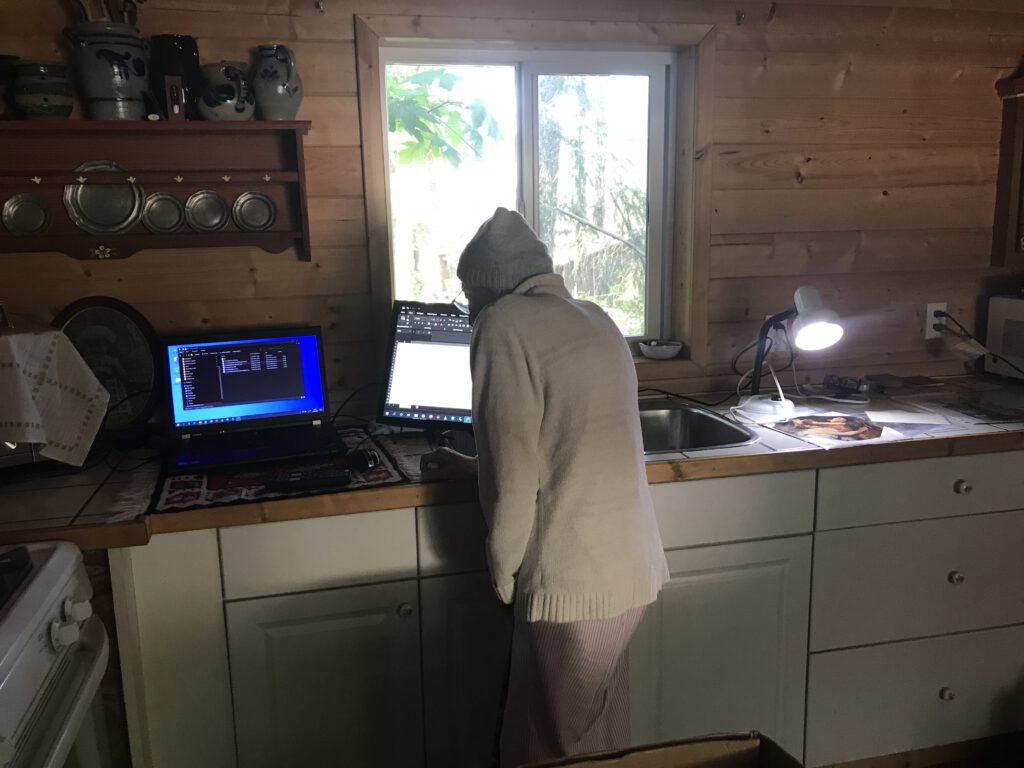
Being uprooted has turned her into someone who can live anywhere. But one can see from her meticulous collection and, above all, from the redundancy of things—the constant preservation of the moment through a camera always at the ready or a sharpened pencil used to jot down impressions and events—that N. and V. never let up throughout their lives in their attempt to hold things together, to capture and put in order what had once been thrown into great disorder. Things are supposed to turn out well and then stay that way. But N. knows that life is fragile and that nothing stays the same.
N. is in regular contact with her family in the afterlife.
There, the behavior of family members is subject to a collective judgment. “The people from Egerland are always complaining: What do you want? You’re almost a hundred now! “It doesn’t matter whether I turn a hundred or two hundred, as long as I’m doing well and I’m not doing anything bad to anyone,” N. replies to them. The realms of this world and the next are no longer clearly separated.
N’s playmates “the girls”
As N tells me: “The girls are up there, waiting for me to come sleep with them. The little angels come to get you. But they can just as well go back. I still want to see how the story unfolds.”
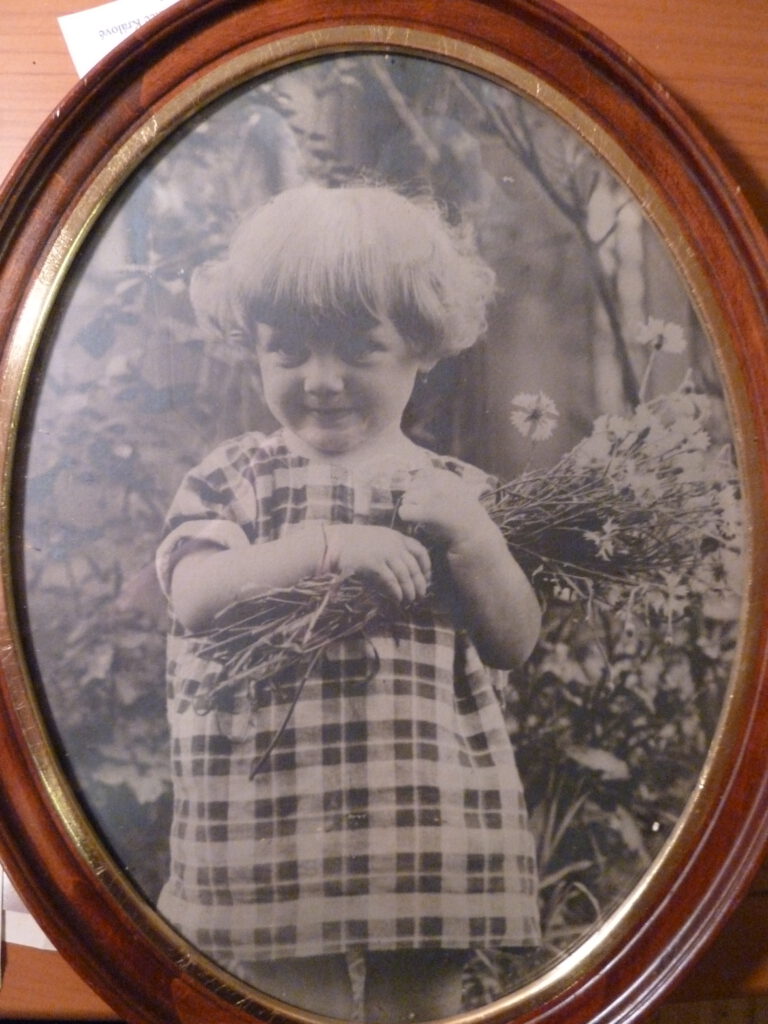
Photo on the right: N., the flower child in Bohemia
The Matriarch ensures the Life of the Family Members
This generous and cheerful matriarch, pictured here with her grandchildren, was named Elisabeth. The children adored her. Whenever a social issue arose, Elisabeth would resolve it discreetly and in a socially acceptable manner. And such a resolution could take many years.
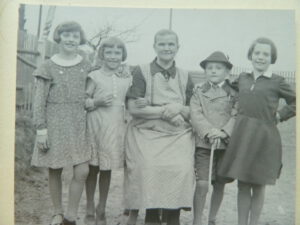
Elisabeth und her grandchildren in the happy years 1932
N., Annie, Erhard, and Gerdi – the playmates
The child who grew up under the protection of her grandmother’s generosity remained a guardian of the family for a century. She supported family members who needed protection and thus ensured successful survival of the family.
Photo on the right: the matriarch with N. and Gerdi
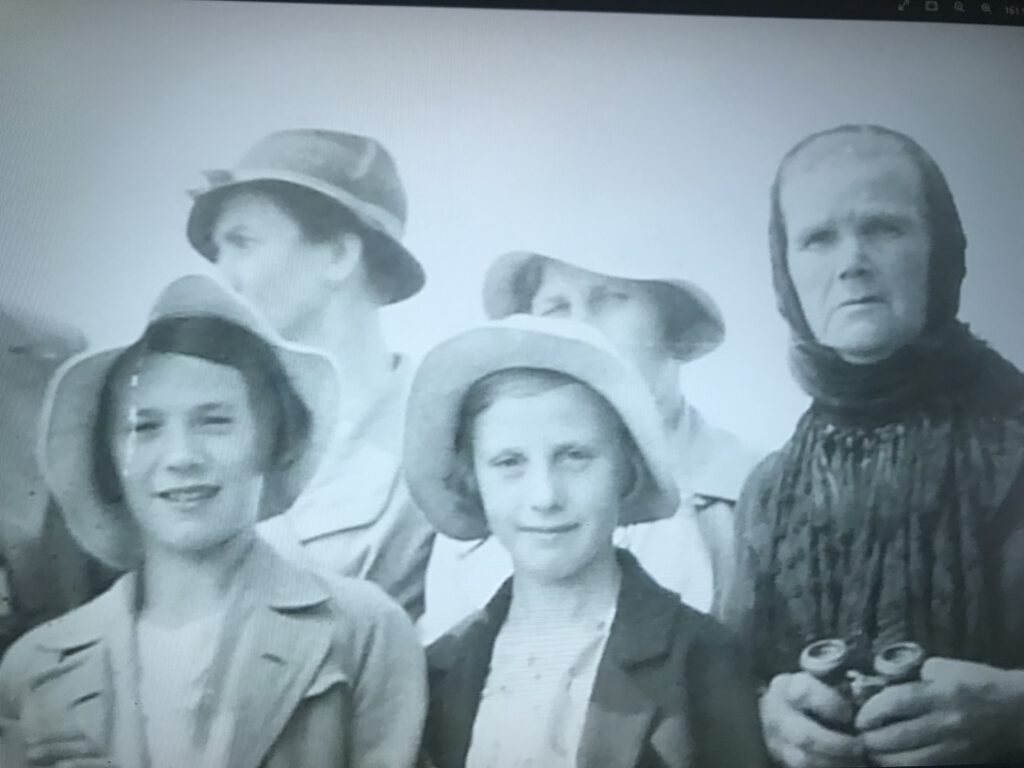
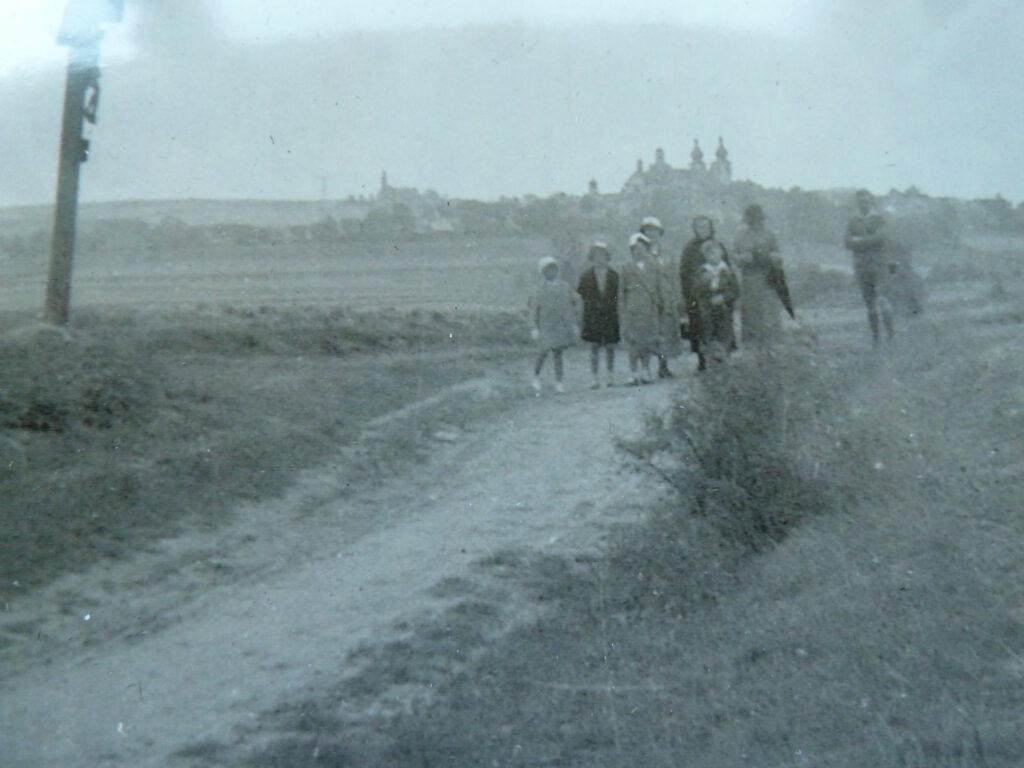
The easter walk – when I sit alone at my desk in the evening, I write down the conversation, taking in once again the people I’ve heard about or the landscape that was described. Everything I’ve experienced in my interactions with people takes up space within me. It’s now late in the evening, and I gaze at the glacier, which glows whitish in the twilight behind the scattered tall spruce trees in the distance.
And now I visualize something. I dream: this group of people, whom I am now looking at in the photograph, come to life before my eyes. A moving image emerges: Slightly torn by the still-cool Easter winds, I hear a girl’s bright laughter. I now sense it: this is a close-knit little family group that nothing can separate. The history of the war that followed has proven this fact to this day.
In the photo: Easter walk —in the background, the Maria Kulm pilgrimage in the 1930. N. wears a black coat and her hat.
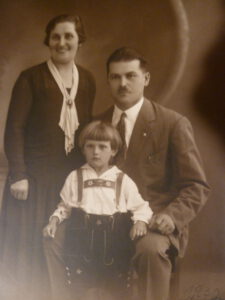
The boy did not survive, but 80 years after his death, N. never missed an opportunity to speak of her playmate as if he were still there. Once, when I was about to leave the room after a long day, she called out after me a sentence that should not be forgotten: “He was still so little!”—a phrase that sprang from the deepest recesses of her protective instinct for her younger playmate.
Erhard, the Bohemian war volunteer, lost his life at the age of 18 in December 1943 while en route to the Eastern Front during an Allied bombing raid at the Leipzig train station.
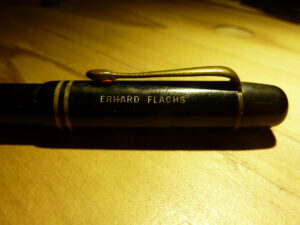
The talented young satirist’s writing instrument is said to have been covered in blood.
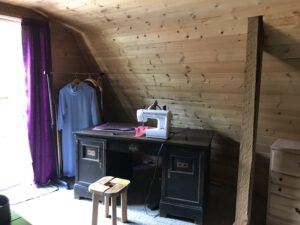
I found Erhard’s fountain pen in a drawer of the sewing cabinet. And then N. told me the story.
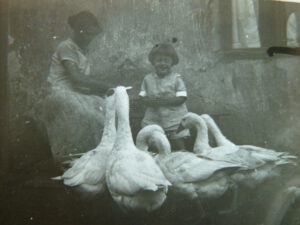
The parents had voluntarily embraced Adolf Hitler’s vision of a Greater Germany. Yet they were living in Bohemia, in Czechoslovakia. The cold chill from the children’s graves still haunts us to this day.
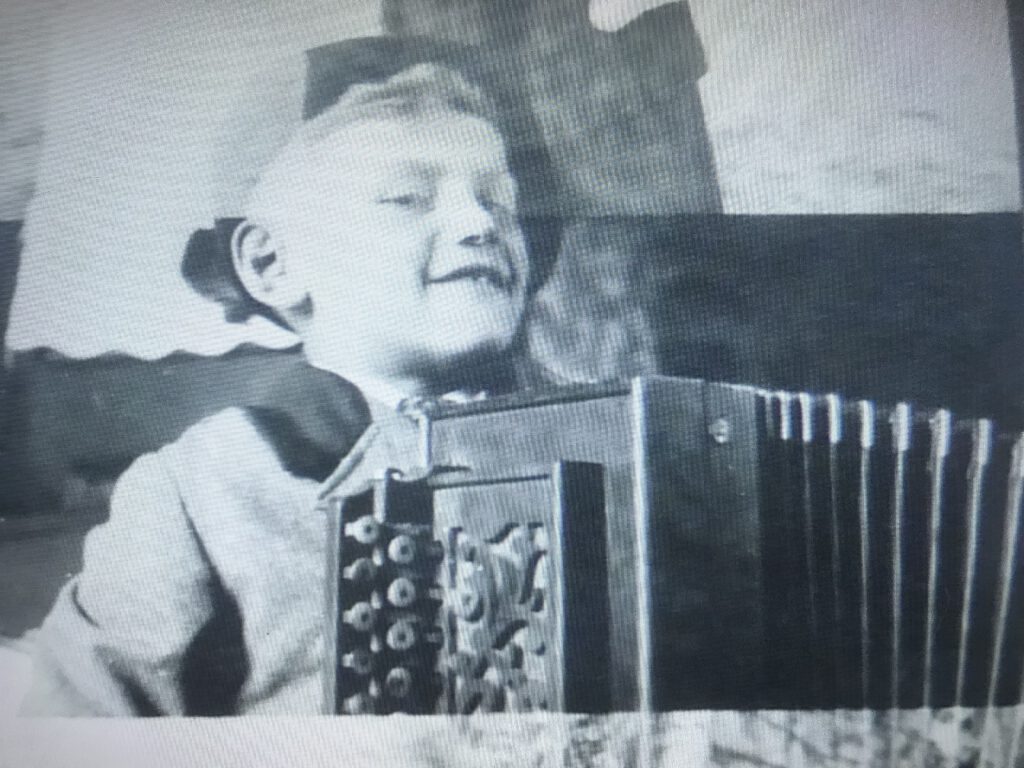
Uncle Rudolf’s sad eyes
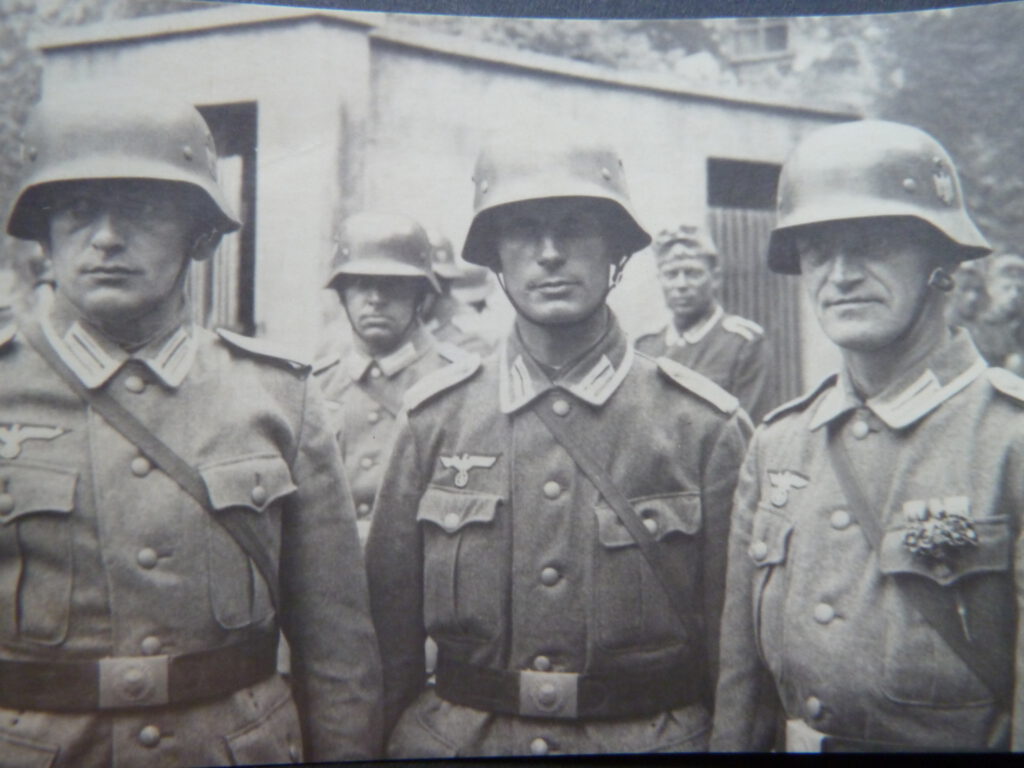
Our thoughts lingered on the photograph of the Wehrmacht soldiers. “Take good care of it!” N. said to me. “It’s the only photograph we have. And yet he was completely apolitical,” says N. “Karlsbad was world-famous, after all. Princes and emperors were there. Goethe was there. It was a whole different world.”
Under his steel helmet, Uncle Rudolf looks like all the other Wehrmacht soldiers. But if we look more closely, we can see his sad eyes. Uncle Rudolf was the head doorman at the Hotel Imperial in Karlsbad and had taught himself several languages to entertain his guests well.
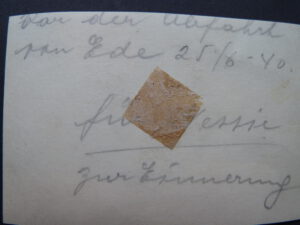
Back of the photograph a note of Uncle Rudolf for N.: “Before leaving Ede on 06/25-40, for N. as a memory” N. has written down all the addresses and personal details of her family members in her red notebook. And that’s where i also found a trace of Uncle Rudolf: Missing since October 10, 1944—Memel—Buckwa No. 54 / Haperspirk Parish Office, Vol. III, p. 134. No one should be left behind.
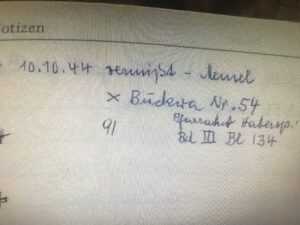
“I wonder if he killed himself?” N. asks, looking at me. Suicide among German Wehrmacht soldiers on the Eastern Front is a firmly established social taboo, but families do talk about it. After Boehmia, which belonged to Czechoslovakia, was annexed to the German Reich in 1938, Uncle Rudolf was drafted for service on the Eastern Front in June 1940 and never came back.
The Homecomer Josef K.
Josef K., a Bohemian chauffeur, was sentenced in 1946 by the so-called People’s Courts of Czechoslovakia to ten years of forced labor, which he was forced to serve in various prisons throughout Czechoslovakia (CSSR). He returned to his family in a strange city in 1956 and took his own life six months later.
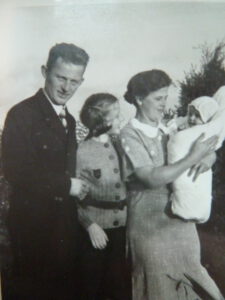
Family K. in the year 1936 in Bohemia/CSSR
“My father was… what’s the word?… ”
“Denounced?”
“Yes. Denounced.”
“A farmer claimed that in 1938, during the ‘Anschluss,’ when the shootings broke out in Haberspirk, Josef shot a Czech policeman. But that wasn’t true. My father had to pick me up from Karlovy Vary on his moped, which was available to him at the facility. Nothing was running because of the Anschluss and the shootings. My father wasn’t even in Haberspirk. So my mother went to the farmer and begged him on her knees to retract his statement, but he said he couldn’t take back what he had said. We had nothing to do with the politics of… Greater Germany. We weren’t interested in that at all.”
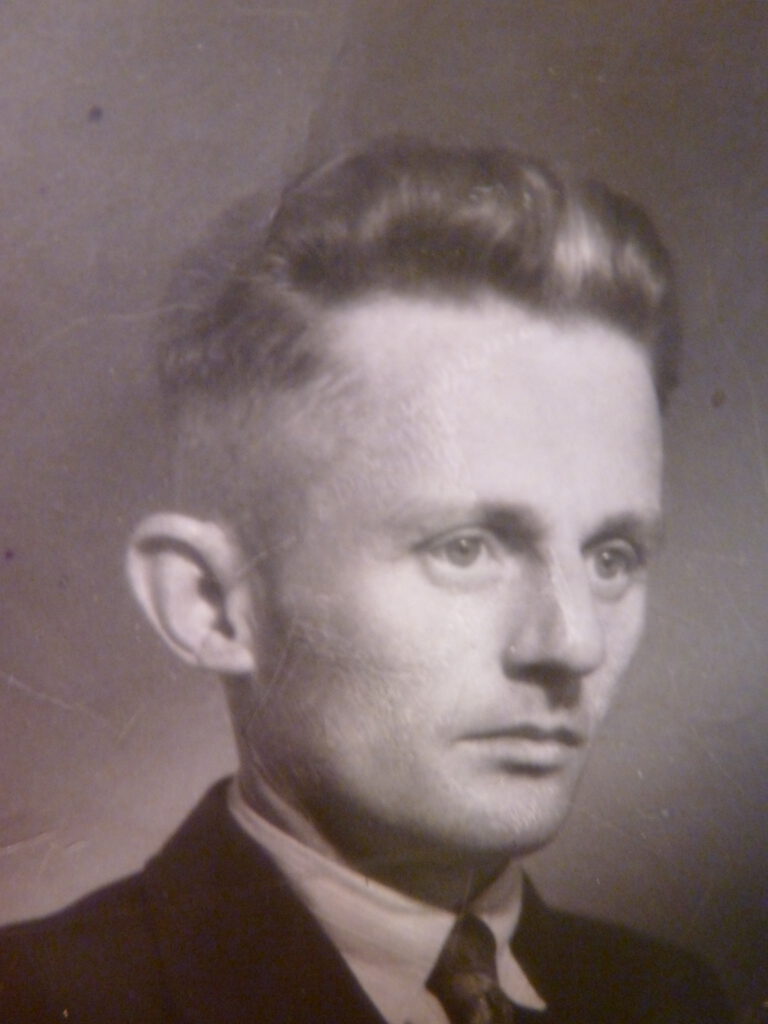
shifting borders and a Miner’s House –
In 1886, German miner Heinrich Müller and his wife Liesbeth emigrated from Hesse to the steel town of Rombas on the Moselle. They were strict, but honest and decent people. They built a two-story house in the town of Rombas, a French territory that had been annexed de facto and de jure by the German Empire in 1870–71. Under the Treaty of Versailles in 1919, the territory became part of France once again. The house was called the Mueller House.
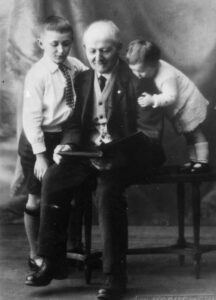
The now french Henri Mueller in the year 1933 with his french grandchildren
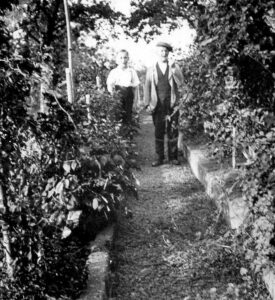
Henri Mueller, the elderly miner, with his grandson Renauld in the vegetable garden behind his house shortly before his death in 1938
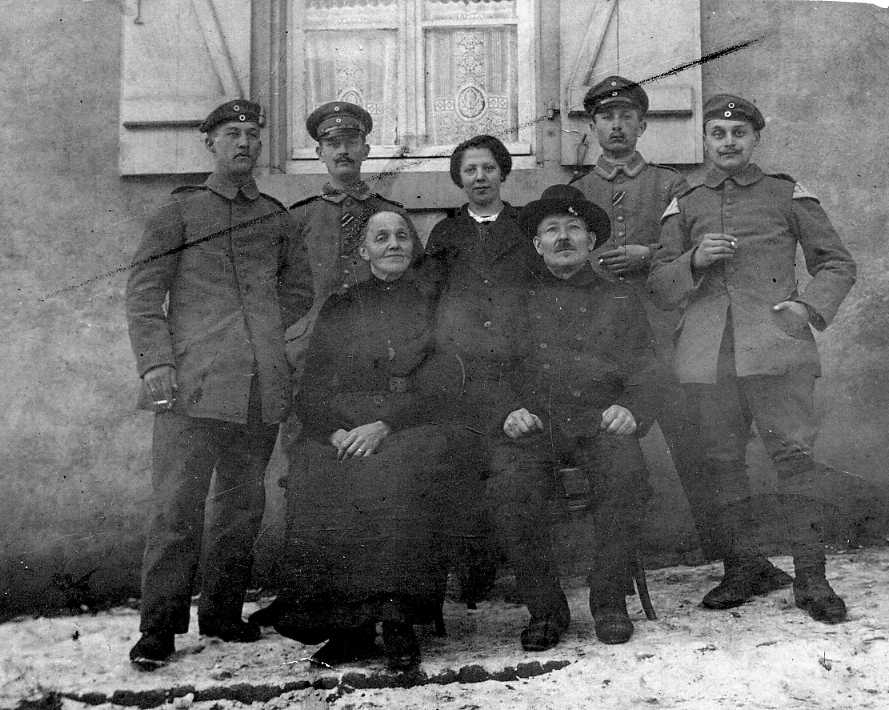
In the photo on the right: A group portrait in front of the Müller House—the Müllers and German recruits who were quartered there in 1915 during World War I. The Verdun front was not far away.
shifting of borders in the Muellerhouse – occupation by the german Wehrmacht
In 1919, the Treaty of Versailles formally ended World War I, and Alsace and Lorraine were reintegrated into French territory. B. Müller, daughter of Lisbeth and Henri Müller and a telephone operator by profession, married Charles Schneider in 1920. The entire family—whether French communists or Prussian militarists, unionists or nationalists—was still united at this wedding. Like B., Charles worked at the Rombacher Hütte and was an accountant by profession. B. and Charles were now naturalized French citizens and Schneider became the head of the household at the Muellerhouse.
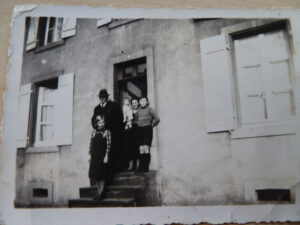
Auguste Wurtz, the brother-in-law—pictured here with B. and her children at the Mueller house – is a communist and supports the workers’ strikes at the steel mill. He served as the elected mayor of Rombas from April 1934 to May 1935.
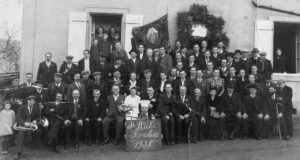
(Photo on the right) In November 1938, Schneider hosts the feast of St. Barbara, the patron saint of miners and steelworkers at the Mueller house.
But ever since a referendum successfully orchestrated by the NSDAP in 1935 in the neighboring German Saar region—a coal-mining area from which the steel mill sourced its coke—and the subsequent incorporation into Germany of that territory, which had been under an international mandate since the Treaty of Versailles, a new wind was blowing through the Müller household. Schneider turned his attention to a Germany that was becoming increasingly radical. He became a supporter of the German leader Adolf Hitler and the NSDAP.
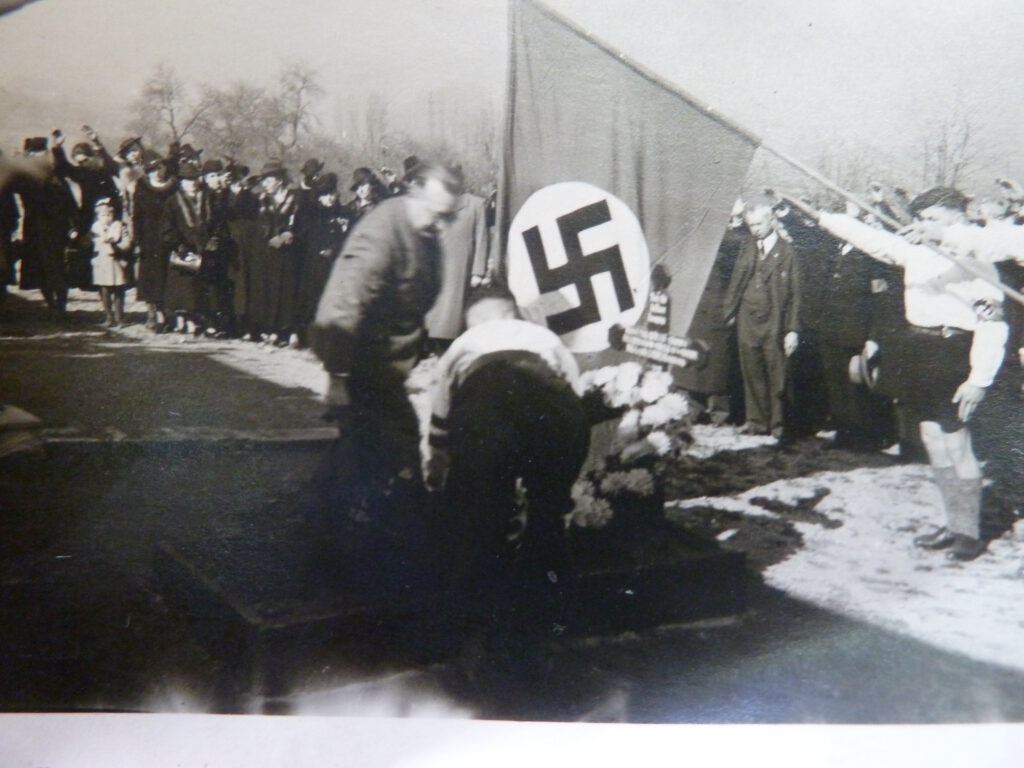
Foto on the right: on June 17, 1940, Schneider flies the swastika flag over the Mueller house. Two days later, the French town of Rombas is occupied by the German Wehrmacht. As a collaborator with the German occupiers, Schneider will betray his neighbors and colleagues to the Gestapo.
Auguste Wurtz joins the French Resistance. He becomes a member of the resistance group “Group Mario” and survives the Queuleu SS special camp in the city Metz as well as the German concentration camp.
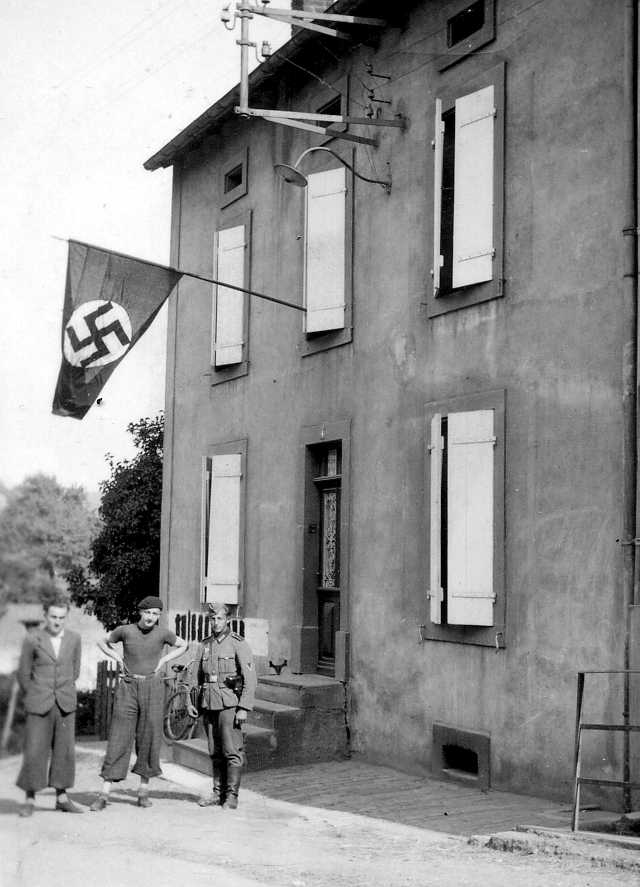
Zeitgeist and Milieu in the steelworkers city Rombas –
Born in 1960 in the Federal Republic of Germany, I think in terms of the categories that totalitarian systems gave rise to in the 20th century. When I observe family dynamics, I ask myself what background led people to act in certain ways. But then one quickly realizes that one is dealing with historical periods that lie much further back in time. And one realizes: it’s about mentalities, the spirit of the times, societies in transition—beyond or entangled with the politics of great powers—in which this region stood like no other in Western Europe. Europe’s fate was decided in France.
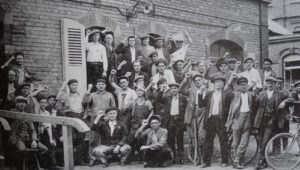
@J.J. Sitek – Rombas in May/June 1936 – Workers’ strike at Gate 2, Moulin Neuf, Rombas
In the 1930s, some 6,000 workers were employed at the Rombach Steelworks alone. With death always in their sights, the workers cherished the simple, good life. They looked out for one another. This was true for the miners in the tunnels, for the steelworkers at the blast furnaces, and it was true for the railroad workers on both sides of the Rhine.
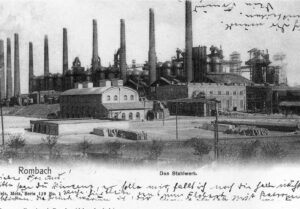
The Rombacher Steelworks / l’Usine Rombas—founded in 1888 by Carl Später—for iron ore extraction and processing. The pig iron, cast iron, and steel from the steelworks of Lorraine were exported all over the world by rail and ship. “Generally speaking, the factory workers were proud of their work, and despite the hard labor, they wouldn’t have traded their jobs—it was a different era; there was a sense of pride in belonging to a guild,” Jean Larché, a former steelworker, told me in 2019. In the 1990s, steel production ceased throughout the region.
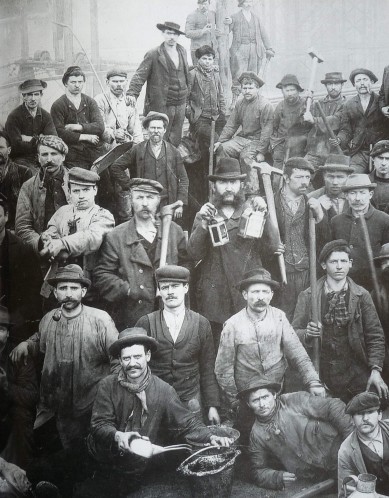
A cozy get-together in Gotha in 1941
The photo on the right shows a German family sympathetic to the Nazis enjoying a cozy get-together in 1941 in the city of Gotha, Thuringia.
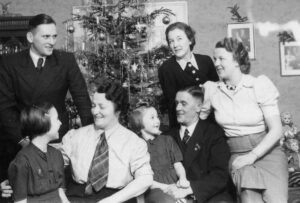
While outside, war, forced labor, deportation, and the extermination of people—often neighbors and family members—were the new norm in Nazi society, German living rooms are fed the illusion of a close-knit community in an ideal world. It was all staged.
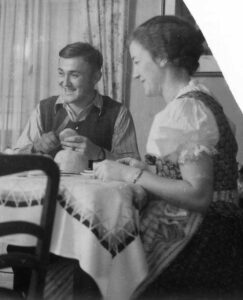
A German breakfast with soft-boiled eggs and fresh rolls while others go hungry. The Buchenwald concentration camp was established in 1937. The Nazi symbol shown in the photo was cut out after 1945.
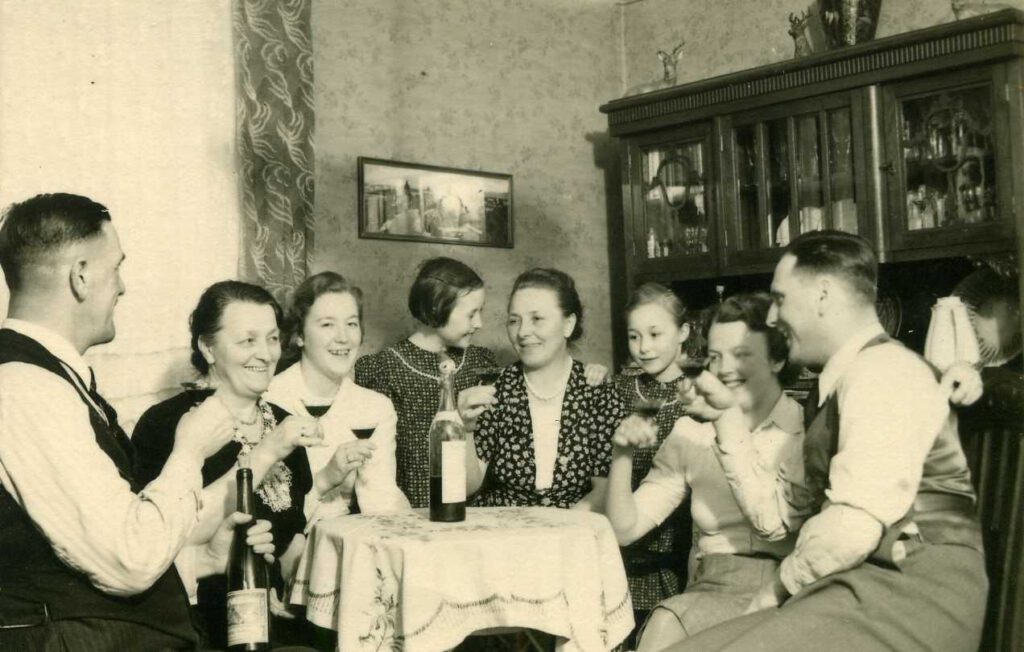
Cultural Genocide Practices in Western Europe
A closer look at a photo:
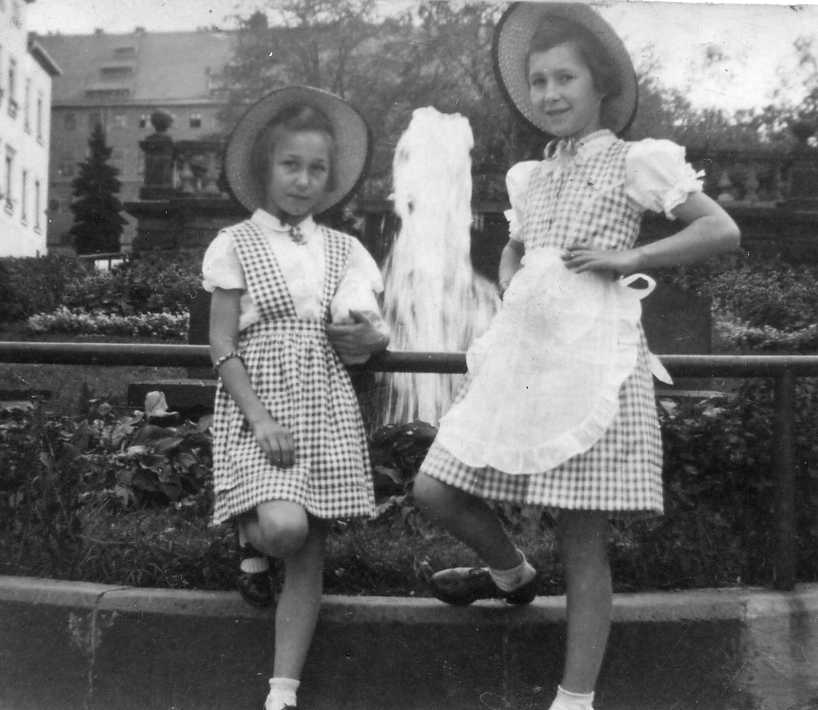
During the German occupation of eastern France’s steel-producing region in 1941, children were taken from their families to Germany under Hitler for “re-education” in the city of Gotha in Thuringia.
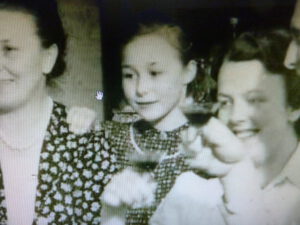
“We were supposed to stay for just one year,” J. told me, “but then we stayed for two years. I was only 8 years old. You don’t just give up your children! Why did they do that?” the elderly child recounts to me.
The abduction and deportation of children from one group to another, writes the lawyer and founder of the Genocide Convention, Rafael Lemkin, is a technique of genocide.
„This type of genocidal practise appeared to be one of the cruelest. It tended to interrupt the cultural continuity of a group. It destroyed the spirit, while it kept the body alive.“ Rafael Lemkin – The founder of the Genocide Convention in his autobiography, *Totally Unofficial*.
Photo on the right: If you look more closely, you can see the dark circles under the children’s eyes and their sad expressions as they force a smile in the photographs taken in Gotha in 1941–1942. They were wearing starched white blouses under plaid dresses, straw hats tied under the chin with ribbons, and black patent leather shoes. The Ohrdruf concentration camp was only 20 km away.
So the Russians just shot him – brainwashing
I’m looking at a photograph. In a forest clearing, you can see two middle-aged men dressed in suits. They’re smoking. One leans toward the other and lights his cigarette. As he does so, we see the back of his shaved head. He is a German employee of the Totenkopf Waffen-SS at the Dachau concentration camp.
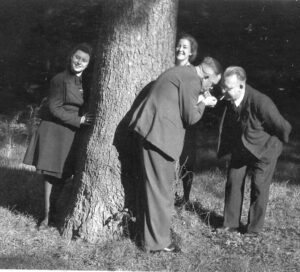
Two younger women peek out from to the right and left of the tree trunk and smile stiffly at the camera. Everyone is dressed in black. If J. hadn’t pointed it out to me, I wouldn’t have realized that this photo shows a family gathered to mourn the death of family member, who died on the Eastern Front.
I ask J.: Do you know how he died? J. replies: “Yeah, sure! Two comrades who fought alongside him visited us later and brought us Reinhold’s diary. They’d been more careful than Reinhold. They said that Reinhold stuck his head out from behind cover, looking back and forth, back and forth. That’s when the Russians just shot him down. “
This sentence is a distortion of reality. While he’s reporting seemingly, he’s obscuring a complex emotion.
According to J., his father had an obituary printed with the words “In deep sorrow and proud mourning.” Suddenly, as she was telling the story, J. flared up briefly with a sense of rage: “In proud mourning!? What an idiot! Look at what they did in Russia! You can read about it in Reinholds diary. They stole food from Russian families at gunpoint. And other things too. How can anyone live with that kind of guilt?”
Silence
“Reinhold was a truly wonderful man.”
Silence.
Twelve hours later, again at midnight under the halo of light at the table in the kitchen, otherwise shrouded in darkness, she said slowly and quietly:
“Reinhold really wanted to join the SS Leibstandarte ‘Adolf Hitler,’ but ended up in the SS Standarte ‘Großdeutschland.’ In his room, he had written in large, arched letters by hand: “My honor is loyalty,” and then he had drawn the SS runes next to it.”
Silence.
It is perhaps only thanks to the quiet hour of the night and both of our patience and effort that J. told me this. Rombach was now palpable. The Müller house on the hill by the Guissebonne. The brother’s room next to that of the two sisters. The little girl peering into the room of her big brother, whom she loved so dearly. On the second floor of the miner’s house. Silence in the house. It was quiet in the kitchen after midnight. J. returned home that night to her brother.
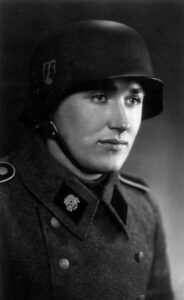
The Frenchman Renauld — germanized and brainwashed by his father and having voluntarily joined the SS-Totenkopf / June 22, 1941, deployed to the Eastern Front and died in Kharkiv in July 1943 under unclear circumstances at the age of 21. (Suicide not ruled out)
Foto on the right. the name Reinhold, was the germanized version of his true french name Renauld. Renauld loved his sisters from the bottom of his heard and so did they.
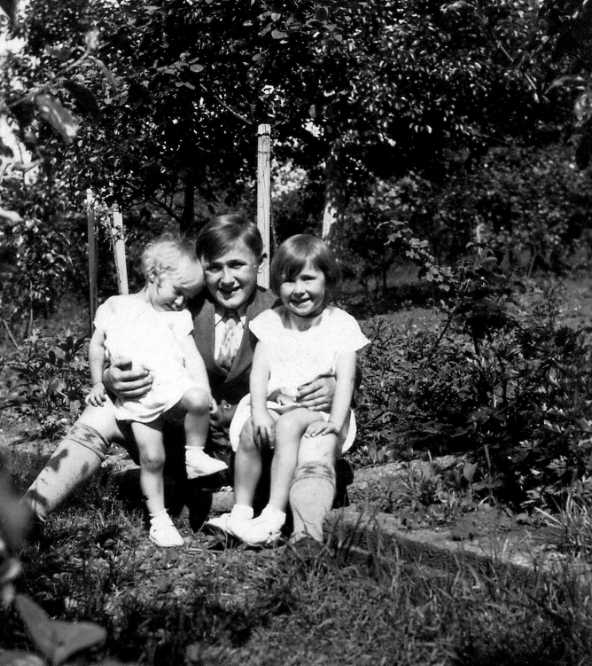
The perpetrator is always at the center of the family –
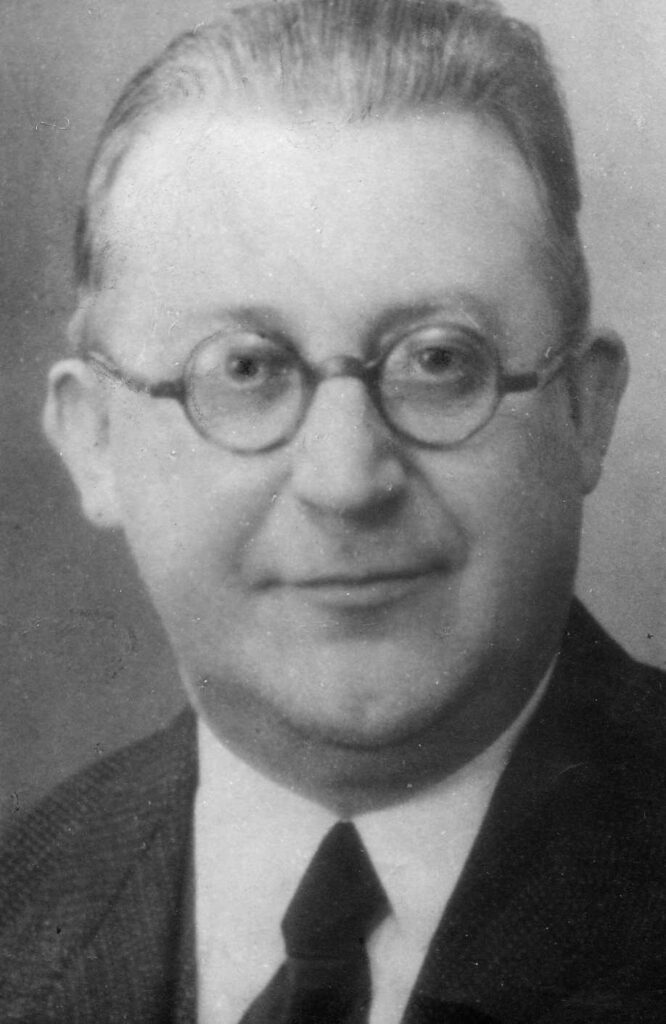
The perpetrator in the family acts as a magnetic pole in the family’s collective memory, attracting some and repelling others. Yet the silence surrounding the perpetrators remains firmly entrenched within the family. At the height of his power, Schneider seemed literally untouchable. The dark side hidden behind his jovial exterior instilled in people a fear that surrounded them like the rings of Saturn.
In the photo on the right: Charles Schneider, Local Group Leader of Rombas and Shop Steward of the Rombas Steelworks in the year 1943 – fanatic Nazi and antisemit.
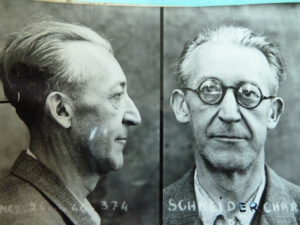
Schneider after his arrest in 1946
When we research and report on perpetrators in our families, we integrate this missing piece of our family history into our living narrative, and in doing so, often—many decades later—finally break free from the spell of silence and the cult of personality that was perpetuated.
Soviet Prisoners of War in France
France, November 4, 2019: I drive to the town of Boulay-Moselle and wait at the old train station, which has long been closed, for local historian and human rights activist Gabriel Becker. He tells me:
“After a week-long journey from the East, the Soviet prisoners of war arrived at the Boulay train station and had to set out on foot on the long march to the camp, which was located in the fields outside Boulay. A baker who secretly slipped bread to the starving prisoners vanished without a trace.”
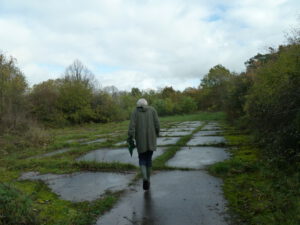
We press ourselves against the wall of a house. It’s raining again this Monday afternoon, and the town of Boulay seems deserted. Becker is wearing rubber boots and a parka. I leave my car behind, get into his old Twingo, and drive with him across the fields until we arrive at the former Maginot base in Le Champ du Ban-Saint Jean, which the Nazis converted into a transit camp for Soviet prisoners of war in 1941. We are alone. Not a soul in sight.
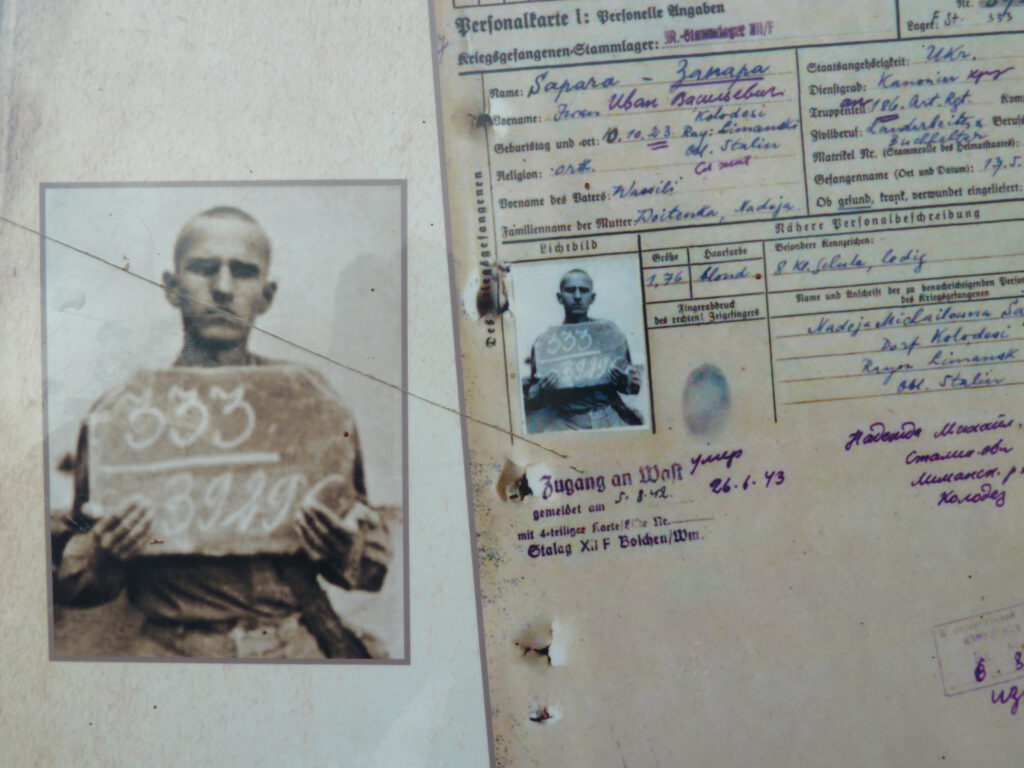
As we look out at a meadow set back a bit from a small wood, Becker tells me that a group of Soviet prisoners of war had to run in circles naked in the snow there for two hours. The SS promised a hot shower afterward. But the shower turned out to be ice-cold. How many Soviet prisoners of war were murdered in France by the German occupiers?
https://www.youtube.com/watch?v=YoRmnXOWTYI
https://hal.univ-lorraine.fr/hal-04052812/document
In the photo: Excavations of mass graves in 1945 at the former Maginot base Le Champ du Ban-Saint Jean / Moselle / Eastern France
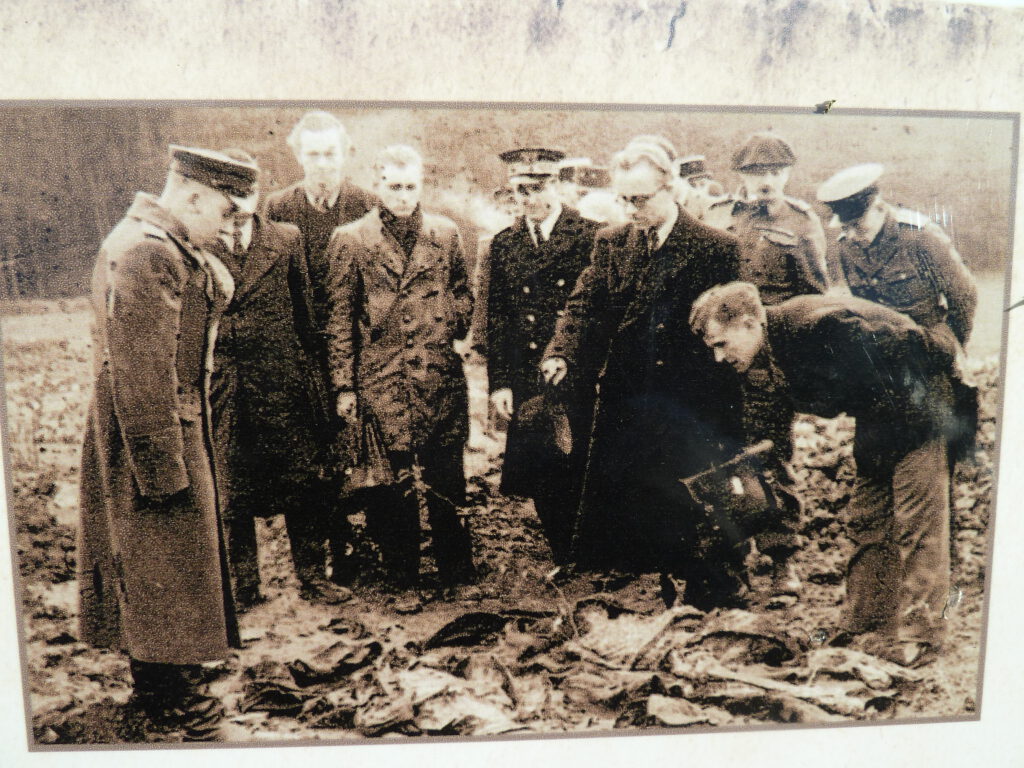
Forced into slave labor and exterminated
If you look more closely, you can see that the entire region of deep Western Europe under German occupation was littered with torture camps, secret camps, prisons for the people of the resistance, and barracks for people forced into slave labor.
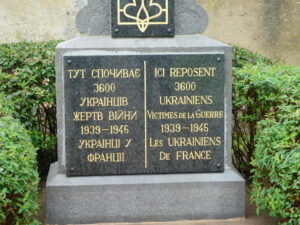
Memorial stone for the Ukrainian forced laborers killed in the French town of Boulay
Every morning, the forced laborers were transported by train and on foot to their work sites. Struthof had over 70 satellite camps in France and Germany. Most prisoners never saw the main Struthof camp, which was among the worst concentration camps of all and had a mortality rate of 40%. They were deployed and murdered throughout the region under the “Extermination by Work” program in factories and mines. I read somewhere that when the Germans had to withdraw from the region, they simply shot the Soviet prisoners of war at road bends and left their bodies there. Back in Germany, most German war criminals went unpunished and lived inconspicuously as stamp collectors or chicken farmers.
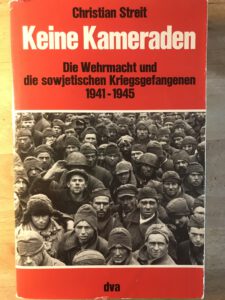
Historian Christian Streit, who published his study on the fate of Soviet prisoners of war in Germany in 1978, reports that around 5.7 million died in German captivity. He writes:
“The year 1941 was the last year in which the German leadership could make decisions freely within the limits it had set for itself. It was in this year that the decisions were made that shaped the further course of the war—decisions that gave Nazi policy a new dimension. All of these decisions—the decision to decisively restrict the army’s authority in the operational zone, to allow the SS Einsatzgruppen to carry out their murderous activities in this area, and thereby significantly elevate the status of the SS; the decision to have a large portion of the Soviet prisoners shot; the decision to exterminate the Jews and large segments of the Soviet population as part of the fight against partisans; the decision to reduce the peoples of Eastern Europe to the status of colonial peoples; the structural transformation of the concentration camps from penal camps into gigantic production and extermination sites; and finally, the decision to exterminate European Jewry in its entirety—all these decisions were closely linked to the ideological war of extermination in the East. “[1]
Nazis—No Eyewitnesses in the Family –
When conducting private research, photos that prove guilt are generally not found in Germany. But even if you do have a photo, you have to do a lot of convincing within the family that family members were involved in war crimes. They were murderers. Every family is different, but many families exhibit similar behavior in this regard. You have to help others navigate the internal struggle they face in this matter. But you also have to present a great deal of research that makes it possible to articulate these facts, so that a process of acknowledging the facts can even begin and an ethical question can be raised.
Photo: Schneider during the German occupation of the city of Rombas—which violated international law—with Georges Bauer, the German mayor appointed at the time.
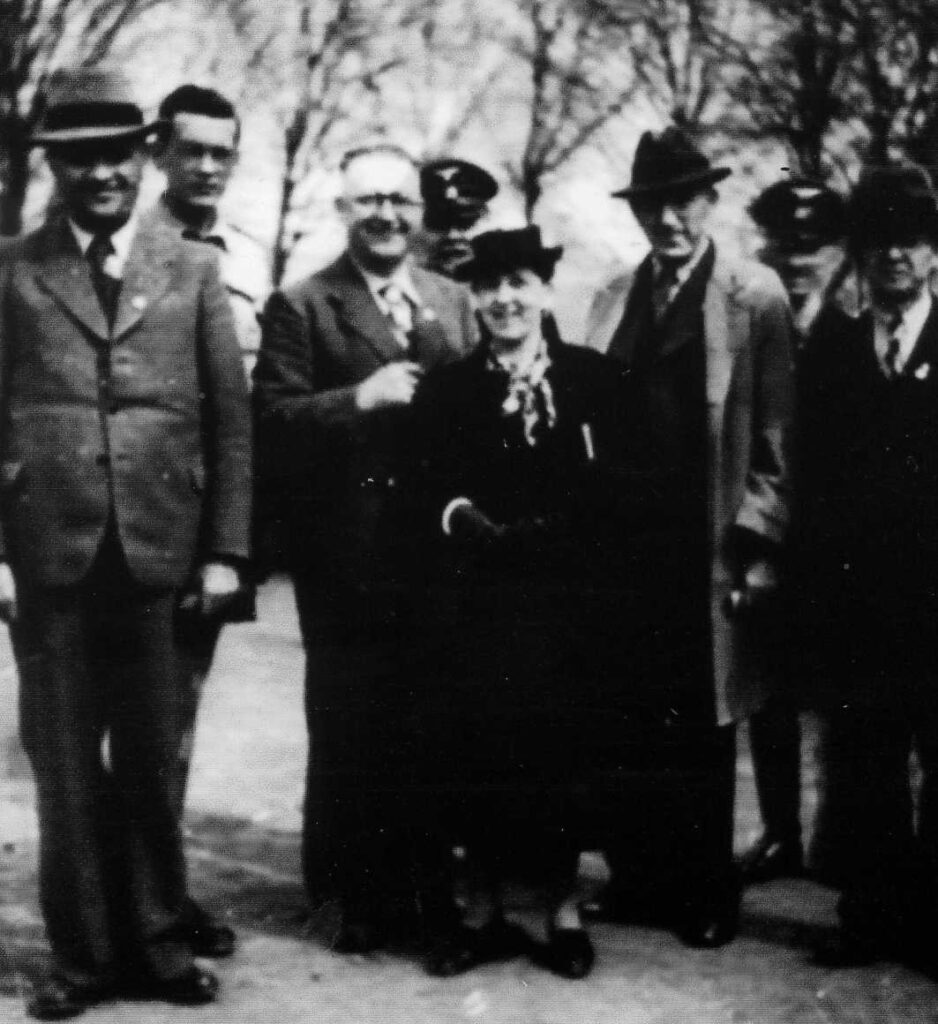
The Investigation File of the french war criminal Schneider
As a researcher, coming across this file in the archives was a soothing, emotionally relieving experience for me, because I was finally able to connect with a historical place and a historical reality.
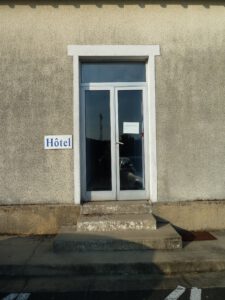
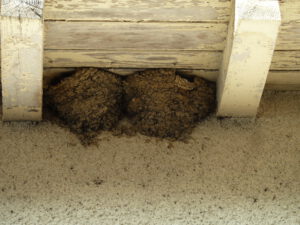
I hear the archivists joking in the hallway, while outside swifts fly through the warm courtyards with shrill cries, hovering in the air, fluttering, and returning.
As you go through the files, you reach this pivotal moment within yourself. You come to your senses, as if you had recovered from a long illness.
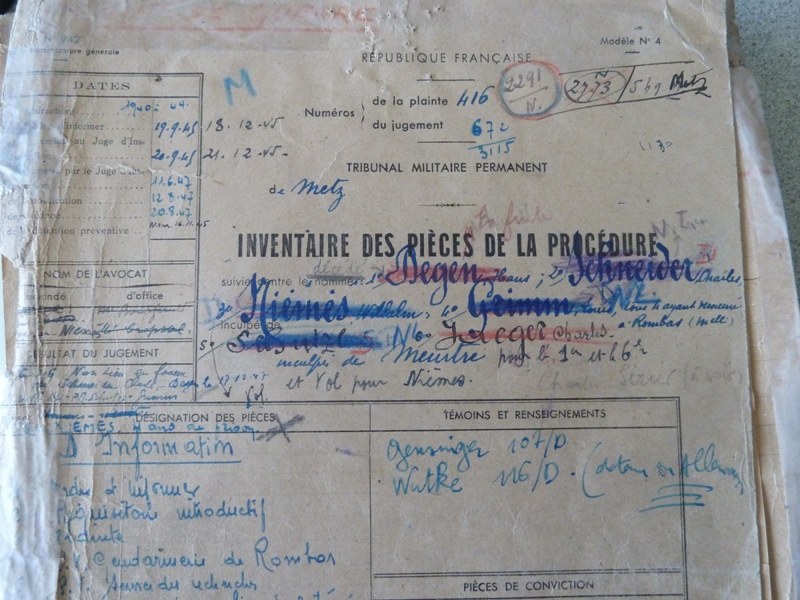
The Schneider File in the Public Archives –
I was utterly fascinated by the cover of the Metz file, which was repeatedly used to document Schneider’s subsequent years in prison. On it markings, crossings-out, and comments; reference numbers outlined twice in red and blue; travel and translation costs for the witnesses added up; witness lists noted; and a square white notepad pinned with a pin bearing the following text: “Schneider Charles; Excluded from amnesty—sentence not served—local group leader and shop steward in Rombas, responsible for expulsions and deportations—12/18/53 (followed by an initial)”
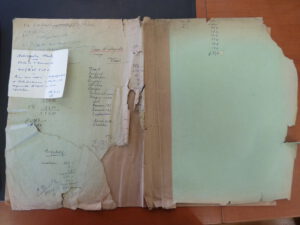
This went on until the edges of the file folder were completely worn away from being handled so often by the court clerks, who had to process Schneider’s three petitions for clemency and three general amnesties granted by the state—but none of it resulted in any success for the prisoner. They simply wouldn’t let Schneider out.
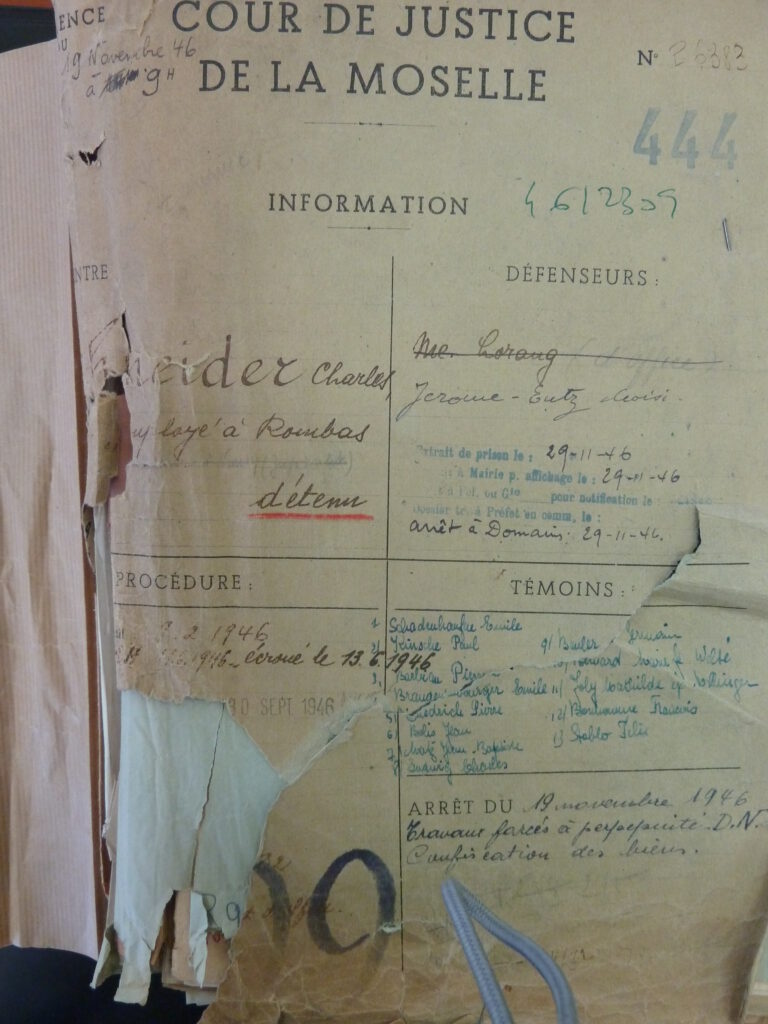
Dogs—Radicalization – Analysis of a Group foto
Something happens while sorting and archiving in the various repositories of knowledge. At night, I suddenly have terrible dreams that leave me waking up drenched in sweat: a dog playfully jumps at me.
There was a strange development in the Schneider family in Rombach regarding the dogs. At first, dogs were friendly and loving animals. They were family members. Under the influence of the Nazis, Schneider changed that. He began to assert his power in Rombach through dogs, but also within the family.
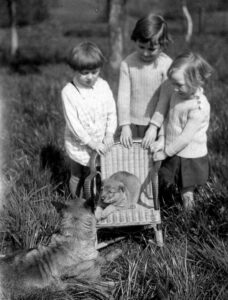
Nero the loyal Newfoundland
“We had Nero, the Newfoundland, who wore a red bow tied around his neck. He brought my father his meals to the cabin. He was so good. You could play with him, do anything,” M. told me.
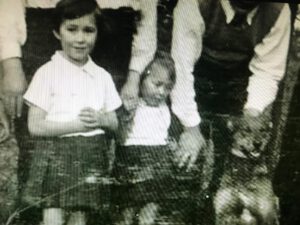
Harras, the older sister tells me, came after Nero, the Newfoundland. To make him aggressive, they had given him blood to drink. He would grab his human victims by the throat and then wait for the command to bite. ”
Harras – “Harras was trained to go for the throat. We weren’t allowed to touch him.”
The sowjet writer Vasily Grossman reports from Treblinka that Kurt Franz, one of the Treblinka commanders, had trained his dog Barry “to leap up at the doomed people and tear out their genitals.” (Vasily Grossmann; The hell of Treblinka,September 1944 published)
And now it becomes clear to me: The children who loved the dogs, played with them, kissed and cuddled them, lost Nero, the good-natured Newfoundland.
But what did happen?
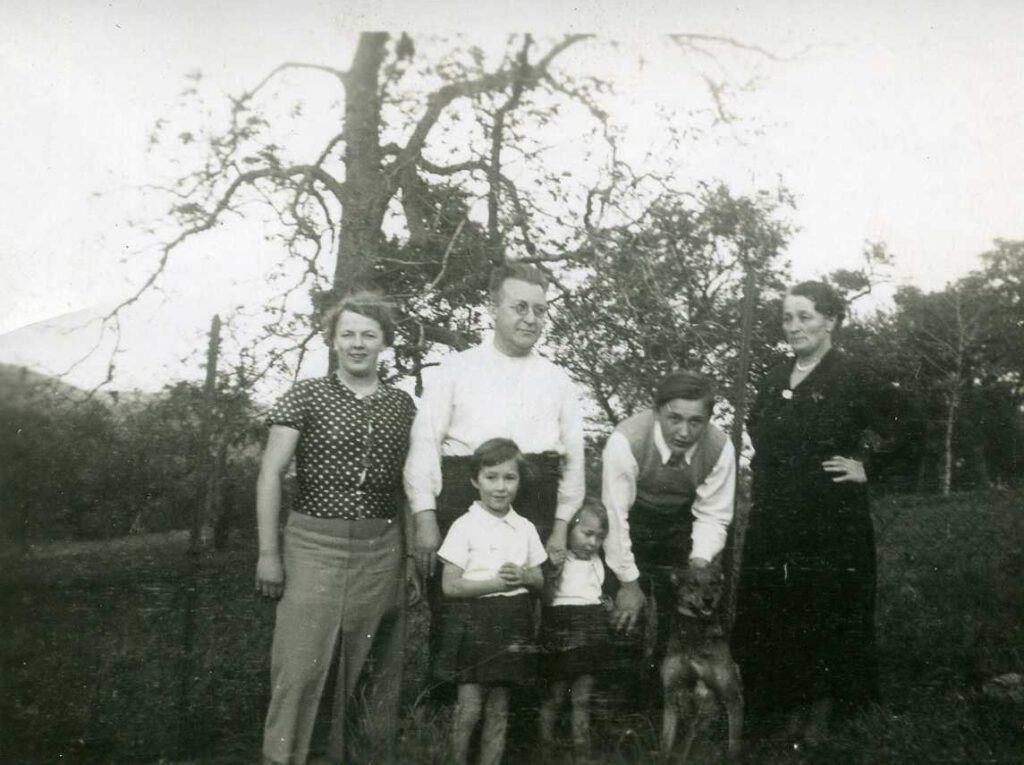
Deportations, torture, murder, and looting
I spoke with J. on the phone today and told her about my research in the archives and the looting by Schneider documented there during the German occupation. He looted the homes of neighbors who had been deported. He is said to have used vicious dogs to do so. She listened to me in silence and then said, in a clear, bell-like, and slightly breathless girl’s voice, that she now remembered her father once coming home with a dog that had been beaten half to death, and that they had to have it put down.
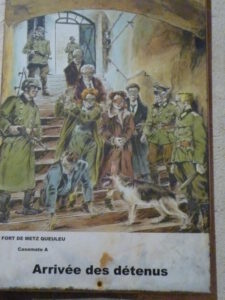
Photo: drawing of the SS and Gestapo torture camp at Fort Queuleu in the city of Metz. Source: FORT DE METZ-QUEULEU ASSOCIATION in memory of the internees and deportees and for the preservation of the site – https://www.fort-queuleu.com/de/
Everyday life in this torture camp, hidden inside the fortress, began something like this: Someone would pound on the iron gate with a fist; the guards would open the gate, and the prisoners—blindfolded and with their hands bound—would be kicked and shouted at as they were forced down the steep staircase, where the SS waited with their German shepherds. The German SS camp commander, Georg Hempen, had a German shepherd that had been trained to attack people. Her name was Alma.
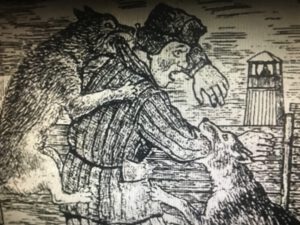
Drawing from a Soviet gulag
German shepherds are actually herding dogs.
Photo on the right: Fort Queuleu Memorial—Interrogation Room—Georg Hempen, the administrator of the SS special camp, was notorious for his brutality. He was charged with six counts of murder but escaped conviction, which sparked fierce protests in France.
Bader, Uwe: Persecution and Torture in Metz 1943/1944. Georg Hempen and the Special Camp at the Goeben Fortress, *Informationen* No. 72 (2010), p. 24ff.
Moisel, Claudia: France and the German War Criminals. Politics and Practice of Prosecution after World War II, Göttingen 2004, p. 203ff., 213ff.
Judgments of the Oldenburg Regional Court dated September 17, 1964, and May 13, 1969, and decision of the Federal Court of Justice dated February 14, 1966, in: Justice and Nazi Crimes, Vol. XXXII, pp. 149ff.
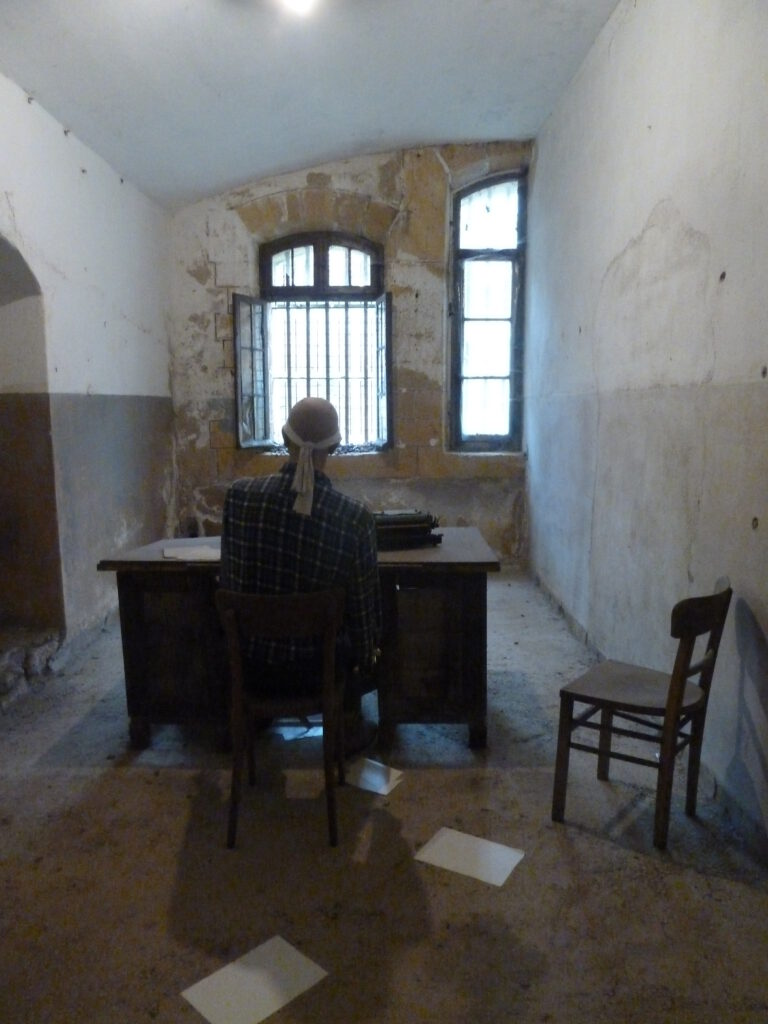
The Dark Cloud –
Convicted war criminal Charles Schneider is permitted to write and receive letters to and from designated individuals while in prison, subject to censorship, a limit on the number of letters, and approval from prison authorities. There are 160 letters from 1945 to 1955 that Schneider wrote to his child. The poor child writes back to him. She sends him soap, underwear, money, and stamps, oranges, and cake. At Christmas, Schneider receives a Christmas stollen. Schneider’s repeatedly expressed belief that he had been wronged was parroted by the child until the end of her life. I sit down and begin transcribing the letters. An overwhelming sense of helplessness, despair, and horror rises like a dark cloud from beneath my chair and envelops me at my desk, penetrating my Berlin reality, which for decades I had believed to be so safe from family problems. Something took hold of a space within me. Something merged with me. What was this all about??
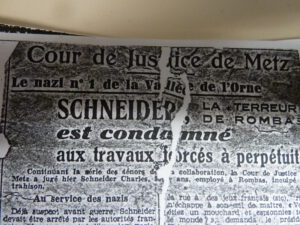
Newspaper report: November 19, 1946, Cour de Justice de Metz: “The No. 1 Nazi of the Orne Valley—the terror of Rombas—Schneider is sentenced to life imprisonment with hard labor.” Source: ASCOMEMO http://ascomemo.chez.com/
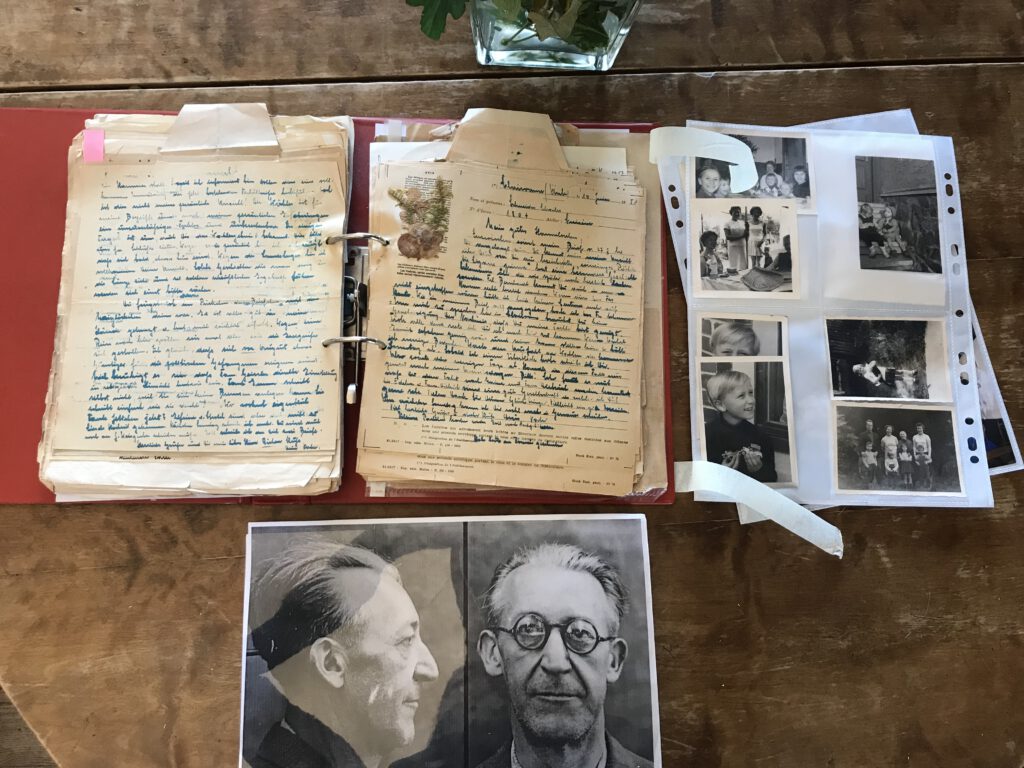
The Little Angel – A Young Child’s Memory of Pain
This little cherub lying on the open book led me to the quiet, wordless grief of the child over the loss of its mother.
The camera sees more than the eye. It wasn’t until years later that I discovered the kneeling child in the photograph.

Cherubs, lying, kneeling, flying
and peeking out in secret wonder
The little cherubs populate the entire house. Where is Mom?
Aphrodite – forbidden Love
The female figure, modeled after the Greek goddess Aphrodite, stands on the landing of the staircase in her house. She wears a garland of flowers draped over her shoulder. At her feet and by her head lies a brown plush dog, a German Shepherd, nestled against the woman’s face.
“Up there on the stairs, that sculpture. It reminds me of my mother” the old child says to me in passing.
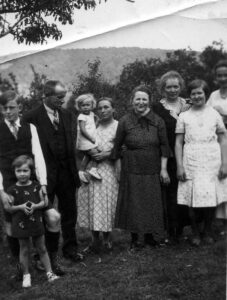
Family conflicts dating back to the Nazi era continue to this day. B. was too gentle for German National Socialism. She was too loving and lenient with her children. Schneider stripped this love—and thus this woman—of its power by isolating her from her children. Under their father’s guidance, the children became accomplices in their mother’s social exclusion within the family.
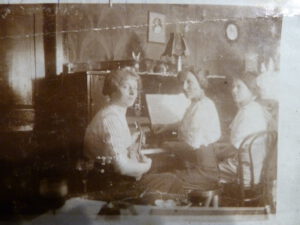
At the Muellerhouse: B. sitting at the piano with her sisters
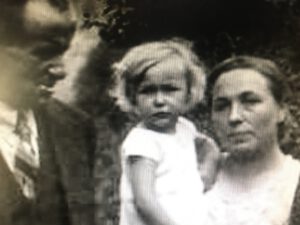
Having lost her son, the Müller house, her home Rombas, completely isolated, lonely, and forced by her husband to do everything, B. took her own life in 1947. And the child had loved his mother so dearly.
After the mother’s suicide Schneider will successfully train the child to now care for him. The child grows cold and becomes like a kingfisher. Dazzling in character and lightning-fast in attack, for ever hiding her fears and her love.
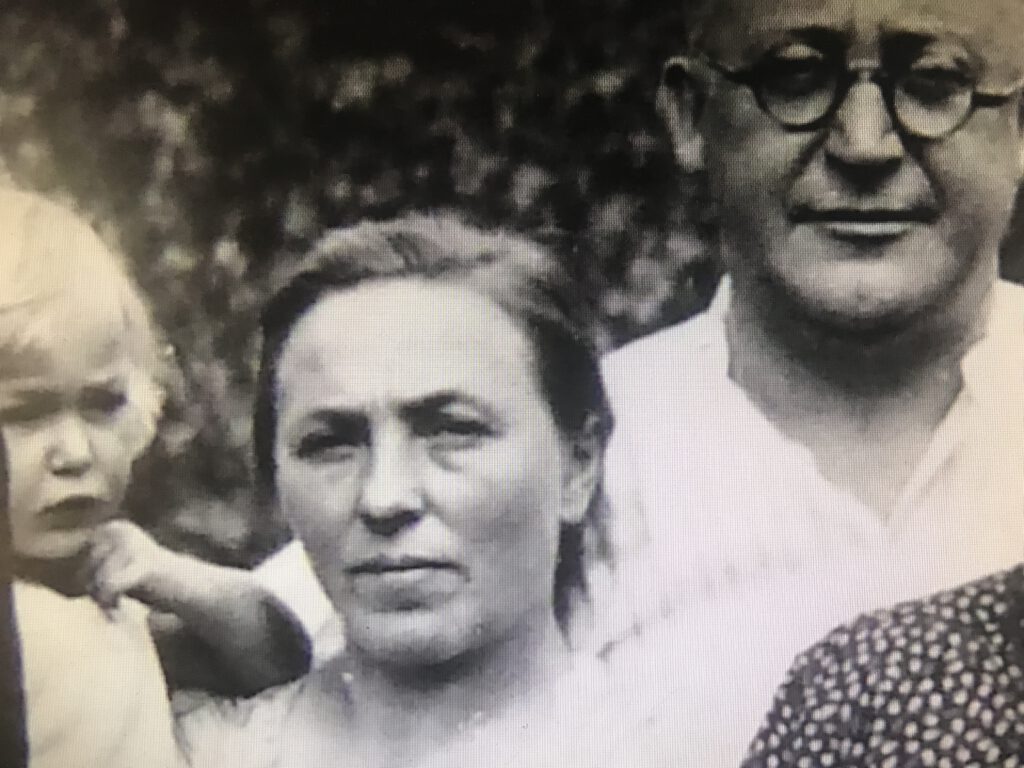
At the top of the Grande Rue in Rombach, there was a soup kitchen in the 15th century, a pitancerie, run by the monks of the Saint-Pierremont monastery. Nothing remains of this monastery—which descended from an 11th-century Augustinian monastery and was reformed in 1622 by the French priest Pierre Fourier—nor of the soup kitchen, except for a relic, a wayside shrine depicting Jesus Christ on the cross, which is embedded in a house wall and which the little girl knew well.
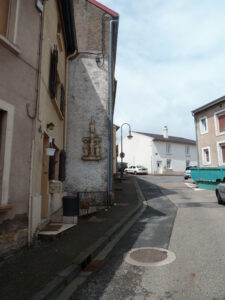
La Grande Rue
Foto: To the right of Jesus Christ stands the Virgin Mary and to the left Saint John, as is so often the case with the Calvaries—the famous wayside shrines!—as historians from Rombas have informed me. Above the cross stands Saint Peter with the one key to Paradise.
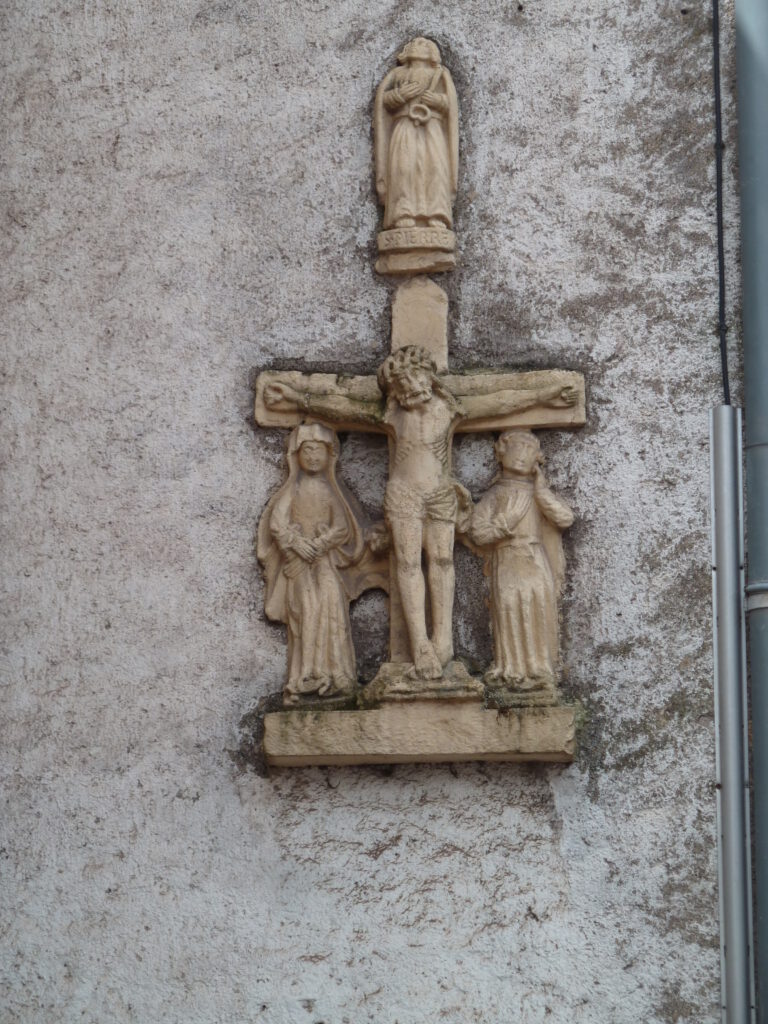
The most Holy virgin Mary
The yellow stone, known as Jaumont stone and dating from the Jurassic period, is a type of sandstone that is still quarried today in Malancourt-la-Montagne near Metz. Many significant buildings in the Moselle department—such as the old train station, the Metz Palace of Justice, and Metz Cathedral—were built with this stone.
Pictured: the Marian Column in Metz on Place Saint-Jacques. It was dedicated in 1924 to thank the Virgin Mary for sparing the city during World War. Inscription: “To the Most Holy Virgin Mary – The City of Metz – Grateful – 1914–1918 ”
Hail, Mary, full of grace, the Lord is with thee!
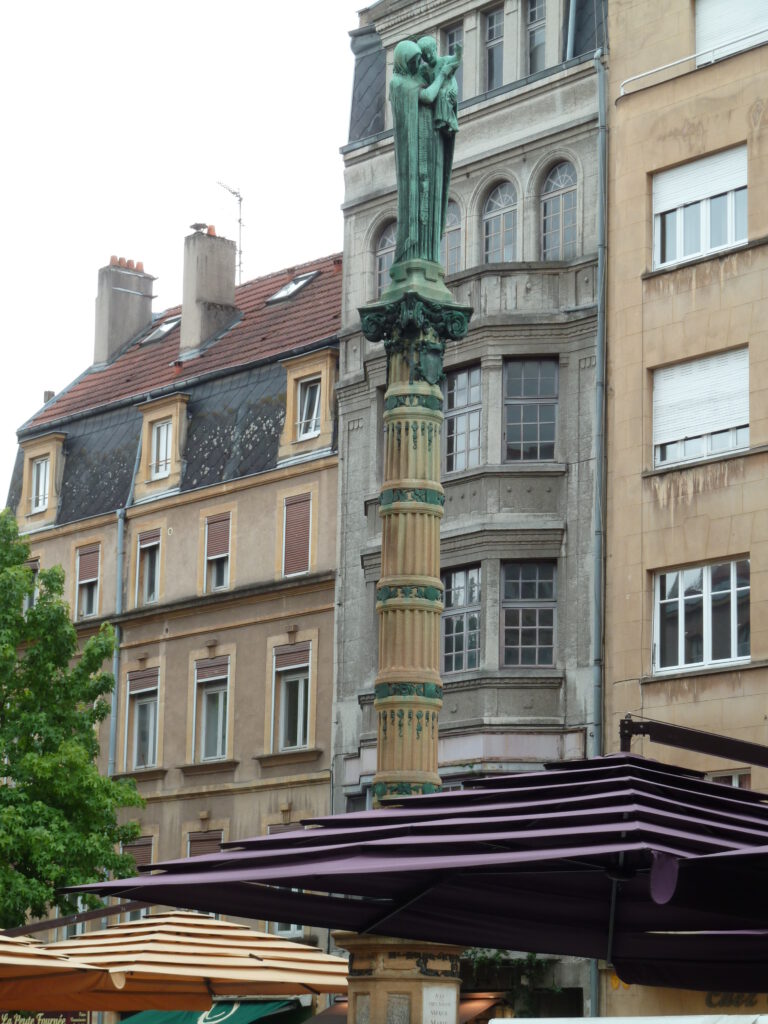
And now she appears before me: the little girl running up the steep Grande Rue toward Guissebonne, heading for the Müllerhaus. When her gaze falls on the weathered face of Jesus, carved from yellow sandstone and set into the wall of the house, she hastily crosses herself three times and keeps running. The color of her home was soft yellow. She was a sensitive, resilient, and strong girl who felt at home among the miners in Guissebonne.
As I stand on the Grande Rue in November 2019, I see a little Bolognese dog in a neighbor’s window—the Bichon d’Italie—looking at me. Its ears, with their silky fur, flutter slightly in the wind.
Lost Childhood –
In the early winter of 2011, I traveled to the countryside to stay with J. for a few days and ask her about her childhood in France during the 1930s and 40s. She put me up in the attic, which had been unoccupied for a long time. She rarely had visitors anymore. It snowed during the night. It was cold. I wasn’t allowed to turn on the heat. She told me she slept cold too and that it didn’t matter. She was angry with me, but I didn’t know why.
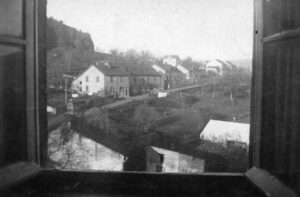
View from the Muellerhouse
When I sat in her kitchen and listened to her, the blunted peaks of the archipelago emerged, like at the break of dawn in the South Seas, her childhood memories appearing shadowy, erratic, and isolated. But before them lay the beautiful myths like clouds of ink, the remnants of the night. A lost childhood, the legendary Vineta. She downright hated me for my family research. But it was she who tossed the prison letters of Schneider into a cheap red ring binder on the table, while making other letters disappear. She always sent mixed messages.
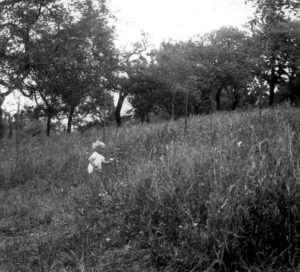
At the minors garden
J. had stored her feelings and memories precisely within herself. I sensed that very clearly, and yet she almost never revealed them to me. A mouth like a zipper.
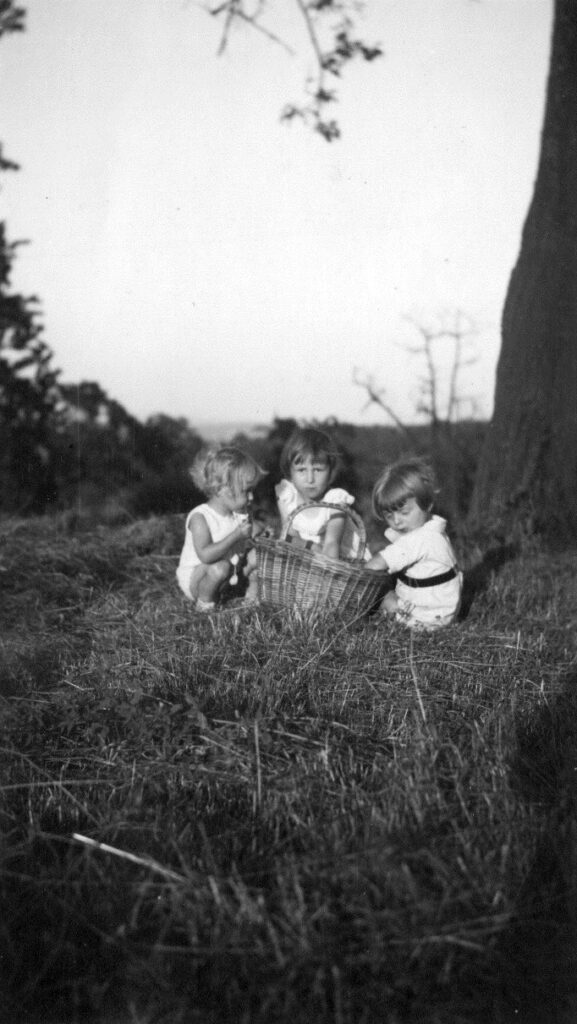
As we explore, we reflect in silence and come to understand the world
This work is dedicated to researching and preserving the history of individuals—the history of us, the individuals within the collective historical process. It is research rooted in the private sphere and focused on the private sphere. Power struggles, social movements, and societal transformations play out differently within each individual and within each family. It is not leaders, nor political parties, but individual people who make history.
In my research approach, I consciously employ a subjective perspective and strive to develop self-critical methods for observing history, as well as a technique for archiving individual historical memory.
For the person undertaking it, family history research is a challenging emotional and intellectual process of discovery that can last many years, sometimes decades, and is a treasure trove for those who explore this field. Family historians are pioneers in our societies. They reconstruct family structures whose traces have been lost, and they explore uncharted psychological and emotional territory through the thicket of conflicts. From this hands-on experience emerged the method I present here and hereby share with all those who venture into family research, wherever you live—whether in China, Palestine, Sweden, Russia, Israel or North Korea, Vietnam, North America or Iran. The method presented here creates space for the complexity of our individual stories and accelerates the process of exploring history.
This work focuses on the 12-year reign of terror by the NSDAP under Adolf Hitler in Germany (1933–1945) and the 30-year reign of terror by the Communist Party of the Soviet Union (CPSU) under Joseph Stalin (1924–1953) in the former Soviet Union—Russia. Both were totalitarian regimes that sought global power, invaded and occupied neighboring territories, deprived the people living there of their rights, and destroyed them and their cities. This had far-reaching consequences in Europe. New borders were drawn, people were displaced, and archives were burned. And once again, countries were occupied. (Hungary in 1956, Czechoslovakia during the Prague Spring in 1968)
These regimes and the civil wars marked by arbitrary violence—like such as the Spanish Civil War of 1936–1939—left a deep mark of destruction on the people of Europe. Everyone was affected by them. And that is what the people I meet—and whose stories I tell—are all about. These are painful and beautiful, tragic and joyful stories that would have remained hidden had it not been for a kind soul who preserved something of the others, and had there been no one to ask questions and take notes. Here, we learn from life. Family history research and bringing the stories of individuals to light is an act of enlightenment, self-assertion, emancipation, and love. And as you research, you come to understand: even if the horizon grows dark, it is the compassionate and active person who is the light of the world
Berlin, July 20, 2026
Gabriella Sarges
copyright@2026 preserving family history – all rights reserved

– observe – record – describe – experience –
“I noticed that there was something
Something strange happened to me
I feel that i used to shrink away from problems
Wether it be family or tribal
I was afraid of everything
Afraid of making mistakes
Or afraid of beeing rejected
And all the things that go with it
Today i have hard time keeping quiet
All there is to know about my culture.”
This sektion is a work in progress