examples – 20 – Forced into slave labor and exterminated
Forced into slave labor and exterminated
If you look more closely, you can see that the entire region of deep Western Europe under German occupation was littered with torture camps, secret camps, prisons for the people of the resistance, and barracks for people forced into slave labor.
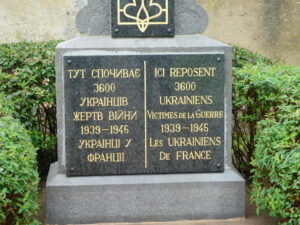
Memorial stone for the Ukrainian forced laborers killed in the French town of Boulay
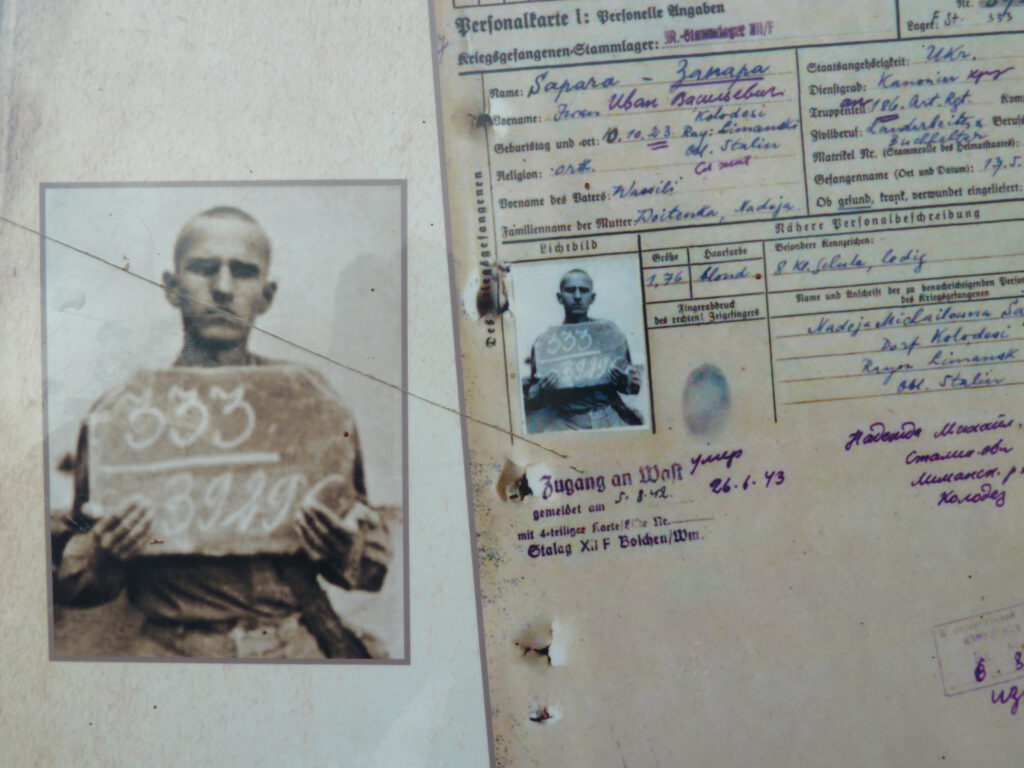
Every morning, the forced laborers were transported by train and on foot to their work sites. Struthof had over 70 satellite camps in France and Germany. Most prisoners never saw the main Struthof camp, which was among the worst concentration camps of all and had a mortality rate of 40%. They were deployed and murdered throughout the region under the “Extermination by Work” program in factories and mines. I read somewhere that when the Germans had to withdraw from the region, they simply shot the Soviet prisoners of war at road bends and left their bodies there. Back in Germany, most German war criminals went unpunished and lived inconspicuously as stamp collectors or chicken farmers.
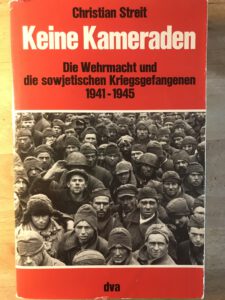
Historian Christian Streit, who published his study on the fate of Soviet prisoners of war in Germany in 1978, reports that around 5.7 million died in German captivity. He writes:
“The year 1941 was the last year in which the German leadership could make decisions freely within the limits it had set for itself. It was in this year that the decisions were made that shaped the further course of the war—decisions that gave Nazi policy a new dimension. All of these decisions—the decision to decisively restrict the army’s authority in the operational zone, to allow the SS Einsatzgruppen to carry out their murderous activities in this area, and thereby significantly elevate the status of the SS; the decision to have a large portion of the Soviet prisoners shot; the decision to exterminate the Jews and large segments of the Soviet population as part of the fight against partisans; the decision to reduce the peoples of Eastern Europe to the status of colonial peoples; the structural transformation of the concentration camps from penal camps into gigantic production and extermination sites; and finally, the decision to exterminate European Jewry in its entirety—all these decisions were closely linked to the ideological war of extermination in the East. “[1]