I – 11 – Life in a Space of Denial among Repressed Families –
Life in a Space of Denial among Repressed Families –
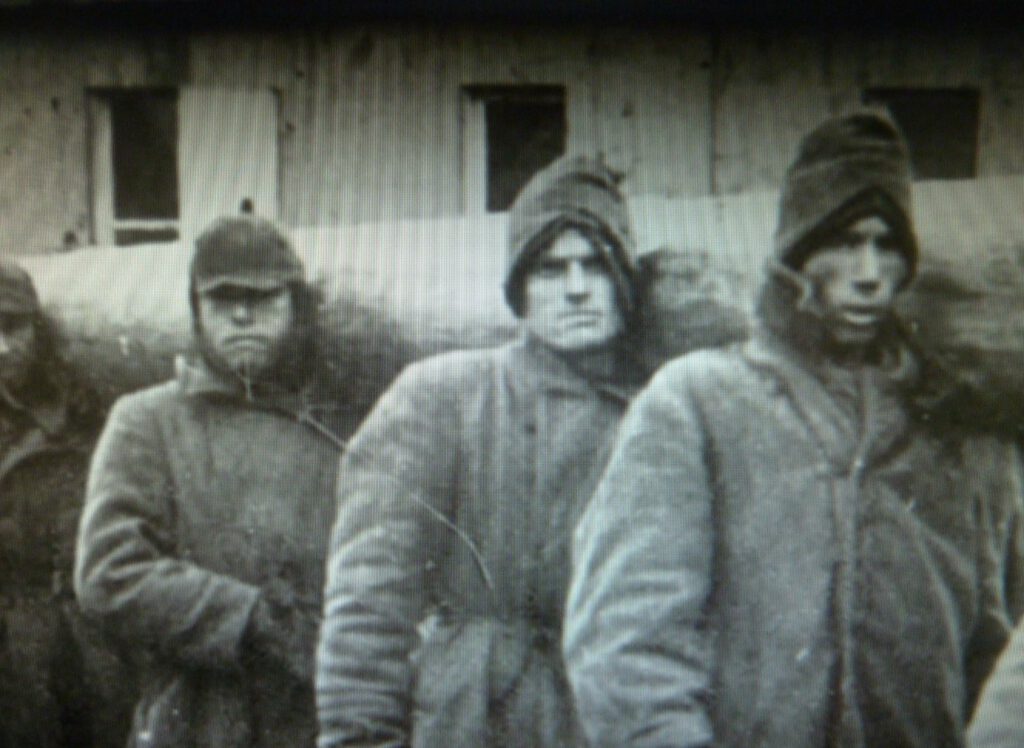
However, this problem of denial can also arise in the opposite scenario—namely, when ancestors were not perpetrators but victims of a repressive regime, and the state stands in continuity with that repressive past. We can observe this today in the Russian Federation. In this negative continuity, it is not only the government that is involved, but often society as a whole, due to the state’s revisionism of history. There is no public discourse on these crimes, and the families of victims of state repression are ashamed that their ancestors were imprisoned, shot in basements, or forced to perform hard labor in the Gulags.
Everyone knows the truth. It cannot be suppressed, but it remains unspoken. It remains a petrified reality hanging in the air. And this is what the “Solovetsky Stone” memorial in Moscow stands for; the following commemorative inscription is engraved on it:
„Этот камень с территории Соловецкого лагеря особого назначения доставлен обществом <Мемориал> и установлен в память о миллионах жертв тоталитарного режима
30 октября 1990 года в День политзаключённого в СССР“
“This stone from the territory of the Solovetsky Special Purpose Camp was brought here by the <Memorial> Society and erected in memory of the millions of victims of the totalitarian regime”
October 30, 1990, on Political Prisoners’ Day in the USSR”
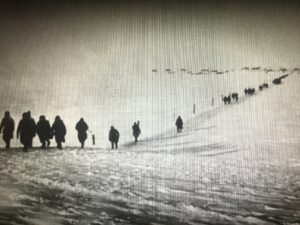
In the photo on the right: People performing forced labor in the Gulag in Kolyma, Siberia—It is estimated that over 20 million people were sentenced to forced labor in the Soviet Union between 1929 and 1956.