method – 6 – the Emotional Grid
The Emotional Grid –
Underlying the entire process is a sequence of emotions followed by insights that enable you to expand your questions or dismiss them entirely. But this variability does not apply to time. It now becomes clear to us: the reconstructive text is asynchronous. And what are you actually doing? You’re working through the prejudices and blind spots you had—ones you didn’t even realize you had.
For example: Born in 1960 in the Federal Republic of Germany, France was simply the better country for us. France, the land of human rights, was in 1939 the great hope of all those who had to flee Hitler’s Germany. But what happened then in July 1940, when the French Parliament voted to abolish the Republic? Vichy France, led by Marshal Pétain, and the Holocaust—the deportation of Jewish children—marked the lowest point in French history. I didn’t begin to explore this catastrophe in France until I started researching my French grandfather. And that was in 2012. I didn’t begin to grapple with this catastrophe in France until I started researching my French grandfather. And that was in 2012.
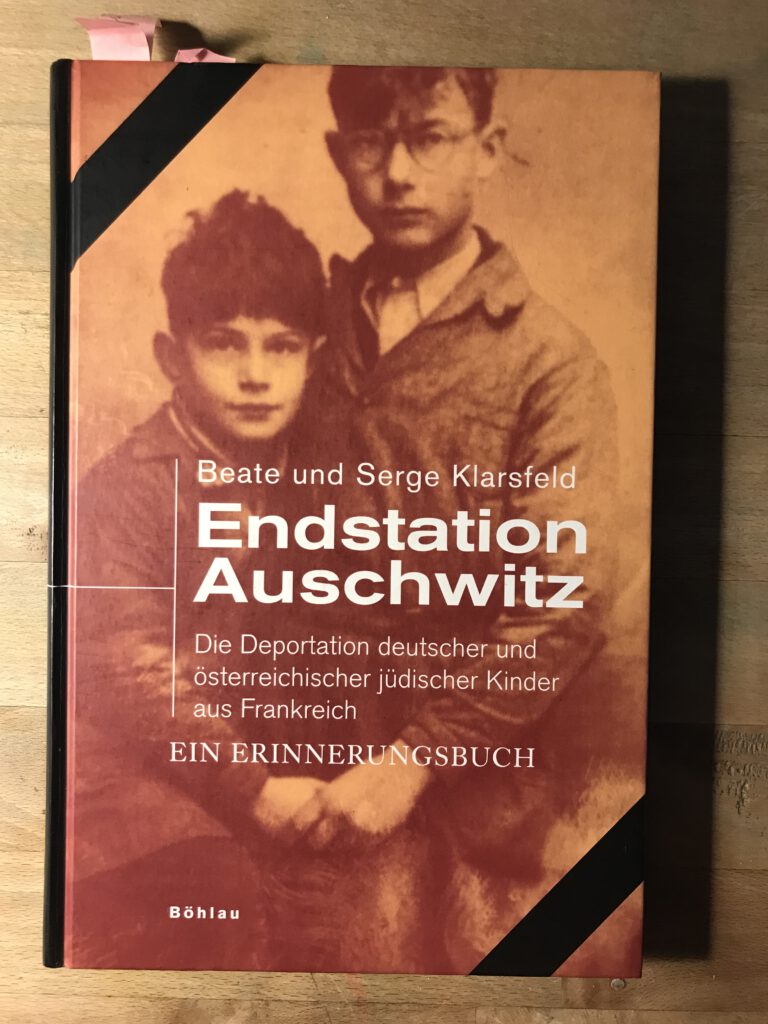
Beate and Serge Klarsfeld wrote:
“The French Vichy government has disgraced itself forever, for it made its police and administrative apparatus available as an active accomplice to the German Nazis in the arrest of Jews, particularly in 1942. 43,000 Jews were deported from France in 1942, 17,000 in 1943, and another 16,000 in 1944. In total, 76,000 Jews were deported, including 11,400 children under the age of 18. About 2,000 children were younger than six years old. Among the Jews deported from France, about 10,500 came from Germany and Austria, including about 800 children and adolescents.”
Beate und Serge Klarsfeld; Endstation Auschwitz. Die Deportation deutscher und österreichischer jüdischer Kinder aus Frankreich, 2008.