examples – 10 – Uncle Rudolf’s sad eyes
Uncle Rudolf’s sad eyes
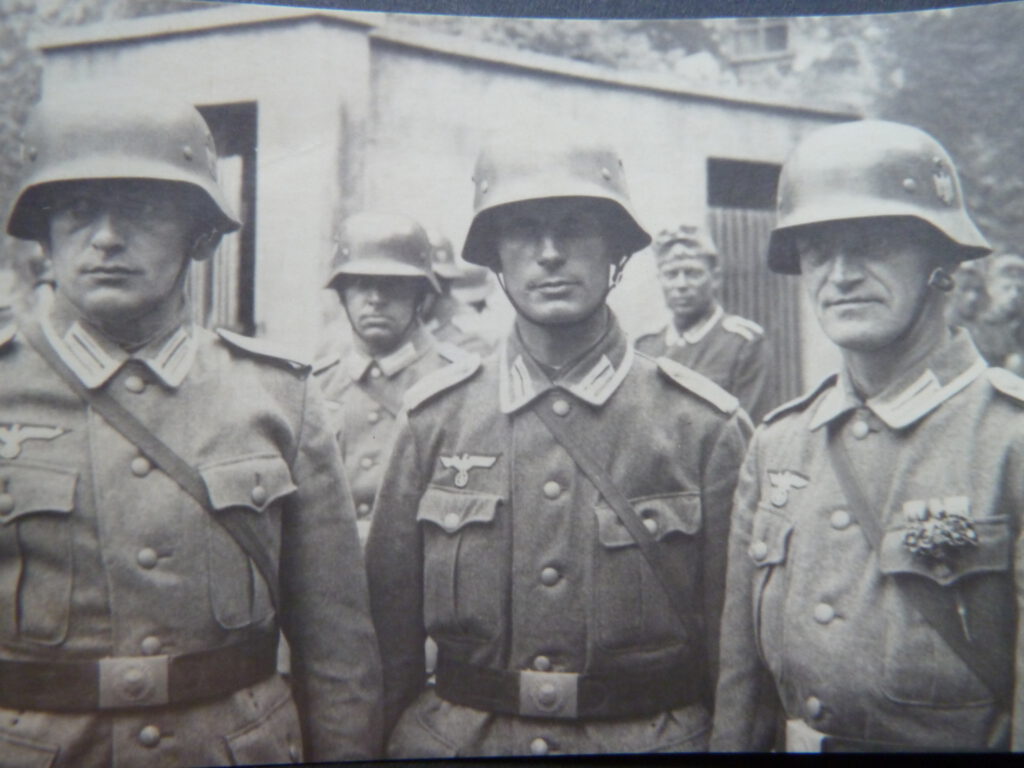
Our thoughts lingered on the photograph of the Wehrmacht soldiers. “Take good care of it!” N. said to me. “It’s the only photograph we have. And yet he was completely apolitical,” says N. “Karlsbad was world-famous, after all. Princes and emperors were there. Goethe was there. It was a whole different world.”
Under his steel helmet, Uncle Rudolf looks like all the other Wehrmacht soldiers. But if we look more closely, we can see his sad eyes. Uncle Rudolf was the head doorman at the Hotel Imperial in Karlsbad and had taught himself several languages to entertain his guests well.
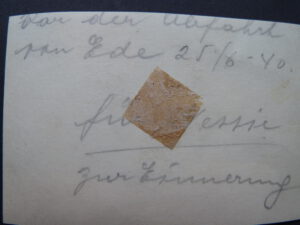
Back of the photograph a note of Uncle Rudolf for N.: “Before leaving Ede on 06/25-40, for N. as a memory” N. has written down all the addresses and personal details of her family members in her red notebook. And that’s where i also found a trace of Uncle Rudolf: Missing since October 10, 1944—Memel—Buckwa No. 54 / Haperspirk Parish Office, Vol. III, p. 134. No one should be left behind.
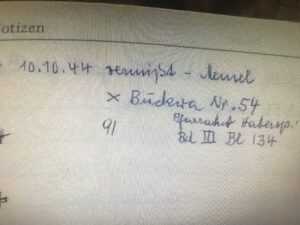
“I wonder if he killed himself?” N. asks, looking at me. Suicide among German Wehrmacht soldiers on the Eastern Front is a firmly established social taboo, but families do talk about it. After Boehmia, which belonged to Czechoslovakia, was annexed to the German Reich in 1938, Uncle Rudolf was drafted for service on the Eastern Front in June 1940 and never came back.